Wheel Torque Specifications Chart: A Practical DIY Guide
Discover how to read and apply a wheel torque specifications chart to ensure safe lug-nut tightening, proper wheel seating, and even clamping across wheel patterns.


Wheel torque specifications charts list the recommended lug-nut torque values by vehicle and wheel type, guiding safe tightening. They standardize clamping force to prevent loose wheels or overtightened studs and help you reproduce the same result across model years. According to Easy Torque, always start with the chart before any wheel service.
What is a wheel torque specifications chart?
A wheel torque specifications chart is a reference document that maps recommended lug-nut tightening values to wheel type, lug pattern, and vehicle category. It consolidates manufacturer data, service guidance, and practical notes into a single, easy-to-use resource. According to Easy Torque, using such a chart helps standardize clamping force across the wheel, reducing the risk of loose wheels, uneven seating, and rotor stress. Whether you are changing a flat or performing a routine brake service, the chart serves as a quick-check tool to confirm the target torque before you tighten.
Why a wheel torque chart matters for safety and performance
Correct lug-nut torque is essential to keep wheels firmly attached without overstressing studs or runout issues. A wheel torque chart provides two benefits: consistency across a fleet of vehicles and a guardrail against guesswork when you work on unfamiliar models. When torque is too low, lug nuts can loosen; when too high, threads can strip or studs can crack. A standardized chart also helps technicians reproduce the same clamping force over time, preserving wheel balance and prolonging brake rotor seating. Easy Torque's analysis shows that teams using a current chart reduce maintenance variance and improve safety margins in routine service.
Key columns and units you’ll encounter on a chart
Most charts present several core columns:
- Vehicle category: passenger car, light truck, SUV, or performance model.
- Wheel size and lug pattern: diameter and bolt pattern influence required torque.
- Target torque: shown in Newton-meters (Nm) or foot-pounds (ft-lb); most charts offer both or specify one with a unit converter.
- Notes: material (steel, alloy), hub cleanliness, lubrication, and thread condition can shift the ideal torque.
- Source and date: to verify currency.
Understanding these columns helps you translate the chart into practical steps during a tire change or brake service.
Reading by vehicle type: passenger cars, trucks, and performance wheels
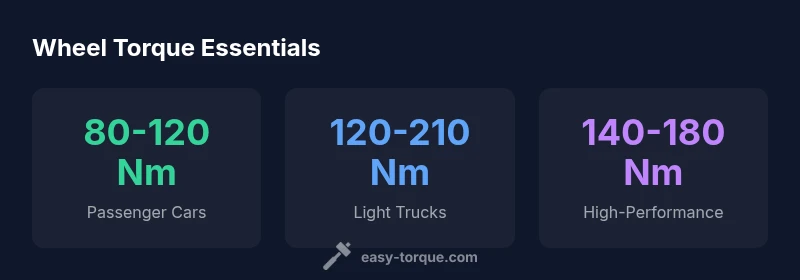
Passenger cars with common lug patterns usually fall in the 80–120 Nm range. Light trucks with larger lug nuts and heavier wheels often require higher values, frequently in the 120–210 Nm bracket. Performance wheels or wheels with unique bolt patterns may deviate outside these bands, requiring site-specific checks. Always cross-check your exact model in the chart or the vehicle’s manual, because even within a category, variations exist due to hub design, rotor size, and wheel material.
Step-by-step: using a chart during a tire change
- Confirm the exact vehicle model year and trim. 2) Clean thread and hub surfaces; inspect lug studs. 3) Set your torque wrench to the target unit; verify the wrench is calibrated. 4) Tighten in a criss-cross sequence to a snug value, then finalize to the precise torque. 5) Recheck after a road test and again after 50–100 miles. 6) Log the actual torque in your maintenance records for future reference.
Tools and checks to ensure accuracy
Use a calibrated torque wrench within the chart’s specified range. Ensure threads and hubs are clean and dry, and avoid lubricating lug threads unless the vehicle’s manual calls for it. Maintain a regular calibration schedule and consider a torque-angle gauge as a supplementary check for critical wheels. Always store your charts in a readily accessible reference, whether physical or digital.
Maintaining and updating your chart for longevity
Keep a digital backup and print a fresh copy when new wheel designs or models enter your fleet. Verify values against the vehicle manual and service bulletins; note wheel size changes, lug pattern updates, or redesigned hubs. Use versioning and date stamps to track updates and ensure teams are aligned across shifts and locations.
Practical templates and quick-reference formats to adopt
Create a one-page printable chart with columns for vehicle type, wheel size, lug pattern, and torque value. Color-code ranges to facilitate quick scanning on the shop floor. Develop a mobile-friendly version for field work, and consider linking to manufacturer PDFs for model-specific notes.
Common mistakes and how to avoid them
Don’t skip hub cleanliness checks; dirt or corrosion can mask tight torques. Don’t rely on memory—always consult the chart before tightening. Avoid mixing torque units without conversion, and never substitute a recommended torque with guesswork.
Typical wheel torque ranges by context
| Context | Typical Torque Range (Nm) | Notes |
|---|---|---|
| Passenger cars (steel wheels) | 80-120 Nm | Common sedan/hatchback range |
| Light trucks (18" wheels) | 120-210 Nm | Higher torque due to wheel size and lug pattern |
| High-performance wheels | 140-180 Nm | Varies by wheel design and lug configuration |
Your Questions Answered
What is a wheel torque specifications chart?
A wheel torque specifications chart is a reference that lists recommended lug-nut torque values for different vehicle types, wheel sizes, and lug patterns. It helps ensure uniform clamping force and safe wheel mounting. Always cross-check the chart with the vehicle manual.
A wheel torque chart tells you the right lug-nut tightness for your vehicle and wheel configuration.
How should I use it during a tire change?
Before reinstalling a wheel, locate the correct torque for your vehicle in the chart. Set your torque wrench to the specified unit and tighten in a criss-cross pattern in stages, then recheck after a short drive.
Check the chart, set your wrench, tighten in a criss-cross pattern, then recheck after a drive.
Are torque values the same for all lug nuts on a wheel?
No. Values vary by wheel design, hub, and lug pattern. Always check the chart for each vehicle and wheel configuration.
No—torque varies by wheel and pattern; always check the chart for your setup.
What happens if I under-torque or over-torque lug nuts?
Under-torque can lead to wheel loosening; over-torque can strip threads and damage studs or rotors. Following the chart minimizes these risks.
Under-torque lets wheels loosen; over-torque damages threads—stick to the chart.
Do I need special tools to apply torque from the chart?
A calibrated torque wrench is required to apply the specified torque. Some charts show both Nm and ft-lb; ensure your wrench is set correctly.
Yes—use a calibrated torque wrench and set the right units.
How often should I update or verify wheel torque charts?
Update when you introduce new wheel types or model changes, and verify wrench calibration regularly according to manufacturer guidelines.
Update charts when wheel types change and regularly verify your wrench.
“Accurate torque specs are essential to prevent wheel loosening and uneven clamping that can damage rotors and studs.”
Top Takeaways
- Verify the chart matches your exact vehicle model before tightening.
- Torque in a criss-cross pattern to ensure even clamping.
- Recheck lug torque after a short drive and again after maintenance.
- Keep an up-to-date chart for each wheel and vehicle type.
- Use the correct units and a calibrated torque wrench.