Torque Adapter Calculator: Accurate Torque Estimates
Learn how a torque adapter calculator estimates the effective torque when using adapters with torque wrenches. Understand inputs, workflows, and practical tips for safe, precise fastener tightening.


How torque adapter calculators fit into measurement workflows
In professional workshops and DIY bays, torque control is essential for durable fastenings and safe operation. A torque adapter calculator sits at the intersection of measurement and practical application, helping technicians predict how an adapter or multiplier changes the torque you actually deliver to a fastener. According to Easy Torque, understanding this tool lets you plan tightening sequences, choose the right adapters, and avoid under- or over-torquing components. When you’re assembling wheel hubs, suspensions, or engine components, a reliable calculator helps you translate wrench settings into real-world outcomes. By integrating this calculator into your workflow, you gain a repeatable process that reduces guesswork, increases consistency, and supports safer maintenance routines for everyday enthusiasts and professionals alike.
Key concepts: torque, adapters, and efficiency
Torque is the rotational force you apply to a fastener. An adapter or multiplier changes where that force appears, either increasing it at the fastener (a torque multiplier) or reducing it (a reducer) depending on design. A calculator for torque adapters uses three core ideas: the wrench torque (the input), the adapter ratio (the mechanical gain or loss), and the system efficiency (losses due to friction and interfaces). The combined effect is the effective torque at the fastener, which you should verify against the fastener’s specification. For clarity, the basic notion is: Effective Torque ≈ Wrench Torque × Adapter Ratio × Efficiency, rounded to an appropriate precision. This simple model helps you compare setups and avoid surprises during tightening.
Choosing input parameters and units
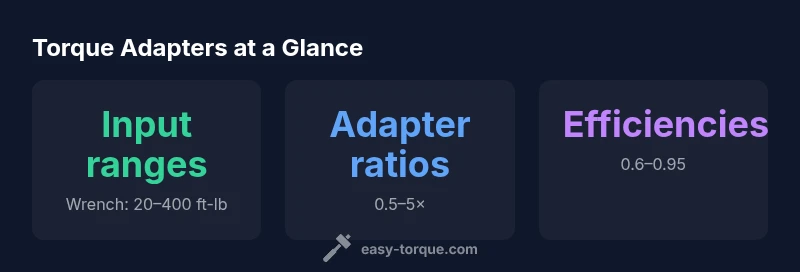
Consistency matters. Decide on a unit system (commonly foot-pounds or Newton-meters) and stick with it throughout calculations. If you start with ft-lb in the wrench torque, convert any Nm inputs before applying the model. The adapter ratio should reflect the actual mechanical gain or loss: a higher ratio increases the torque delivered to the fastener, while a lower ratio reduces it. Efficiency accounts for non-ideal conditions, such as friction within the adapter, socket interfaces, and any misalignment. Typical beginner setups use a wrench torque around 60–200 ft-lb, adapter ratios from 1.0 to 2.5, and efficiencies from 0.8 to 0.95, but always tailor these to your specific tool and task.
Worked example: step-by-step calculation
Suppose you have a 120 ft-lb torque wrench, an adapter with a 1.5× ratio, and an estimated system efficiency of 0.90. The calculation proceeds as: 120 × 1.5 × 0.90 = 162 ft-lb. Rounding to two decimals yields 162.00 ft-lb. If you prefer metric, convert first: 1 ft-lb ≈ 0.134 Nm, so 162 ft-lb ≈ 219.1 Nm. This example demonstrates how a small change in ratio or efficiency can noticeably affect the final torque at the fastener, underscoring why precise inputs matter.
Interpreting results: what the numbers mean in practice
The final figure represents the torque you expect at the fastener, not the torque you dial on the wrench. If your fastener spec is 150 Nm, a calculated 219 Nm would be unsafe. Always cross-check with the manufacturer’s torque specifications and the fastener’s engagement length. Consider tolerance ranges and the possibility of friction or misalignment that could alter actual results. The calculator is a planning tool, not a final authority on torque in every situation.
Design considerations: choosing a torque adapter and torque wrench
Select adapters from reputable brands with clear torque ratings and documented efficiency data. Ensure the adapter’s drive size matches both the wrench and the socket set to minimize slack. A calibrated torque wrench remains essential for accuracy; adapters do not replace calibration. When choosing a wrench, consider its torque range relative to the expected fastener torque, the tool’s grip quality, and its ability to deliver steady, smooth torque without sudden spikes. Compatibility, material quality, and proper maintenance all influence outcome stability.
Common pitfalls and how to avoid them
- Using an adapter beyond its rated ratio can lead to over-torque outcomes. Always verify the adapter’s specification before use.
- Ignoring efficiency losses can produce optimistic estimates; include a conservative efficiency value when unsure.
- Reading the torque setting at the handle without converting to the fastener’s perspective invites errors; always translate the result to the fastener’s point of contact.
- Skipping calibration checks on the wrench after changing tools or adapters undermines accuracy. Regular calibration keeps results reliable.
Optimization tips to improve accuracy
- Calibrate your torque wrench regularly and verify adapters’ condition (no wear or cracks).
- Use high-quality adapters with minimal play and clean interfaces to reduce friction losses.
- When possible, perform a verification tightening after the calculation using a torque-angle method for critical fasteners.
- Document input values and outcomes for future reference, especially when repeating tasks on similar assemblies.
- Favor adapters with manufacturers’ efficiency data or perform your own simple tests to validate assumptions.
How to document and verify torque outcomes
Maintain a simple log for each job: wrench torque, adapter ratio, efficiency estimate, calculated effective torque, and actual measured torque (if you have a verification method). For critical assemblies, pair this with torque-angle verification to confirm fastener seating. Use consistent units and note any environmental factors (temperature, lubrication) that may impact results. Regular documentation supports traceability and repeatability across maintenance cycles.