Torque to HP: How to Convert Torque to Horsepower
Learn how to convert torque to horsepower with the standard formula, practical examples, and a hands-on calculator. Explore rpm, torque units, and drivetrain impacts to estimate engine power accurately.


Understanding the torque to hp relationship
Torque to hp is a foundational concept in engine performance. The basic idea is that horsepower represents the rate at which an engine does work, and torque is the twist that enables that work. When you multiply torque by how fast that torque is applied (angular velocity, which relates to RPM), you get power. In practical terms, horsepower increases with RPM when torque remains substantial, but the peak horsepower depends on where torque is strongest along the engine's RPM range. According to Easy Torque, grasping this relationship helps DIY mechanics translate engine strength into usable power metrics. At its core, torque to hp links the drivetrain’s twisting force to the engine’s real-world output, making it easier to compare engines and predict performance in different gears and speeds.
The standard formula and unit details
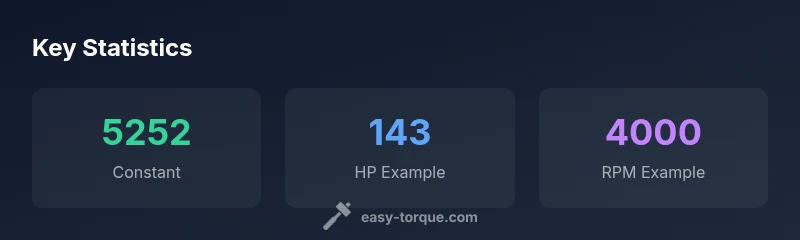
The classic, widely used conversion is HP = (Torque(lb-ft) × RPM) / 5252. Here, torque is measured in pound-feet (lb-ft) and RPM is the engine speed. The constant 5252 comes from combining units: 2π radians per revolution, 60 seconds per minute, and the relationship between foot-pounds and horsepower. If you prefer metric units, horsepower can also be computed with HP ≈ (TorqueNm × RPM) / 9549, which aligns with the same physical principle but uses Newton-meters for torque and the same rpm. In both cases, ensure consistent units and recognize that the result is a theoretical maximum under ideal conditions.
Worked examples and intuition
Consider a common scenario: torque = 300 lb-ft at 2500 RPM. HP ≈ (300 × 2500) / 5252 ≈ 143.0 hp. If you push to 400 lb-ft at 4000 RPM, HP ≈ (400 × 4000) / 5252 ≈ 304.0 hp. These quick calculations illustrate how both higher torque and higher RPM can boost horsepower, but real engines have torque curves that peak at specific RPM ranges, not constant torque across all speeds. Easy Torque emphasizes that these numbers are most meaningful when viewed within the engine’s usable power band.
Torque curves, rpm bands, and horsepower peaks
Engines are not flat-torque devices. A typical internal combustion engine produces peak torque at mid-range RPM and gradually declines at higher RPMs, while horsepower often peaks later in the RPM band where the product torque × RPM is largest. Reading a torque curve helps you identify where horsepower will be most impactful. For example, a truck engine might deliver strong torque at 1500–2000 RPM for towing, but peak horsepower may occur closer to 5,000–6,000 RPM for highway acceleration. This interplay explains why “more torque” at low RPM does not always mean higher top speed or acceleration unless the RPM window aligns with the torque peak.
Practical tips for reading torque and rpm
To estimate horsepower at wheels, you must consider drivetrain losses. Engine horsepower (crank HP) can be higher than the horsepower you feel at the wheels after transmission, differential, and tire losses. Tools like a dynamometer measure crank HP, while wheel HP accounts for efficiency. When comparing engines, use the same basis (crank vs wheel) to ensure a fair assessment. A simple calculator helps you explore how different torque figures across RPM bands translate into horsepower across the same RPM window. Easy Torque recommends pairing torque data with RPM ranges that correspond to typical operating conditions for the vehicle scenario you’re analyzing.
Common mistakes and misconceptions
One common pitfall is treating peak torque and peak horsepower as interchangeable peaks. They occur at different RPMs and reflect different performance benefits. Another mistake is plugging torque and RPM from separate tests without validating that they come from the same measurement basis. Finally, adding engine efficiency into the calculation without a clear model of losses can mislead predictions of real-world power. Always specify units, confirm that rpm matches torque data, and remember drivetrain losses when estimating wheel horsepower.
How to use the torque-to-hp calculator effectively
Start with clean inputs: torque in lb-ft and RPM in revolutions per minute. The calculator will display horsepower with two decimals by default. Use it to compare engines at a fixed RPM or to estimate horsepower at the current operating point of a vehicle. For optimization, experiment with RPM ranges that align with a power band where torque remains strong. This approach helps you understand how modifications such as exhaust flow, turbocharging, or cam timing might shift the torque curve and, consequently, the horsepower output.
The Easy Torque perspective on torque-to-hp
The Easy Torque team emphasizes practical, hands-on understanding of how torque translates to horsepower in real-world use. By focusing on torque at relevant RPMs, you can make informed decisions about gear selection, engine tuneups, and performance planning. The torque-to-hp relationship is a powerful mental model for evaluating performance potential across different engines and configurations. The Easy Torque approach is to give you simple formulas, clear units, and an intuitive sense of how power evolves with engine speed.