Fix Torque Converter Shudder: A Step-by-Step Guide
Learn to diagnose and fix torque converter shudder safely with Easy Torque's practical, step-by-step approach. This guide covers symptoms, common causes, essential tools, and actionable repair paths for DIY enthusiasts.


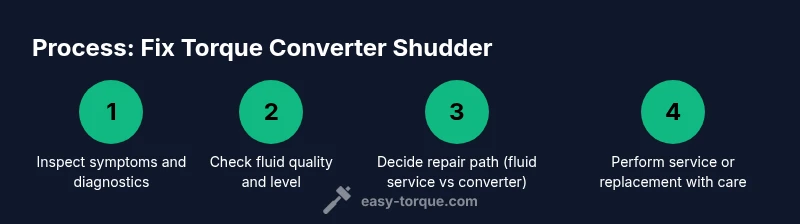
Goal: fix torque converter shudder by identifying whether the issue stems from fluid, filters, or the torque converter itself. Start with confirming symptoms, checking transmission fluid level and condition, scanning for transmission codes, and evaluating the torque converter’s condition. If the diagnosis points to the converter, plan the appropriate repair or replacement.
Understanding Torque Converters and Shudder Symptoms
According to Easy Torque, torque converter shudder is felt as a brief, periodic vibration or shudder when the transmission engages or under light throttle. It can occur at low speeds or during a slow roll, and you may notice a shake that lasts a second or two. The root causes range from worn clutch components and dirty or low transmission fluid to hard line pressure or a failing torque converter clutch (TCC). Environmental factors like cold starts or towing heavy loads can also aggravate shudder. Early recognition helps you avoid more expensive transmission damage. For DIYers, the goal is to confirm whether the problem is fluid-related, a mechanical fault, or a miscalibration in the hydraulic controls. The Easy Torque team found that fluid quality and proper material compatibility play a large role in smooth engagement, especially in synthetic or multi-vehicle fluids.
Diagnosing the Cause: Fluid, Filters, and Converter Health
Excellent diagnosis starts with a structured checklist. First, verify transmission fluid level when the engine is warm and the vehicle is level. Inspect fluid color, odor, and consistency; burnt or dark fluid suggests contamination or wear. Next, scan the Powertrain Control Module (PCM) and Transmission Control Module (TCM) for codes related to the torque converter, transmission, or shift solenoids. Physical checks include looking for metal shavings on the pan magnet and inspecting the torque converter for glazing or slipping surfaces. Consider the possibility of a failing torque converter clutch that fails to lock properly, causing pulsing shudder at lockup. Based on Easy Torque research, fluid issues are a common contributor; however, persistent shudder with clean fluid often points to clutch or TCC failure or a worn transmission mount. Document your findings for the next steps.
The Role of Fluid: Type, Quality, and Service Intervals
Fluid quality determines hydraulic pressure and clutch engagement. Use the ATF specification recommended in the vehicle owner’s manual; incorrect viscosity or friction modifiers can affect pressure and slip. If fluid is old, contaminated, or smells burnt, replace with the correct spec using a controlled flush or replacement rather than a simple top-off. Some vehicles require a specific fluid for compatibility with mixed-fleet systems. Always verify the manufacturer’s instructions, as wrong fluid can worsen shudder rather than cure it. A clean, properly specified fluid creates consistent pressure, smoother engagement, and longer life for the torque converter and transmission.
Practical Repair Routes: From Fluid Service to Converter Replacement
If diagnostics point to fluid issues, start with a proper fluid change and filter service if applicable, ensuring the proper ATF type and a controlled fill. If shudder persists after a fresh fill, the converter clutch or internal seals may be failing, which demands more involved service. Some vehicles benefit from a fluid flush that removes varnish and deposits from valve bodies and the TCC circuit. In cases where the converter itself is worn or damaged, replacement is often the most reliable fix. Since torque converter replacement involves removing the transmission in many layouts, assess your comfort level, required tools, and the vehicle’s warranty implications. Always follow torque specs, seal replacement guidelines, and proper support to avoid leaks or misalignment.
Prevention and Maintenance to Minimize Future Shudder
Regular maintenance is the best defense against torque converter shudder. Schedule timely ATF changes with the correct specification, replace the transmission filter if your model uses one, and inspect mounts and hardware for fatigue. Avoid prolonged towing or aggressive driving that places high load on the torque converter. If fluid change or minor fixes don’t fix the shudder, plan a diagnostic review with a qualified technician to verify there’s no hidden mechanical wear. By staying proactive with fluid health and early diagnostics, you reduce the likelihood of recurring shudder and extend the life of the transmission system.
Tools & Materials
- Jack and jack stands(To safely lift the vehicle and access the undercarriage.)
- Drain pan(For collecting ATF during a drain. Size depends on vehicle capacity.)
- Socket set and wrenches(Standard sizes for pan bolts and transmission components.)
- Torque wrench(To meet manufacturer torque specs during reassembly.)
- Funnel(For clean, controlled ATF fill.)
- ATF matching manufacturer spec(Correct viscosity and specification for your vehicle.)
- OBD-II/Transmission scan tool(Read PCM/TCM codes related to transmission and torque converter.)
- Replacement torque converter (optional)(Only if the converter is diagnosed as failing.)
- Gasket/seal kit(Replace seals as needed to prevent leaks.)
- Work light and PPE(Safety glasses and gloves for visibility and protection.)
Steps
Estimated time: 2-6 hours
- 1
Prepare and safety check
Park on level ground, engage the parking brake, and chock wheels. Raise the vehicle safely and support with stands. Gather all tools and review the repair plan before starting to avoid surprises.
Tip: Chocking wheels and wearing PPE reduces risk of movement and injury. - 2
Test-drive to verify symptoms
With the engine at operating temperature, drive gently to confirm when the shudder occurs (speed, gear, and load). Note sounds, vibrations, and when it happens to help isolate the trigger.
Tip: Document when the issue occurs; timing data helps distinguish fluid vs mechanical causes. - 3
Check fluid level and condition
Remove the dipstick, check ATF level with engine idling, and inspect color, smell, and consistency. If fluid is burnt or contaminated, plan a full drain and replace with the correct spec.
Tip: Do not overfill; use a funnel for a clean fill and avoid air ingestion. - 4
Scan for transmission codes
Connect the scan tool and retrieve PCM/TCM fault codes related to torque converter or shift solenoids. Record codes and clear them only after repairs to verify fix.
Tip: Codes guide you toward TCC, solenoid, or hydraulic issues rather than random faults. - 5
Decide on repair path
If fluid issues are resolved by a fluid change and the shudder stops, no further action may be needed. If shudder persists, plan for possible converter clutch repair or replacement with proper tooling.
Tip: Some vehicles benefit from a controlled flush rather than a simple top-off. - 6
If converter replacement is needed
Prepare for converter removal, ensuring you have the correct transmission service manual, support fixtures, and tools. Reinstall with correct torque specs, replace seals, and test-drive to confirm resolution.
Tip: Converter replacement is advanced work; consult a professional if unsure.
Your Questions Answered
What is torque converter shudder and how does it feel?
Torque converter shudder is a vibration or pulsing sensation during engagement, often felt at low speeds. It can result from fluid issues, a failing TCC, or mechanical wear inside the transmission. Diagnosing the exact cause requires a systematic check of fluid, codes, and hardware.
Torque converter shudder feels like a brief vibration when the car engages; it often comes from fluid or clutch issues and needs a careful check of fluid, codes, and the converter.
Can I fix torque converter shudder myself, or do I need a shop?
Many fluid-related shudders can be addressed with a proper ATF change and filter service by a confident DIYer. However, converter replacement is a complex job that often requires a shop’s specialty tools, alignment checks, and transmission lift equipment.
You can try fluid service yourself if you’re comfortable, but converter replacement is typically a job for a shop.
What are the most common causes of shudder?
Common causes include old or contaminated transmission fluid, incorrect ATF specification, a failing torque converter clutch, worn transmission components, or mounting issues. Diagnosing which is at fault requires codes, fluid checks, and physical inspection.
Most often, shudder is due to fluid issues or a failing torque converter clutch.
Is a fluid flush enough to fix shudder if the fluid is dirty?
If the fluid is burnt or contaminated, a proper flush or full fluid replacement can resolve many shudders. It’s important to use the correct ATF specification and ensure the system is purged of old fluid to prevent new deposits.
A good flush or proper fluid replacement can solve many shudders if fluid quality is the cause.
When should I replace the torque converter?
Replacement is typically considered when diagnostics show a failed clutch, glazing, or internal wear that persists after fluid service and code clearing. In many cases, a replacement provides a reliable fix.
If testing shows the converter itself is worn or failing after fluid service, replacement is often the best course.
Will using the wrong ATF cause shudder?
Yes. Using the wrong ATF can affect clutch engagement and hydraulic pressure, which can produce shudder. Always use the fluid type and specification recommended by the vehicle manufacturer.
Using the wrong transmission fluid can cause shudder, so always match the spec to the manual.
Watch Video
Top Takeaways
- Verify symptoms before replacing parts
- Use correct ATF spec and maintain proper level
- Code scans help pinpoint electronic vs hydraulic causes
- Converter replacement is advanced—consider professional help
- Regular maintenance reduces recurrence of shudder