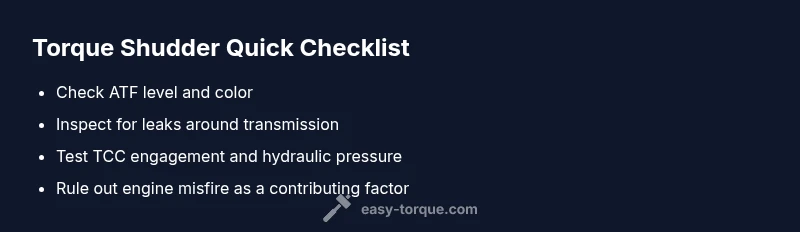
Is Torque Converter Shudder Bad? Diagnosis, Fixes, and Prevention
Is torque converter shudder bad? Learn to diagnose the cause, assess risks, and apply practical fixes to protect your transmission. Easy Torque provides a clear, step-by-step approach for DIYers and pros alike.


A shudder is not normal and often signals a torque converter or transmission issue. The most common causes are contaminated ATF, burnt fluid, or a failing torque converter clutch. Start with a quick ATF check: color and level, then replace or flush if needed. If it persists, schedule a professional diagnosis to inspect the torque converter and clutch packs.
Is torque converter shudder bad? A practical reality check
When a vehicle experiences a shudder during idle or light acceleration, it’s not something to ignore. The phrase is commonly used to describe an uneasy, momentary vibration or a judder that you feel through the vehicle’s drivetrain. In many cases, the symptom points to the torque converter’s clutch engaging and disengaging unevenly, or to fluid issues that prevent smooth lock-up. From a practical standpoint, is torque converter shudder bad? Yes, if it persists, because it can indicate wear, contamination, or inadequate lubrication that may lead to more costly failures if left untreated. Easy Torque recommends addressing it promptly to minimize risk and expense over time.
Quick diagnostic mindset: prioritize safety and basics
Before diving into complex tests, confirm the basics: ensure the vehicle is on a level surface, the parking brake is engaged, and the engine is cool. The very first questions you should answer are: Is the transmission fluid at the correct level? Does the fluid look clean, brown, or burnt? If you have a fluid leak or a burnt odor, those are red flags. The goal at this stage is to rule out simple, fixable causes that can be addressed without expensive repairs.
The usual suspects: common causes of shudder
The most frequent sources of shudder include contaminated or degraded ATF, a failing torque converter clutch (TCC), worn clutch packs inside the transmission, or a misbehaving engine that causes inconsistent torque delivery. Engine misfires, dirty injectors, or ignition problems can masquerade as a torque converter issue, so treat those as potential culprits too. In modern automatics, the lock-up clutch is central to smooth operation, and any slip or failure there causes noticeable shudder.
Step-by-step: quick checks you can do now
- Check ATF level and color: pale red is good; dark, burnt, or burnt-smelling fluid needs replacement.
- Look for ATF leaks around the transmission pan and seals; a leak can lead to low fluid pressure and clutch slippage.
- Check for diagnostic trouble codes (DTCs) using an appropriate scan tool; read any transmission-related codes and clear them after repairs to verify results.
- Test drive in a controlled environment: mimic the symptom (steady speed, light acceleration) and note when the shudder happens. This helps you describe the issue to a tech more precisely.
Diagnosing torque converter health: a structured approach
To distinguish a torque converter problem from engine issues, separate tests are essential. A locked torque converter clutch should engage consistently at higher speeds; if lock-up occurs late or is intermittent, the clutch or the TCC solenoid may be at fault. Check the input and output shaft speeds if you have the tools, and review any fault codes related to transmission fluid temperature, slippage, or torque-converter slip. Use a service manual or trusted guidance to interpret codes accurately.
What to do if ATF checks out but shudder persists
If ATF is clean and at the correct level, but shudder continues, the issue is more likely internal to the torque converter, clutch packs, or related hydraulic components. A controlled ATF flush or fluid replacement can still help if you had some contamination, but if symptoms persist after a fresh fill, plan a professional inspection. Torque converter replacement or rebuild is typically recommended when clutch wear or internal damage is evident.
Additionally, check for mounting issues that can amplify vibration (engine or transmission mounts) since a bad mount will exaggerate normal torque fluctuations.
Safety considerations and how to avoid future problems
Always work with the vehicle safely supported, using wheel chocks and proper PPE. If you’re unsure about hydraulic systems, don’t attempt to disassemble valve bodies or the torque converter housing. Routine maintenance like periodic ATF changes and following service intervals can prevent fluid degradation that leads to shudder. Preventive measures matter, especially for vehicles with higher mileage or aggressive driving habits.
Proactive maintenance tips to reduce shudder risk
- Schedule regular ATF checks and changes using the manufacturer’s recommended fluid type.
- Inspect the transmission cooler lines and radiator for leaks that can degrade ATF quality.
- Monitor for unusual engine or transmission noises and address engine misfires promptly—ignition issues can compound torque converter symptoms.
- Keep service records that note ATF color, mileage, and any shudder events, so you can identify trends over time.
How a professional diagnosis typically proceeds
A technician will first verify the symptom, inspect ATF condition, and run a pressure test to assess clutch engagement. They may perform a TCC engagement test and, if needed, use a transmission scope to view valve body operation. If the shudder is tied to the torque converter, the professional may recommend a torque converter replacement or rebuild, along with possible clutch pack service. A proper diagnosis can prevent additional damage and ensure the correct repair path.
Steps
Estimated time: 60-120 minutes
- 1
Check transmission fluid
Warm up the engine to normal operating temperature, then pull the dipstick and inspect color, aroma, and level. Low or burnt fluid is a red flag and warrants immediate attention. If the fluid is clear and at the correct level, proceed to the next check.
Tip: Always test with the transmission in PARK and the engine running to get an accurate reading. - 2
Inspect ATF condition and leaks
Look for dark, burnt, or burnt-smelling ATF and check seals and cooler lines for leaks. Leaks can cause fluid pressure loss that leads to clutch slip. Note any wetness along the transmission pan, bell housing, or cooler lines.
Tip: Use a flashlight and a clean rag to wipe the dipstick for a real color read. - 3
Top up or replace ATF if needed
If the ATF is degraded or low, perform a controlled replacement or flush per service manuals. Do not mix fluids; use the manufacturer-specified ATF type. Recheck the level after the drive cycle.
Tip: Use the correct torque on the drain plug to avoid leaks. - 4
Test drive to reproduce symptoms safely
Drive in a controlled environment to reproduce the shudder. Note the RPM range, speed, and load conditions. If the shudder only occurs under certain loads, this narrows down the cause to the TCC or hydraulic control.
Tip: Avoid heavy acceleration that could worsen the issue. - 5
Scan for transmission codes
Use an OBD scanner to read transmission-related codes and clear them after repairs. Codes related to torque converter slip or transmission pressure can guide you toward the proper repair path.
Tip: Record codes before clearing so you can compare after work. - 6
Inspect torque converter and hydraulic circuits
If the ATF checks out, inspect the torque converter clutch operation and hydraulic control circuits. A professional may perform pressure tests and observation of valve body operation.
Tip: Don’t force the torque converter to engage—let the system actuate normally. - 7
Decide on repair path
If wear or internal damage is evident, plan for torque converter replacement or rebuild, possibly along with clutch pack service. If issues persist after fluid work, consult a transmission specialist.
Tip: Document all findings and keep a repair plan with cost estimates.
Diagnosis: Shudder during idle or light acceleration in a vehicle with automatic transmission
Possible Causes
- highContaminated or burnt ATF
- highLow ATF level or leaks
- highWorn torque converter clutch or slipping clutch packs
- mediumTorque converter internal damage
- lowEngine misfire or misfiring spark plugs
Fixes
- easyCheck ATF color and level; top up or replace if degraded
- easyPerform ATF flush/replacement to remove contaminants
- mediumInspect torque converter clutch engagement and TCC solenoid function
- hardReplace torque converter or clutch packs if wear/damage is found
- easyAddress engine misfires (spark plugs, coils) if contributing
Your Questions Answered
What does it mean if my car shudders when accelerating?
Shudder during acceleration often points to torque converter or clutch problems, or contaminated ATF. Start with ATF check and a diagnostic scan, then assess the torque converter. If symptoms persist, professional inspection is advised.
Shudders on acceleration usually indicate torque converter or clutch issues or dirty transmission fluid. Start with ATF checks and a diagnostic scan, and see a professional if it continues.
Can a transmission fluid flush fix shudder?
A fluid flush can remove contaminants that cause slip and shudder, especially if the ATF is old or burnt. If the shudder persists after a flush, the issue may be deeper in the torque converter or valve body.
A fluid flush can help if the fluid is dirty, but if the shudder remains, the problem may be with the torque converter or valve body.
Is a torque converter replacement necessary for shudder?
Not always. A replacement is common when the clutch or internal components show wear or damage. Many shudder cases improve with ATF maintenance or clutch repair, but severe internal damage requires replacement.
Not always, but sometimes a torque converter replacement is required if there’s wear or internal damage.
Can engine issues cause similar symptoms?
Yes. Misfires, vacuum leaks, or ignition problems can mimic torque converter shudder. Run a full engine diagnostic to rule out non-transmission causes before committing to torque converter repairs.
Engine problems can mimic a torque converter issue; check engine diagnostics to rule those out first.
What maintenance helps prevent shudder long-term?
Regular ATF checks and changes, ensure proper fluid type, and inspect cooling lines help prevent ATF degradation that leads to shudder. Also monitor engine health and address misfires promptly.
Regular ATF maintenance and checking engine health helps prevent shudder from developing.
Should I drive the car to a shop if it shudders violently?
If shudder is severe or accompanied by a no-start, warning lights, or unusual noises, limit driving and seek immediate professional service to avoid major transmission damage.
If the shudder is severe or the car won’t run properly, stop driving and call a mechanic.
Watch Video
Top Takeaways
- Check ATF first and address color/level immediately
- Persistent shudder usually means torque converter or clutch wear
- A professional diagnosis can save time and money
- Regular ATF maintenance reduces shudder risk