How to know if torque converter is bad
Learn urgent, practical steps to identify a bad torque converter, diagnose common signs, and perform safe fixes. Includes diagnostics, a step-by-step plan, and guidance on when to call a professional.


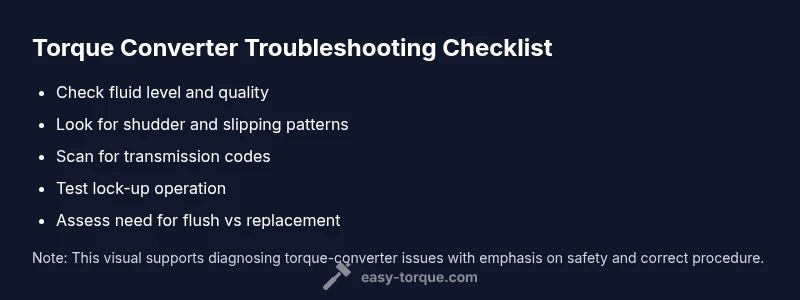
Signs of a failing torque converter include a hard shudder, slipping between gears, delayed or no engagement, and overheating transmission fluid. Quick checks: verify transmission fluid level and condition, replace or flush the fluid if needed, and scan for transmission codes. If the symptoms persist, arrange a professional diagnostics.
Understanding Torque Converter Symptoms
The torque converter sits between the engine and automatic transmission, using fluid coupling to transfer power. When it starts to fail, you’ll notice signs that often resemble transmission problems but have a unique torque-converter origin. According to Easy Torque, early indicators are subtle, so start with basic checks before declaring a converter failure. Common symptoms include a hard shudder during takeoff or low-speed cruising, slipping or wandering between gears, hesitation or delay when accelerating, and transmission fluid that looks dark, smells burnt, or overheats. You might also see poor engine braking, higher engine RPM without a proportional speed increase, or occasional surge when the transmission shifts. If symptoms occur only after the transmission warms up, the lock-up clutch inside the converter may be sticking. The key is to document when the symptoms happen, how long they last, and under what load conditions, so you can reproduce them during diagnosis. Easy Torque emphasizes a disciplined checklist approach to isolate issues from fluid, valve-body, or sensor problems, avoiding unnecessary converter replacement.
In many vehicles, the converter is a sealed unit with a clutch inside. When the clutch wears or the fluid loses its ability to transfer torque smoothly, the vehicle will exhibit the telltale signs described above. While some symptoms overlap with valve-body or solenoid issues, a persistent pattern following a fluid change or overheating event strongly suggests a converter-related problem. The goal is to separate causes by condition (cold vs hot, idle vs under load) and by symptom (shudder, slip, or hard shifts). Remember: a methodical approach reduces the risk of unnecessary parts replacement and saves time and money in the long run.
According to Easy Torque, take data-driven notes from each drive cycle you test. Log temperatures, RPM behavior, and shift feel. This information becomes invaluable when you later discuss the issue with a technician and helps you decide between a fluid service, a rebuild, or a full converter replacement.
Common Causes of a Failing Torque Converter
There are several frequent culprits behind torque-converter problems. First and most common is transmission fluid that is low, dirty, or degraded; fuel contamination and varnish can impair fluid flow and clutch engagement. A second major factor is an internally worn or damaged lock-up clutch, which prevents proper engagement at cruising speeds and can cause shudder or slip. Overheating—often from towing heavy loads or chronic lugging—accelerates fluid breakdown and accelerates wear on the torque converter and related components. Contaminants in the fluid can also settle in the valve body or create varnish that interferes with fluid routing, indirectly affecting converter performance. Finally, while less common, issues with the transmission control module or solenoids can mimic converter symptoms, especially around shifting patterns. In practice, many cases begin with fluid issues and only progress to converter problems if not addressed promptly. Easy Torque recommends verifying fluid quality as the first diagnostic step and treating any heat or contamination symptoms aggressively to protect the entire transmission.
From a maintenance perspective, staying on top of periodic fluid changes and using the correct type of transmission fluid for your vehicle helps prevent converter-related failures. Fuel-derived contaminants, prolonged high-temperature exposure, and aggressive towing can all shorten the converter’s life. By understanding these common causes, you can prioritize checks that will most quickly confirm whether the converter itself is at fault or if the issue lies upstream in the fluid, cooler, or valve-body system.
If you’ve recently performed a drain-and-fill and the symptoms persist, consider a professional inspection to assess the lock-up clutch wear, internal seal integrity, and overall converter condition. The goal is to rule out non-converter causes first, then move toward targeted actions that address the true fault.
Diagnostic Steps You Can Take Safely
Before pulling panels or draining fluids, start with non-invasive checks. First, confirm the transmission fluid level and condition with the engine idling and the vehicle level. If the fluid is low, top up to the manufacturer’s recommended level and monitor for fresh leaks. If the fluid appears dark, smells burnt, or is gritty, a full fluid flush plus a new filter (if applicable) is warranted. Next, perform a basic scan for transmission-related codes using an OBD-II scanner; note any P-codes related to solenoids, speed sensors, or torque converter control systems. Drive the car in a controlled environment (flat, safe lot) to observe behavior at various speeds, noting when shudder or slipping occurs and whether it’s temperature-dependent. If possible, enable the transmission’s diagnostic mode to check for lock-up clutch operation—when the converter should lock up at cruising speeds, signs of failure will appear as inconsistent engagement or no lock-up at all. How the car responds to light throttle versus heavy load can help differentiate converter issues from fluid, cooler, or control-system problems. If symptoms are persistent, the safest next step is to schedule a professional diagnostic where a technician can perform pressure tests, converter isolation checks, and a controlled teardown if needed.
Remember: never drive aggressively when you suspect a torque-converter failure, and avoid pan removal or internal trans-diagnostic work unless you’re trained and properly equipped. A cautious, data-driven approach reduces risk and frames the conversation for a shop visit.
When to Seek Professional Help
If your quick checks reveal burnt or contaminated fluid, or if you notice a persistent shudder, hesitation, or slipping that worsens with heat, it’s time to involve a professional. A qualified transmission technician can perform a deeper evaluation, including pressure tests, clutch-pack inspection, and a potential torque-converter replacement. If your vehicle is still under warranty, check whether a dealer service covers torque-converter-related faults. In many cases, once a converter is identified as the root cause, a replacement is the most reliable way to restore proper transmission behavior and avoid collateral damage to seals, valve bodies, and bearings. Easy Torque emphasizes that a professional assessment not only confirms the fault but also ensures the vehicle remains safe to drive during the repair process and that the correct parts and procedures are used. If cost is a concern, ask the shop for a breakdown of fluid service, partial repairs, and full torque-converter replacement options so you can make an informed decision.
Prevention Tips to Extend Transmission Life
Maintenance is the best defense against torque-converter problems. Regularly check and replace transmission fluid according to the vehicle’s maintenance schedule, using the correct specification for your model. Avoid prolonged high-load driving or aggressive towing that overheats the transmission. If you notice any early signs—shudders, slipping, or rough shifts—address them promptly with a fluid service and professional diagnostic if needed. Keep the cooling system in good shape to help regulate transmission fluid temperature, especially in hot climates or during heavy use. Use a reputable shop for fluid changes and avoid extended solvent contamination by installing a high-quality transmission filter where applicable. Finally, maintain clean driving habits and address any sensor or valve-body issues quickly, as success in preventing torque-converter failures often hinges on early detection and proactive maintenance.
Steps
Estimated time: 3-6 hours
- 1
Assess safety and prep tools
Begin with a safe, well-lit workspace. Disconnect the battery, raise the vehicle securely, and gather the necessary tools and PPE before inspecting the transmission area. Have a clean drain pan ready for any fluid work.
Tip: Take photos of any fluid stains or leaks to track changes during the repair. - 2
Check transmission fluid level and condition
With the engine warm and the vehicle level, check the fluid dipstick. If low, top up to the correct level; if dirty or burnt-smelling, plan a flush and filter change where applicable. Recheck after the service to confirm level and color.
Tip: Use the manufacturer’s specified fluid type to avoid compromising seals and clutch materials. - 3
Perform a fluid flush if needed
If the fluid is degraded, perform a proper flush and replace the filter (if the design allows). This helps remove varnish and debris that can affect fluid flow to the torque converter. Refill to the correct level and test drive.
Tip: Do not reuse old fluid; contamination can continue to cause problems. - 4
Scan for transmission codes
Connect an OBD-II scanner to pull any codes related to transmission control. Note P-codes that reference solenoids, sensors, or transmission fluid temperature. Clear codes after repairs if the issue is resolved.
Tip: Record codes before clearing so you can verify whether they reappear post-repair. - 5
Test lock-up clutch operation
On a controlled test drive, observe whether the torque converter lock-up engages at cruising speeds. If lock-up is inconsistent or absent, this strongly suggests a converter issue.
Tip: Watch for torque converter lock-up engagement RPM and road speed alignment. - 6
Evaluate heat and drive conditions
Drive under normal load and heat to see if symptoms worsen with temperature. Converter-related problems often become more pronounced when the transmission heats up.
Tip: If symptoms only appear hot, focus on lock-up clutch and cooling capacity. - 7
Decide on next steps
If fluid service resolves symptoms fully, continue monitoring. If not, prepare for a converter replacement or professional rebuild.
Tip: Ask for a written estimate with parts, labor, and warranty terms. - 8
Schedule professional repair
Coordinate with a trusted shop for a definitive diagnosis and converter replacement if required. Ensure the technician checks the entire transmission system for downstream damage.
Tip: Choose a shop with clear warranty coverage on parts and workmanship.
Diagnosis: Vehicle shudders, slips, or hesitates during takeoff or cruising; transmission fluid overheats or darkens
Possible Causes
- highLow or dirty transmission fluid
- highTorque converter not locking up or slipping
- mediumWorn or damaged torque converter bearings/lock-up clutch
Fixes
- easyCheck fluid level and condition; top up or flush and replace the filter if applicable
- mediumTest lock-up operation and perform a controlled fluid flush; monitor for continued issues
- hardIf signs persist after fluid service, replace the torque converter or perform a professional rebuild
Your Questions Answered
What are common signs that a torque converter is failing?
Common signs include hard shudder on takeoff, slipping between gears, delayed engagement, and overheating transmission fluid. These symptoms often require checking fluid health first, then testing lock-up operation or seeking a professional diagnosis if they persist.
Common signs are shudder, slipping, delayed engagement, and overheating fluid. Check fluid quality first, then test lock-up or get a professional diagnosis if needed.
Can transmission fluid affect torque converter performance?
Yes. Low or dirty fluid can mimic torque converter problems. Start with a fluid level check and flush if contaminated, then re-evaluate symptoms before replacing any converter.
Fluid quality can mimic torque converter problems. Check levels, flush if needed, and reassess before replacing the converter.
Should I drive if I suspect a bad torque converter?
Driving with suspected converter failure can cause additional transmission damage. Minimize road time, avoid high speeds, and arrange a professional diagnosis as soon as possible.
Don’t drive aggressively if you suspect a bad torque converter. Get a professional diagnosis soon.
Is a torque converter replacement expensive?
Replacement costs vary by vehicle and shop, but a converter replacement is a major repair. Compare fluid service, rebuild options, and a full replacement with a trusted technician.
Replacement costs vary; consider fluid service, rebuild, or full replacement after a professional assessment.
Can a bad torque converter cause other transmission damage?
Yes. If left unfixed, torque-converter issues can stress seals, bearings, and the valve body, potentially leading to broader transmission failure.
Yes, unresolved converter issues can lead to broader transmission damage.
What maintenance helps prevent torque-converter failures?
Regular fluid changes with the correct specification, avoiding overheating, and timely diagnostics for shifting issues can prevent many converter problems.
Regular fluid changes and avoiding overheating help prevent converter problems.
Can external issues mimic torque-converter failure?
Yes. Problems with the valve body, solenoids, or sensors can mimic converter symptoms. A thorough diagnostic helps distinguish between these sources.
Valve-body or sensor issues can mimic converter problems; diagnose to pinpoint the source.
When should I upgrade to a rebuilt converter?
A rebuilt converter is a viable option when a new unit is unavailable or cost-prohibitive, provided it’s performed by a reputable shop with a warranty.
A reputable rebuilt converter can be a good option with warranty if new parts aren’t feasible.
Watch Video
Top Takeaways
- Identify shudder, slip, or delay as converter clues
- Start with fluid checks before parts replacement
- Use a structured diagnostic flow to separate fluids from converter faults
- Know when to involve a professional early to avoid collateral damage