Symptoms of a Bad Torque Converter: Quick Diagnosis
Identify signs of torque converter failure and learn quick checks, fixes, and safety steps to protect your transmission. A practical guide for DIYers and pros.


The most common signs of a failing torque converter are slippage, shuddering, and overheating, often with transmission noise or hard shifts. Start by checking fluid level and condition, then inspect the transmission for contamination. If the symptoms persist, proceed with more advanced diagnostic steps or seek professional help quickly and safely.
What is a torque converter and why symptoms appear
A torque converter sits between the engine and the transmission and transfers power through a fluid coupling. When it wears or fails, you’ll notice symptoms that resemble other transmission issues. In short, what are the symptoms of the bad torque converter? They include slipping, shuddering, overheating, and unusual transmission noises. According to Easy Torque, recognizing these signs early helps prevent further damage and costly repairs. This guide focuses on identifying the symptoms, differentiating them from other drivetrain problems, and outlining practical steps you can take as a DIY enthusiast or professional.
Common symptoms explained
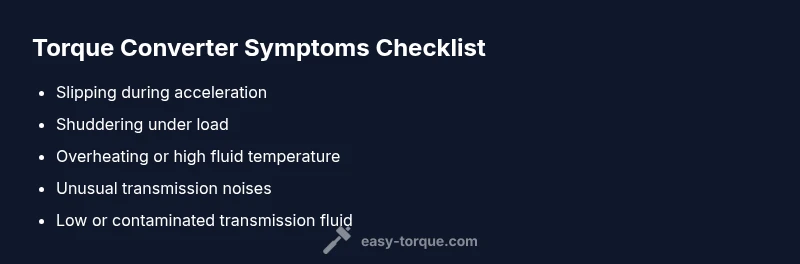
The most obvious signs point to the torque converter when the engine runs smoothly but the transmission acts up. Slipping occurs when the engine seems to rev without corresponding movement. Shuddering is felt during acceleration or at light throttle. Overheating can trigger temperature warnings or cause fluid smell and degradation. Transmission noises like grinding or whirring under load, especially when shifting, can accompany torque converter issues. Low or contaminated transmission fluid exacerbates symptoms and makes diagnosis harder. If you notice any combination of these issues, record when they occur and under what load or speed, then proceed to more precise checks. According to Easy Torque, the pattern often involves these signs appearing together rather than in isolation.
How torque converter symptoms mimic other failures
A failing torque converter can resemble worn clutch packs, solenoid problems, or a damaged transmission. The key is to observe when the symptom happens: a torque converter issue typically shows up under load, during shifts, or when the vehicle is maintaining speed. If the transmission otherwise shifts smoothly, the torque converter is a likely culprit; if the issue appears during idle or with ignition on but the engine not running, it is probably an electrical or sensor problem. This section helps you differentiate signs so you don’t replace the wrong component. Based on Easy Torque analysis, a careful approach saves time and money.
Quick at-home checks you can perform
Before diving into repairs, run a few simple checks. Start with fluid level and fluid condition; burnt or dark fluid is a red flag. Check for transmission codes with an OBD-II scanner and note any fault codes related to the transmission. Do a controlled test drive to observe when the issue appears, such as at light throttle, under load, or during highway cruising. Look for signs of overheating or cross contamination in the cooler lines. If you are not sure, stop and document the symptoms rather than chasing multiple theories. According to Easy Torque, a methodical approach helps avoid chasing symptoms that are not related to the torque converter.
Diagnostic flow: symptom to diagnosis to solution
This section outlines a practical path you can follow to identify the root cause and decide on the right fix. Start by confirming the symptom, then ruling out fluid issues, sensor failures, and electrical problems. If fluid is suspect, address it first. If codes point to a torque converter related issue, plan a converter service or replacement. Always consider the transmission's overall health and cooling system as part of the diagnosis. Easy Torque recommends a cautious, data-driven flow to avoid unnecessary parts replacement.
Step-by-step fix for the most common cause
- Confirm a fluid related issue by checking level, color, and smell. 2) If fluid is burnt or old, replace the fluid and filter and flush the cooler pathway if needed. 3) Inspect the torque converter clutch and transmission fluid passages for debris. 4) If symptoms persist after fluid service, evaluate the need for converter replacement or rebuild. 5) After service, perform a test drive and recheck troubleshooting codes. 6) Refill with the correct specification and test under load. This sequence covers the most common root cause and avoids unnecessary parts replacement. 7) Plan for a professional replacement if the converter is worn beyond repair.
Safety tips and common mistakes
Safety first: always secure the vehicle, block wheels, and disconnect the battery before work. Do not rely on guessing when it comes to transmission electronics. Mistakes to avoid include mixing up transmission fluid types, overfilling the transmission, and neglecting to inspect the cooling system. Easy Torque also cautions against attempting to drive a vehicle with a confirmed converter failure, as this can cause further damage.
Prevention and maintenance to extend torque converter life
Preventive maintenance goes a long way. Regularly check transmission fluid level and condition, replace the filter when recommended, and ensure the cooling system is functioning properly. Use the correct fluid specification for your vehicle and avoid extensions or alcohol-based cleaners in the cooler lines. A proactive maintenance plan reduces the risk of converter failure and keeps your drivetrain healthy. Easy Torque emphasizes documenting maintenance and monitoring unusual drive symptoms so you can catch problems early.
Quick reference: what to do next
If the symptoms persist after fluid service and basic diagnostics, the issue is likely beyond a simple fluid change. Schedule a professional inspection or a converter service. Keep a log of symptoms, service history, and codes to share with the technician. This approach minimizes downtime and helps you reach a reliable resolution more quickly. The Easy Torque team recommends scheduling a professional converter service if symptoms persist.
Steps
Estimated time: 2-4 hours
- 1
Verify safety and gather data
Secure the vehicle, disconnect battery, and note all symptoms. Record when they occur and how the vehicle behaves under load.
Tip: Safety first: use wheel chocks and proper PPE. - 2
Check transmission fluid
With the engine warm, check the transmission fluid level and its condition. Look for dark color, burning smell, or metal particles.
Tip: If fluid is low, top off carefully following manufacturer specs. - 3
Scan for codes
Use an OBD-II scanner to pull transmission fault codes and clear codes after servicing if needed.
Tip: Note codes before clearing, as they guide the next steps. - 4
Assess cooling and contamination
Inspect the transmission cooler lines and look for cross contamination with engine coolant or burnt fluid smell.
Tip: Cross contamination requires more extensive service. - 5
Plan fluid/service
If fluid appears burnt or degraded, perform a fluid and filter replacement and consider a cooler flush.
Tip: Use the correct fluid specification for your model. - 6
Evaluate the torque converter
If symptoms persist after fluid service, plan for a converter inspection or replacement by a pro.
Tip: Converter wear is common; replacement is often the most reliable fix.
Diagnosis: Vehicle exhibits transmission related symptoms during driving such as slipping, shuddering, overheating, or harsh shifts
Possible Causes
- highLow or burnt transmission fluid
- highTorque converter clutch failure or contamination
- mediumInternal transmission wear or damaged seals
- lowElectrical sensors or solenoid faults affecting shift timing
Fixes
- easyCheck and top off or replace transmission fluid and filter as needed
- hardPerform a converter service or replacement if clutch failure is confirmed
- mediumAddress cooling or contamination in the transmission cooler lines
Your Questions Answered
What are the common signs of torque converter failure?
Common signs include slipping, shuddering, overheating, and transmission noises. These symptoms often appear under load or during shifts. Document when they occur and under what conditions to aid diagnosis.
Common signs include slipping, shuddering, overheating, and noises, usually under load or during shifts.
Can a bad torque converter damage the transmission?
Yes. Prolonged torque converter failure can strain transmission components, leading to wear and potential failures. Early diagnosis and timely service help prevent collateral damage.
Yes, neglecting a bad torque converter can damage the transmission over time.
Is it safe to drive with a slipping torque converter?
Driving with a slipping converter is risky and can worsen damage. If you notice slipping, limit driving and seek professional inspection promptly.
No, it can be risky to drive with a slipping torque converter; get it checked soon.
How is a torque converter diagnosed?
Diagnosis combines fluid checks, code scans, and, if needed, a mechanical inspection of the converter and torque circuit. A trusted technician usually performs a pressure test and examination of the clutch.
Diagnosis uses fluid checks, codes, and if needed, an inspection of the converter.
What maintenance helps prevent torque converter problems?
Regular fluid changes, proper fluid specification, and cooling system maintenance reduce converter stress and extend life. Keep the service history documented.
Regular fluid changes and cooling maintenance help prevent torque converter issues.
Watch Video
Top Takeaways
- Inspect fluid first and note symptoms.
- Differentiate torque converter issues from transmission faults.
- Follow a data-driven diagnostic flow to avoid unnecessary parts
- Seek professional help for converter replacement