Is My Torque Converter Bad? Troubleshooting Guide
Urgent, practical troubleshooting to diagnose a bad torque converter, with symptoms, a clear diagnostic flow, step-by-step fixes, and safety guidance for DIYers.


The most likely issue is wear or contamination in the torque converter, often shown as shuddering, slipping, or poor acceleration. Start with safe checks: verify transmission fluid level and condition, scan for codes, and test drive in a controlled way. If symptoms persist, plan a professional inspection and follow the diagnostic flow for a precise fix.
Is my torque converter bad? Quick context
The torque converter sits between the engine and automatic transmission, transferring power through hydraulic fluid. Under normal operation, it provides smooth, seamless acceleration. When it wears or becomes contaminated, you may notice vibrations, shudder, or reduced acceleration. If you're asking 'is my torque converter bad', you're not alone. This guide from Easy Torque focuses on urgent, practical ways to confirm the root cause without guessing. A safe starting point is to check the transmission fluid level and condition, scan for diagnostic trouble codes, and plan a controlled test drive to reproduce symptoms. By following a structured diagnostic flow, you can distinguish torque converter issues from other transmission problems and avoid unnecessary repairs. If you’re uncertain about your safety or the repair complexity, pause and seek professional help.
According to Easy Torque, diagnosing torque converter trouble starts with symptom recognition and a safe baseline test. The steps outlined here help you avoid guessing and move toward a precise fix.
Common symptoms that point to a bad torque converter
- Shuddering or bucking during acceleration at light to moderate throttle can indicate torque converter problems. This isn’t always the transmission; start with fluid checks and codes to rule that out.
- Slipping out of gear or a delayed engagement is a red flag that the torque converter clutch isn’t locking properly or the hydraulic fluid isn’t transmitting pressure correctly.
- Overheating transmission fluid, a burnt smell, or rising fluid temp can accompany converter issues, especially after highway driving or heavy loads.
- Decreased power and sluggish acceleration, particularly when towing or climbing grades, points to energy transfer inefficiency in the torque converter.
- The check engine light or transmission warning light may illuminate if sensors detect abnormal pressure or slip.
How torque converters fail and root causes
Torque converters fail for several reasons: wear on the turbine or stator bearings, contamination from burnt or degraded transmission fluid, or clutch material breakdown inside the converter. Over time, heat accelerates fluid breakdown, reducing lubrication and increasing clearances. External causes may include a failing transmission pump or a clogged cooler line feeding the converter. Understanding these root causes helps you target the right fix rather than replacing parts blindly. According to Easy Torque, most failures start with fluid condition and heat management, then progress to clutch wear if drivers continue to operate in a compromised state.
Safe, initial checks you can perform without disassembly
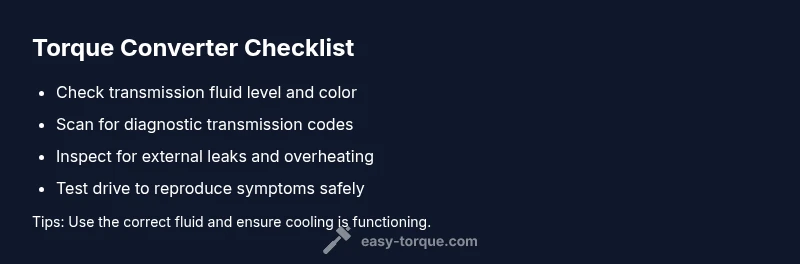
- Verify transmission fluid level when the engine is warmed up and vehicle on level ground; compare against the manufacturer spec. If the fluid is low or looks burnt, plan a proper fluid change before testing further.
- Inspect the transmission fluid color and smell; a dark, burnt odor indicates contamination that can damage seals and clutches, including inside the torque converter.
- Use a scanner to read any diagnostic trouble codes related to transmission and engine control; clear codes and recheck after basic checks.
- Look for obvious leaks around the transmission pan, cooler hoses, or torque converter area. Leaks can cause low pressure, which mirrors converter failure.
- Perform a cautious road test: drive in appropriate conditions, note when symptoms appear, and avoid aggressive acceleration that could worsen the issue.
- Do not attempt extensive disassembly or torque converter replacement unless you are trained and equipped for transmission work; if in doubt, call a pro.
Steps
Estimated time: 2-5 hours
- 1
Prep and safety check
Park on level ground, engage parking brake, and wear eye and hand protection. Gather the tools you’ll need for basic fluid checks and safe inspection. Confirm you have the vehicle service manual or access to a trusted guide.
Tip: Never work under a vehicle supported only by a jack; use jack stands. - 2
Check fluid level and condition
Warm up the engine briefly, then check the transmission fluid level on the dipstick with the engine running or per your vehicle’s procedure. Look for correct level and color—pink or red is good; brown or burnt smell means contamination.
Tip: If fluid looks burnt, plan a full fluid change and a filter replacement if applicable. - 3
Scan for codes
Connect a transmission scanner to retrieve any stored or pending fault codes. Note codes related to hydraulic pressure, torque converter, or solenoid issues for later cross-reference with symptoms.
Tip: Clear codes after basic checks and recheck to see if issues recur. - 4
Controlled test drive
Take the vehicle on a safe test route under controlled acceleration to reproduce symptoms. Note exactly when the shudder, slip, or lack of power occurs and under what load or speed.
Tip: Avoid aggressive driving that could worsen potential damage. - 5
Inspect for leaks and cooling issues
Visually inspect the transmission area for fresh leaks and check cooler hoses for cracks. Ensure the cooling system, radiator, and lines aren’t contributing to overheating of the transmission fluid.
Tip: Coolant leaks into the transmission can mimic converter problems. - 6
Decide on repair path
If symptoms persist after safe checks and fluid service, plan professional assessment for possible torque converter replacement or transmission rebuild. Document symptoms and weather conditions to aid diagnosis.
Tip: Request a written estimate and ask about warranty coverage.
Diagnosis: Vehicle shudders or slips during acceleration, or experiences reduced power
Possible Causes
- highWorn or damaged torque converter clutch/pump assembly
- highLow, dirty, or burnt transmission fluid
- mediumContaminated cooler lines or transmission fluid overheating
- mediumFaulty transmission control solenoids/valve body
- lowInternal transmission wear or damage
Fixes
- easyCheck fluid level and condition; drain and refill with the correct spec, and replace the filter if applicable
- mediumFlush transmission fluid and replace filter to remove contaminated fluid
- hardReplace torque converter or rebuild the transmission if wear/contamination is severe
- mediumInspect valve body/solenoids and seals; perform necessary repairs
- easyRepair external leaks and ensure the cooling system maintains proper temperatures
Your Questions Answered
What are the most common signs that my torque converter is failing?
Common signs include shuddering during acceleration, slipping between gears, overheating transmission fluid, reduced power, and warning lights. These symptoms warrant a fluid check and codes scan before expensive repairs.
Look for shudder, slip, or poor acceleration; check codes and fluid, then seek professional help if unresolved.
Can a failing torque converter damage the rest of the transmission?
Yes. A failing torque converter can cause excessive heat and pressure that stress the transmission and seals, potentially leading to broader transmission damage if left unchecked.
Yes, it can damage other transmission components if ignored.
Should I drive my car if I suspect a bad torque converter?
If you suspect a failure, avoid aggressive driving and consider towing or professional transport to prevent further damage. Do not push the vehicle aggressively.
Avoid driving hard if you suspect a faulty torque converter; get it checked before continuing.
How long does a torque converter replacement take?
Replacement or rebuild is a significant job and can take several hours depending on the vehicle. Plan for a lengthy service and possible related component replacements.
It’s a major repair that can take a while; you’ll want a professional to estimate the time.
Is a torque converter problem the same as a transmission problem?
Not exactly. The torque converter is part of the transmission, but converter issues can mimic or cause transmission problems. Accurate diagnosis relies on fluid, codes, and tests.
They’re related but not the same; diagnose with tests to confirm.
What maintenance helps prevent torque converter issues?
Regular fluid changes with the correct spec, keeping the cooling system in good shape, and addressing small transmission issues early help prevent torque converter problems.
Keep up with fluid changes and cooling system maintenance to prevent issues.
Watch Video
Top Takeaways
- Identify symptoms early to prevent further damage
- Start with fluid checks before deeper diagnosis
- Use the proper fluid and cooling to protect the converter
- Only perform advanced repairs if you’re trained or with professional help
- Document symptoms to streamline professional service