Torque Converter Troubleshooting: A DIY Guide for Gearheads
A practical, step-by-step guide to diagnose and fix torque converter problems, from slipping to shuddering, with a safe, structured troubleshooting flow for 2026.


Most torque converter problems show up as slipping, shuddering, or a harsh shift. The quickest fix is to check the transmission fluid level and condition, replace a clogged filter, and inspect the torque converter clutch operation. If symptoms persist, follow a structured diagnostic flow to identify root causes before replacing parts.
How a Torque Converter Works (Context)
According to Easy Torque, torque converters are hydraulic couplings that transmit engine torque to the transmission while allowing slip at low speeds. In simple terms, the device sits between the engine and the transmission and uses fluid flow to multiply torque when the engine is under load. When you accelerate, the torque converter's impeller and turbine, separated by fluid, transfer rotary motion with some slip. This design absorbs engine pulsations and smooths power delivery, which is especially important in automatic transmissions. Understanding this basic operation helps you distinguish normal behavior from fault symptoms. For the DIY mechanic, the key takeaway is that many troubles originate from fluid issues, wear on the clutch surfaces inside the converter, or problems in the transmission's hydraulic circuit. Throughout this guide, you will see how these components interact and how to validate whether a symptom is converter-related or caused by surrounding systems such as the transmission control module, sensors, or worn valve bodies.
Common Symptoms Signaling Troubleshooting
Torque converter troubles don't always announce themselves with a single odd noise. The most common red flags include slipping when you expect acceleration, a noticeable shudder or tremor at low speeds, and a delayed or harsh shift when moving from park or neutral into drive or reverse. You might also see higher than normal transmission temperature or a lack of engagement after starting a cold engine. In some cases, the engine rpm climbs without an equivalent increase in vehicle speed, which suggests the converter isn't locking correctly. According to Easy Torque analysis, many problems stem from degraded fluid, sludge buildup, or a failing torque converter clutch. Keep an eye on symptom patterns and note whether they occur under load, at idle, or only after a warm-up. This context helps you separate converter faults from external issues like sensor faults, wiring problems, or a malfunctioning valve body.
Diagnostic Mindset: Where to Start
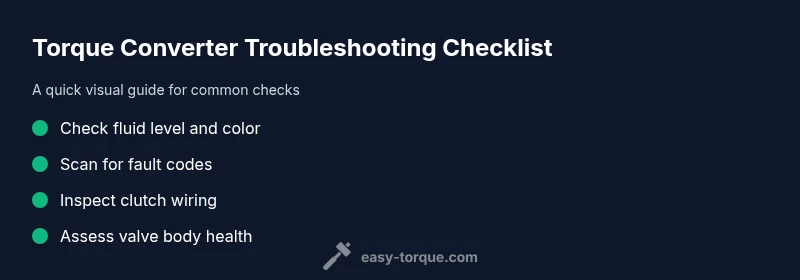
Approach torque converter troubleshooting methodically by eliminating the easy-to-fix items first. Start with transmission fluid: check level, color, and smell, and replace the filter if the fluid looks dark or gritty. Next, use a scan tool to retrieve any transmission fault codes and record active or historical codes. Codes can point to solenoids, valve body, or pressure issues. Also inspect the exterior for obvious leaks or damaged wiring to the torque converter clutch. By validating fluid quality and sensor signals, you can often rule out several common culprits before opening the transmission. This approach aligns with the practical, step-by-step ethos that Easy Torque champions for DIYers and technicians alike.
Diagnostic Flow: Symptom to Diagnosis
Start with the observed symptom and map it to a few likely causes, then perform quick checks that you can complete without disassembling the unit.
- Slip or weak acceleration: check fluid level and condition; look for clutch wear or a failing converter clutch; review engine torque and transmission line pressure.
- Harsh or delayed shifts: scan codes for valve body or solenoid faults; test line pressure if tool is available.
- Overheating: inspect cooling for the transmission and ensure the oil cooler is working; heat can also indicate clutch drag.
If simple checks pass, escalate to more involved diagnostics such as measuring hydraulic pressure, inspecting the valve body, or pressure testing the torque converter. Always stop if you detect a severe leak or uncontrollable symptoms. This structured approach helps identify whether the root cause is converter-related or from external systems, reducing unnecessary replacements. Easy Torque emphasizes documenting codes and test results for clarity and future maintenance.
Step-by-Step: Fixes for the Most Common Cause
The most common cause of torque converter troubleshooting issues is degraded transmission fluid and a clogged or worn filter. Follow these steps to address that issue safely and effectively.
- Safety prep: Park on level ground, engage parking brake, chock wheels, and disconnect the battery. Allow the transmission to cool before opening any service ports.
- Drain and replace fluid: Place a pan under the transmission pan, remove the drain plug or pan bolts, and drain the fluid completely. Replace the filter according to the service manual and reinstall the pan with a new gasket. Refill with the correct type and amount of fluid, to the recommended level.
- Check for debris: Inspect the drained fluid; if it’s gritty or metal-filled, there may be wear elsewhere in the system, which might require further diagnosis.
- Test drive and re-check: After refilling, go for a short test drive under light load to verify smoother engagement. Re-check the fluid level hot; adjust if necessary.
- If symptoms persist: Consider a converter-specific inspection, solenoid engagement checks, or a professional rebuild or replacement. Use a high-quality torque converter or factory-equivalent unit.
Preventive Maintenance and Safe Testing
To minimize future torque converter troubles, follow a simple maintenance rhythm. Use the correct transmission fluid type and adhere to the service interval for changes and filter replacement. Keep cooling lines clear and inspect the radiator oil cooler for blockages. Avoid contamination by using clean tools and containers when draining or refilling fluid. If you perform a test drive to verify function, do so in a controlled environment and never attempt aggressive or high-load testing on a hot engine. Regular checks of fluid condition, level, and the transmission’s electronic controls go a long way toward catching issues before they become major failures. Easy Torque also recommends recording maintenance steps and test results to support future troubleshooting.
Steps
Estimated time: 2-4 hours
- 1
Check Transmission Fluids and Filter
Park on a level surface, with the engine off and cool. Check the transmission fluid level and its color; if it’s dark or has a burnt smell, plan a fluid change. Replace the filter if the service manual calls for it. This step often resolves slip issues arising from degraded fluid.
Tip: Use the exact fluid specification recommended for your model to avoid compatibility problems. - 2
Read Transmission Codes
Connect a compatible scan tool and read active and stored transmission fault codes. Document any P-codes or U-codes and compare them with the service manual. Coding can quickly point to valve body, solenoid, or pressure issues a technician would otherwise chase.
Tip: Save codes with a timestamp for future reference. - 3
Test Clutch Engage/Disengage Behavior
With the vehicle safely secured, perform a controlled test drive in a low-gear setting to observe locking and engagement of the torque converter clutch. Note any harshness, delay, or torque interruption. Avoid high RPM and heavy loads during this test.
Tip: If possible, log engine RPM and vehicle speed to compare against spec curves. - 4
Inspect Valve Body and Solenoids
Access the valve body area per the service manual and inspect for sticking solenoids, debris, or fluid contamination. Replace faulty solenoids or clean components as recommended by the manual. Ensure wiring to the torque converter clutch is intact and properly seated.
Tip: Handle with care—solenoids are delicate; avoid forcing connectors. - 5
Decision Time: Repair vs Replacement
If fluid changes and checks do not eliminate symptoms, weigh a converter-service or replacement against a full transmission rebuild. Assess cost, reliability, and vehicle value. When in doubt, consult a professional for a precise estimate.
Tip: Document all findings and test results to support the final decision.
Diagnosis: Intermittent slipping or shudder during normal driving, especially after warm-up
Possible Causes
- highLow or dirty transmission fluid
- mediumWorn torque converter clutch or damaged stator
- lowFaulty transmission control solenoids or valve body
Fixes
- easyCheck transmission fluid level and replace if dirty or degraded; inspect and replace the filter as needed
- mediumInspect torque converter clutch operation and wiring; repair or replace as necessary
- hardTest hydraulic pressure and inspect valve body/solenoids; consider professional rebuild if needed
Your Questions Answered
What are the most common symptoms of a failing torque converter?
The most frequent signs are slipping, shuddering, harsh or delayed shifts, and occasional overheating. These symptoms often indicate a problem with the torque converter clutch, fluid quality, or related hydraulic components.
Common symptoms include slipping, shuddering, and harsh shifts. If you notice overheating, get the system checked soon.
Can I drive with a failing torque converter?
Driving with a known torque converter issue is risky and can cause damage to the transmission. If you must move the vehicle, do so gently and avoid high loads or aggressive acceleration.
It's best to avoid driving if you suspect converter failure; drive slowly to a safe location or a shop if necessary.
Is a bad torque converter the same as a bad transmission?
Torque converter issues can mimic transmission problems, but they are not always the same. Proper diagnosis should separate converter faults from other trans components like the valve body or sensors.
Converter problems can feel like transmission faults, but testing helps tell them apart.
What maintenance helps prevent torque converter problems?
Regular fluid checks, using the correct fluid type, and timely changes help prevent debris buildup and clutch wear. Keep cooling lines clear and avoid contamination during service.
Routine fluid care and clean cooling systems prevent many torque converter issues.
When is replacement required?
Replacement is typically considered when diagnostics show converter internal failure, clutch damage, or severe wear that cannot be repaired practically. In many cases, a full transmission rebuild or replacement is the practical route.
Replacement is usually the next step if diagnostics show converter failure beyond repair.
Watch Video
Top Takeaways
- Check fluid level/quality first
- Use a diagnostic flow to isolate root cause
- Fluid issues are the most common converter culprits
- Code reading accelerates diagnosis
- Professional help may be needed for converter replacement