Can Torque Converter Cause Slipping? Diagnosis and Fix Guide
Learn the causes, symptoms, and proven fixes for torque converter slipping. A practical, urgent guide from Easy Torque with step-by-step checks and maintenance tips.


The most common cause of torque converter slipping is worn lockup clutch or contaminated transmission fluid, which fails to lock properly under load. Quick fix steps: check fluid level and color, replace old or degraded fluid, and scan for codes. If slipping continues after fluid service, the torque converter or clutch pack may need replacement or a rebuild.
Why torque converter slipping matters
The torque converter is the hydraulic coupling that transmits engine torque to the transmission. When it slips, you lose acceleration, you may see higher engine RPM without a corresponding increase in vehicle speed, and fuel economy plummets. Repeated slipping also generates excess heat that can degrade transmission fluid and wear internal components. According to Easy Torque, addressing slip early protects the drivetrain and avoids costly repairs down the line. This section explains what slipping is, why it happens, and how to approach fixes with a practical, DIY-friendly mindset while recognizing when to call a professional.
From a performance perspective, slip reduces torque transfer efficiency and can cause heat burnout in the fluid. In some cases, the issue is isolated to the lockup clutch inside the converter; in others, external hydraulic pressures or valve-body problems contribute. Understanding these differences helps you choose the right fix and avoid unnecessary parts replacement. Easy Torque’s guidance emphasizes methodical testing, using the correct transmission fluid, and following torque specifications when reassembling.
Safety note: never perform fluid work on a hot transmission. Allow cooling and use proper drain pans. If you smell burnt fluid or see metallic debris in the fluid, stop driving and seek professional help to prevent collateral damage.
Common causes of torque converter slipping
Slipping can result from several root causes, and the easiest fixes address the simplest symptoms first. The most frequent culprit is a worn or contaminated lockup clutch inside the torque converter. When the lockup mechanism doesn’t engage cleanly, you’ll feel or hear slipping during steady acceleration. Low or degraded transmission fluid can fail to transmit torque smoothly, especially under load or heat. Overheating from towing, heavy city traffic, or restricted cooling reduces fluid effectiveness and accelerates wear. A clogged transmission filter or a dirty valve body can create improper hydraulic pressure that causes inconsistent shifts and perceived slip. Finally, misalignment or loose bolts connecting the converter to the flexplate can permit movement and slip under higher torque loads. Routine checks, including fluid quality and drivetrain mounting integrity, are an effective early step in preventing these problems.
Symptoms to watch for early warning signs
Common symptoms include a soft or shuddering launch, high engine RPM with little acceleration, or a noticeable “slip” sensation when the car should be gaining speed. You may also notice abnormal heat buildup under the hood, a burning transmission fluid smell, or diagnostic trouble codes related to transmission performance. If you observe these signs, avoid aggressive driving; perform a check soon to prevent further damage. Pay attention to whether symptoms occur only when hot or under heavy load, as this helps isolate fluid-related causes from mechanical wear. Quick checks—visual fluid color, smell, and level—can provide a first, low-cost indicator of whether a fluid issue is present.
Diagnostic approach and workflow
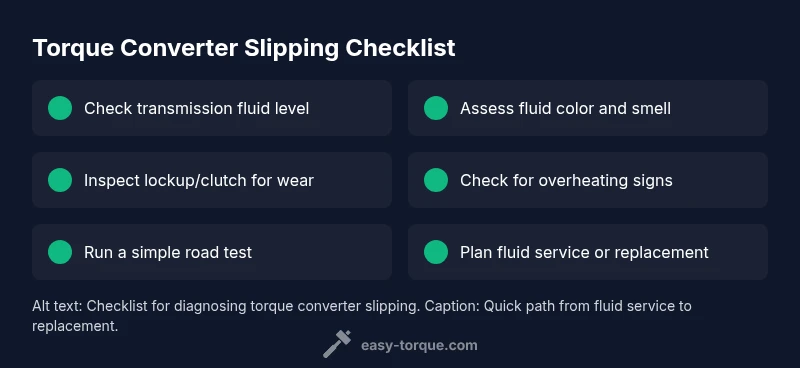
A methodical approach helps distinguish a slipping torque converter from other transmission issues. Start with the simplest check: examine transmission fluid level, color, and odor. If the fluid looks dark or burnt, flush and replace it with the manufacturer-specified fluid. Next, review any stored codes with a basic scan tool and perform a controlled road test to observe the slip behavior across gears. If slipping persists after the fluid service, the converter clutch or the entire unit may be at fault, requiring more advanced tests such as a converter stall test or hydraulic pressure check. This section outlines a practical, decision-driven process that balances speed with thoroughness.
Key diagnostic questions include: Is fluid fresh and matching the spec? Are there unusual codes or sensor readings? Do symptoms change with engine temperature? Answering these helps you determine whether a fluid service will resolve the issue or if a converter replacement is necessary.
Fix paths: from fluid service to replacement
The most common fix begins with a fluid service—drain, flush, and refill with the correct fluid type. If symptoms persist, the converter clutch is typically the culprit and replacement of the torque converter or clutch pack is the usual remedy, sometimes paired with a valve-body service. In some cases, minimizing load or avoiding aggressive acceleration can temporarily reduce slip while awaiting parts or a professional diagnosis. Always follow safety procedures, disconnect the battery when removing panels or wiring, and ensure you’re using the right torque specs for reassembly. This block focuses on practical, step-by-step decision making—from fluid service to full converter replacement—so DIY enthusiasts can plan effectively.
Prevention and maintenance tips
Maintain a clean cooling system for the transmission and adhere to a regular fluid-and-filter service schedule. Use the exact transmission fluid type recommended by the manufacturer and avoid mixing fluids. Regularly check fluid level, especially in extreme temperatures or during heavy towing. Inspect converter bolts and ensure the flexplate is properly torqued during major service work. For DIY tasks, keep a torque wrench handy, follow the service manual’s specs, and recheck all fasteners after the test drive. Consistent maintenance reduces slip risk and extends transmission life.
When to seek professional help
If you cannot confidently diagnose or your vehicle exhibits warning lights, shuddering under load, or unusual noises, stop driving and consult a licensed technician. A slipping torque converter can cause heat buildup and damage to the transmission, so professional diagnosis with pressure tests and fluid analysis is recommended. A qualified shop can perform a controlled hydraulic test, verify the converter’s stall characteristics, and determine whether a full replacement is required.
Steps
Estimated time: 2-6 hours
- 1
Confirm the symptom and document context
Note when slip occurs: cold vs hot, at steady throttle or during heavy acceleration, and whether the issue improves or worsens with load. Record any warning lights and recent service history.
Tip: Keep a simple symptom log and a few test drive notes to share with a tech. - 2
Check fluid level and condition
Park on level ground, run the engine to operating temperature, and check the transmission fluid level per the manual. Look for color that is translucent with a light berry-brown hue and a burnt smell indicates degraded fluid.
Tip: If fluid is low, top off with the correct spec and note if the level drops again after a short drive. - 3
Perform a basic diagnostic test
Use a scan tool to read any transmission codes and perform a controlled test drive to observe shifts and slip behavior. Check for abnormal hydraulic pressure readings if you have access to a pressure gauge.
Tip: Document any codes and test results for the technician; this speeds up diagnosis. - 4
Decide on service path
If fluid looks poor or codes point to fluid/valve issues, start with a fluid service. If slip persists after fluid service, plan for converter clutch replacement or a full converter rebuild.
Tip: Avoid guessing; a fluid service is inexpensive and often effective for fluid-related slip. - 5
Execute repair and verify
Install the correct torque converter or clutch kit if required, reseat mounting hardware to spec, and refill with fresh fluid. Test drive again to confirm the problem is resolved.
Tip: Always torques bolts to spec and recheck fluid levels after the test drive.
Diagnosis: Vehicle shows slipping symptoms during acceleration or gear shifts
Possible Causes
- highLow or degraded transmission fluid
- mediumWorn torque converter clutch
- lowTorque converter not fully engaging due to misalignment or damage
- lowInternal transmission wear or valve body issue
Fixes
- easyCheck and top off transmission fluid (and replace if burnt or degraded)
- hardReplace torque converter clutch or torque converter
- mediumInspect torque converter bolts and flexplate alignment
- mediumFlush transmission and inspect valve body for wear
Your Questions Answered
Can a slipping torque converter cause transmission damage?
Yes. Persistent slip can overheat fluids and wear internal components, leading to accelerated transmission wear or failure if not addressed.
Yes. Continuous slipping can cause overheating and wear, so you should get it checked promptly.
What are common signs of torque converter slipping?
Signs include hard or soft launches, high engine RPM with little speed gain, shuddering during acceleration, and occasional transmission codes related to performance.
Watch for harsh launches, high RPM with little move, and occasional shuddering.
Is it safe to drive a car with a slipping torque converter?
Driving with slip is not recommended. It risks further damage and overheating. Limit driving and seek a professional diagnosis as soon as possible.
No, it’s risky to drive; get it checked promptly.
What fixes are available for slipping torque converter?
Fix options range from a fluid service to replacement of the torque converter or clutch pack, and sometimes a valve-body service. The correct path depends on diagnosis and the vehicle.
Options include a fluid service or converter replacement, based on diagnosis.
How long does a torque converter replacement take?
Replacement can vary by model and shop, often taking several hours to a full day. Plan for downtime and a professional assessment.
Replacement may take several hours; consult your shop for an ETA.
Watch Video
Top Takeaways
- Check fluid first; most slips are fluid-related
- Converter clutch wear is a common root cause
- Diagnostics start simple and escalate as needed
- Professional help protects against costly damage