How to Tell If Your Torque Converter Is Slipping: A Troubleshooting Guide
Urgent guide to identifying torque converter slipping with practical tests, safe fixes, and preventative maintenance for DIY mechanics and automotive enthusiasts.


Most likely signs of a slipping torque converter are rough engine RPM changes, shuddering at takeoff, and sluggish acceleration. Quick checks: verify transmission fluid level and condition, inspect for burnt smell, and ensure the fluid is the correct type. If symptoms persist after a fluid service, the converter clutch or turbine may be slipping and require professional testing.
What does it mean when the torque converter is slipping?
A torque converter is the fluid coupling between your engine and transmission. When it slips, it fails to lock the engine and transmission together smoothly, causing the engine to surge or RPMs to rise without a proportional increase in vehicle speed. You’ll often notice a mismatch between how hard you push the accelerator and how quickly the car actually responds. The phrase how to tell if torque converter is slipping puts this dissonance into plain terms: the engine sounds like it’s working harder, but the car isn’t delivering power in a consistent, predictable way. In Easy Torque terms, slipping usually points to clutch wear inside the converter, contaminated or low transmission fluid, or a malfunctioning valve body that prevents proper lockup. Understanding this helps you triage safely and decide whether you can proceed with basic checks or need a pro.
Key takeaway: slippery behavior emerges during shifts or takeoff, not at constant cruising, and it often couples with heat or fluid issues.
Common symptoms to watch for
There are several telltale signs that your torque converter may be slipping. Start with the most obvious: fluctuating RPMs that don’t match speed, especially during acceleration or when moving from a stop. A noticeable shudder or bucking at low to mid speeds is another red flag. You might also see poor acceleration or delayed response when you press the gas, followed by rapid RPM rebound when the converter finally locks up. Transmission fluid that is dark, burnt-smelling, or low can aggravate slipping because proper clutch engagement relies on clean, correct fluid. Finally, a priority signal is if the check engine light or transmission warning light comes on, as modern vehicles store codes related to torque converter lockup, pressure, and solenoid operation. These symptoms warrant careful evaluation rather than casual driving.
Pro tip: keep a log of when you notice issues—temperature, speed, gear, and load. That data helps you and a technician pinpoint the root cause more quickly.
Why slipping often starts with fluid issues and heat
Fluid quality and temperature are central to torque converter performance. Fresh, correct-spec transmission fluid maintains hydraulic pressure that enables smooth clutch engagement. Over time, fluid degrades, becomes contaminated by metal or varnish, or simply migrates to incorrect levels due to leaks. Heat accelerates fluid breakdown and can warp internal components. When the converter overheats, it loses lockup efficiency, leading to slipping sensations and higher fuel consumption. In many cases, replenishing or replacing the fluid, along with a filter change, resolves the issue if the converter’s internal clutch hasn’t suffered irreversible wear. However, if problems persist after a fluid service, more invasive fixes or converter replacement may be required.
Bottom line: address fluid and heat first, then test lockup behavior with a professional scan if self-diagnosis remains inconclusive.
Safe home checks you can perform before pulling the pan
Before removing the transmission pan, perform non-invasive checks that can yield quick clues:
- Check fluid level and fluid color on the dipstick; if low or burnt, top up with the correct fluid and schedule a change.
- Inspect for external leaks around the transmission cooler lines, pan gasket, and filter housing.
- Verify you’re using the manufacturer-recommended fluid specification and that no incompatible fluid has been introduced.
- Ensure the transmission’s electrical connectors to the valve body and solenoids are clean and fully seated. If you’re not seeing clear improvement after these checks, proceed to more advanced diagnostics or a professional evaluation.
Diagnostic flow: symptom leads to diagnosis (overview)
In this guide, we move from symptom observation to diagnosis using a practical flow. Start with common, easy fixes (fluid level, filter) and escalate to pressure tests, solenoid checks, and, if needed, converter assessment. Remember: the goal is to confirm whether the slipping originates in the torque converter clutch, the transmission, or fluid systems. Use a structured approach to avoid guessing and avoid driving aggressively if slipping continues, as prolonged wear can lead to transmission failure.
Step-by-step pathway to fixes (most common cause first)
This section provides the concrete sequence to address slipping caused by oil/fluid issues and converter lockup problems. It covers safe fluid service, filter replacement, spacer seals, and the subtle check for torque converter lockup solenoid operation. Each step is designed to minimize risk to the driveline while delivering a clear path toward restoration of proper lockup action. If you reach a hard fault or warning codes persist, consulting a qualified technician is recommended to avoid further damage.
Maintenance and prevention: keeping torque converter healthy
Prevention revolves around routine fluid changes at recommended intervals, using the correct viscosity and specification, and keeping the transmission cooling system clean. Regular inspections of the torque converter area, and listening for abnormal noises, help catch issues before they escalate. If you frequently drive in heavy traffic, towing, or high-load conditions, consider more frequent fluid services and temperature monitoring. A proactive maintenance plan reduces the likelihood of slipping and extends the life of the drivetrain.
Safety notes and when to seek professional help
Torque converter issues can quickly evolve into major transmission failures. If you notice sudden loss of power, severe shuddering, or a SUV/Truck warning light blinking, stop driving and call a tow, especially if the vehicle loses motive power or exhibits grinding noises. Handling internal components requires specialist tools and transmission-specific fluid; attempting a repair beyond basic fluid service can risk injuries and additional damage. When in doubt, contact a certified technician promptly.
Steps
Estimated time: 45-75 minutes
- 1
Verify symptoms and safety
Document when slipping occurs and ensure the vehicle is in a safe state for inspection. Check for warning lights and note driving conditions that precede the issue. Do not continue driving if the car loses motive power or makes abnormal noises.
Tip: Take note of ignition timing and ambient temperatures; these can influence fluid performance. - 2
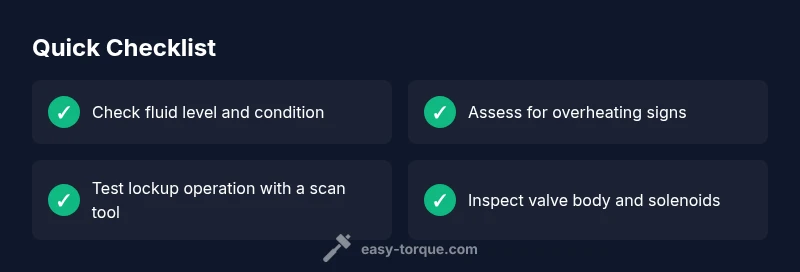
Check transmission fluid level and condition
With the vehicle warmed up, check the dipstick level and color. If low, top up with the recommended fluid; if dark or burnt, plan a full drain-and-fill and consider a filter change. Recheck after running through gears.
Tip: Use the manufacturer-specified fluid type to avoid fluid incompatibility. - 3
Inspect for external leaks and cooling issues
Look for leaks around the pan, seals, and cooler lines. Verify the transmission cooler is functioning and that there is no coolant contamination in the transmission fluid, which can mimic slipping symptoms.
Tip: If you see blue coolant in the fluid, stop and diagnose a coolant leak immediately. - 4
Test for proper lockup operation
With a scan tool, monitor torque converter lockup signals during steady cruise; check if the converter is fully locking at appropriate speeds. If lockup is irregular, the clutch or control solenoid may be failing.
Tip: Do not attempt to force lockup by towing; test via diagnostic software where possible. - 5
Decide on next steps based on findings
If fluid and lockup tests pass but slip persists, prepare for a converter replacement or rebuild by a professional. If issues point to the valve body or solenoids, service those components first before replacing the converter.
Tip: Keep a maintenance log and plan cost-effective options with a shop.
Diagnosis: Vehicle shows slipping or shuddering during takeoff and gear changes
Possible Causes
- highLow or degraded transmission fluid
- mediumIncorrect fluid specification or contamination
- mediumTorque converter clutch wear or failure
- lowSolenoid or valve body issues
- lowOverheating transmission
Fixes
- easyCheck and top up fluid to correct level; replace if burnt or contaminated
- easyFlush or drain-and-fill with the correct fluid specification; replace the fluid filter
- hardTest torque converter lockup and clutch operation; replace converter if clutch shows wear
- mediumScan for transmission codes; test valve body and solenoids; repair or replace as needed
- easyAddress overheating: ensure cooler lines are clear; inspect radiator and transmission cooler
Your Questions Answered
What are the most common signs of a slipping torque converter?
Rough RPM changes, shuddering at takeoff, and slow or laggy acceleration are typical signs. Fluid issues and heat also contribute to slipping symptoms.
Common signs include RPM fluctuations, shuddering on takeoff, and delayed acceleration. Check the fluid and heat as possible causes.
Can a slipping torque converter damage the transmission?
Yes. Prolonged slipping can wear the clutch and turbine components, leading to transmission damage if not resolved promptly.
Yes. If left unchecked, slipping can wear internal parts and cause transmission damage.
How much does_fixing a slipping torque converter typically cost?
Costs vary widely depending on the cause. Fluid service is affordable, while converter replacement is significant and should be evaluated with a professional.
Costs vary a lot; fluid service is cheaper, converter replacement is more expensive and requires a shop.
Is it safe to drive a car with a slipping torque converter?
Driving a car with suspected slipping is risky. If you notice persistent slipping, limit road use and seek professional diagnostics.
It's risky to drive long with slipping. Get it checked soon to avoid further damage.
What tests do technicians run to diagnose torque converter slipping?
Technicians use scan tools to check lockup, monitor transmission pressures, inspect valve bodies, and, if needed, perform fluid analysis and pressure tests.
Techs use scanners to check lockup and pressures, and may test the valve body and fluid.
Can aftermarket torque converters fix slipping symptoms?
An aftermarket converter can help in performance-focused builds, but reliability varies. Always consult a professional for compatibility and warranties.
Aftermarket converters can help, but compatibility matters—talk to a pro first.
Watch Video
Top Takeaways
- Inspect fluid first; it is central to converter performance
- Differentiate slipping from other transmission issues
- Use safe, structured diagnostics before component removal
- Seek professional help for clutch wear or complex diagnoses