Does Torque Converter Shudder Damage Transmission? Troubleshooting Guide
Urgent guide on whether torque converter shudder damages the transmission, with diagnostics, safe tests, and repair paths for DIYers and pros.


Does torque converter shudder damage transmission? In many cases, brief shudder is a warning sign that should not be ignored, but the risk depends on duration and severity. A quick fix is to check ATF level and condition, perform a basic diagnostic scan, and plan fluid service or clutch inspection if needed. If symptoms persist, professional evaluation is recommended.
Understanding the risk: does torque converter shudder damage transmission
Many DIYers ask, does torque converter shudder damage transmission? The short answer depends on how long the symptom lasts and how aggressively you drive. The torque converter sits between the engine and the automatic transmission, allowing slip and torque transfer through fluid coupling. A persistent shudder or judder during acceleration or under load can indicate trouble with the torque converter clutch, a dirty or low transmission fluid, or a failing transmission component. According to Easy Torque, taking action early is essential because ongoing vibration can increase wear on bearings, seals, and gears, and may cause heat buildup that degrades lubrication. In some cases, a fluid service or clutch replacement can restore smooth operation and prevent further damage. In others, the issue points to more serious wear that benefits from professional inspection. The key is to distinguish a one-off rough idle from a repeating vibration that gets worse with speed or heat. If you notice slipping, metal debris in the fluid, or a burnt odor, stop driving and test basic conditions: level, fluid condition, and a simple diagnostic scan. Early confirmation helps you choose the safest repair path and reduces the chance of secondary damage.
Common causes of shudder in torque converter systems
Shudder in torque converter systems can stem from several root causes. The most common is low or dirty automatic transmission fluid (ATF), which prevents the torque converter clutch from engaging cleanly and creates slippage. Fluid that is burnt or degraded loses lubricating properties and can overheat, accelerating wear. A worn or failing torque converter clutch is another frequent culprit; when the clutch plates do not engage smoothly, you feel a harsh vibration instead of clean torque transfer. Contamination can also affect the turbine and stator inside the torque converter, altering hydraulic flow and causing left-right wobble during engagement. Electrical or hydraulic control issues, such as valve body wear or faulty solenoids, can mimic a mechanical fault by altering pressure and clutch timing. Finally, non-torque-converter causes exist: engine misfire, misadjusted idle speed, degraded engine mounts, or transmission mounting wear can transmit vibration that feels like a shudder. Distinguishing these requires a process of elimination, careful fluid analysis, and sometimes professional testing. Easy Torque recommends starting with the simplest checks first and escalating only as needed to avoid unnecessary repairs.
How to tell if shudder is related to the torque converter vs. other issues
Distinguishing whether the shudder originates in the torque converter or elsewhere in the driveline is essential for a correct fix. If the vibration occurs mainly when you apply light to moderate throttle and disappears at steady cruising, the torque converter clutch is a likely suspect. If the shudder appears only when the transmission downshifts or when the engine is cold, that suggests hydraulic or fluid dynamics issues rather than a worn clutch. Pay attention to pattern: a consistent, speed-dependent vibration (for example at 40-60 mph) often points to torque converter behavior, while random vibrations under acceleration could indicate engine misfire, bad spark, or worn engine mounts. Check for related signs: a burnt smell or dark, gritty ATF, metallic noises during gear transitions, or a detectable whine from the torque converter area. Scanning for transmission codes can help narrow the field; however, a code alone rarely pinpoints a torque converter problem without corroborating fluid checks and a physical inspection. In all cases, document symptoms, weather, and driving conditions to track how the issue evolves over time.
Diagnosing the issue: tests and checks you can perform safely
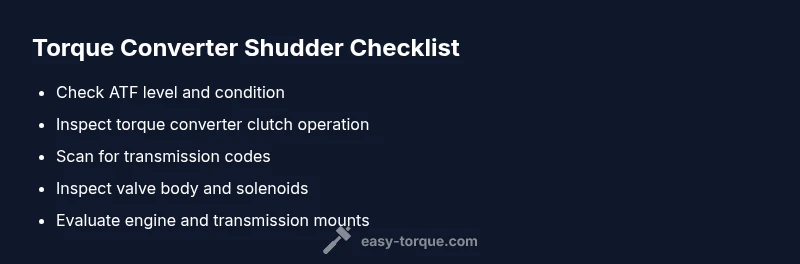
Begin with safe, straightforward checks that don’t require disassembly. Check the transmission fluid level with the vehicle at normal operating temperature and on level ground; note the color and odor. If the fluid is dark, burnt-smelling, or gritty, plan a fluid service. Use a scan tool to read transmission codes and monitor live data, focusing on clutch slip percent and hydraulic pressure readings. A basic road test under light throttle can reveal whether the shudder occurs at a particular speed or load, helping differentiate torque converter engagement vs. other driveline issues. Inspect visible components for leaks and damage, and check engine mounts and transmission mount condition—worn mounts can amplify or mimic shudder. If you suspect the torque converter, you may need to confirm clutch engagement with a professional tool or by replacing the torque converter clutch. Remember safety: never work under a vehicle that isn’t securely supported, and avoid long test drives if you hear unusual noises or detect heat buildup. If symptoms persist after these checks, plan a more thorough inspection with a transmission specialist.
Quick guide to next steps after initial checks
After completing the basic checks, you’ll usually have one of two paths: a fluid-service path or a mechanical-path requiring component replacement. If ATF shows signs of wear, prioritize a fluid flush and refill with the manufacturer-specified fluid; this often restores smooth engagement and reduces shudder. If the ATF is fine but symptoms persist, the issue may be with the torque converter clutch or the valve body; plan a professional inspection that includes torque converter clutch testing and possible clutch replacement. Keep in mind that driving habits can aggravate shudder; gentle acceleration and avoiding heavy throttle until the issue is resolved helps prevent further wear. Document symptoms, service history, and any recent maintenance to aid the technician. Finally, obtain a written diagnostic plan and expected turnaround time before authorizing repairs, so you know what to expect in terms of cost and downtime.
Safety and professional help: when to stop and call a technician
Shudder can indicate problems that, if left unchecked, may worsen and lead to more costly repairs. If you notice a burning smell, loud metallic noises, sudden loss of power, or significant transmission fluid leakage, stop driving and seek professional help immediately. Even if you suspect fluid issues, avoid driving long distances until a qualified technician evaluates the system. A professional can perform controlled pressure tests, torque converter clutch diagnostics, and internal inspections that require specialized tools. Prioritize a clear, written estimate and turnaround expectations before any work begins. The goal is to prevent secondary damage and protect the drivetrain’s integrity.
Prevention and long-term care: extending life of torque converter and transmission
Regular maintenance is your first line of defense against shudder. Adhere to the manufacturer’s ATF interval and use the recommended fluid type; never mix fluids. Schedule periodic transmission fluid changes to remove particulates that can wear the clutch and bearings. Keep cooling systems in good shape to prevent ATF overheating and breakdown, and address engine misfires or mounting wear promptly, as those issues can amplify shudder. If you drive in heavy traffic or tow frequently, consider more frequent inspections and a mechanical check for the torque converter clutch. When in doubt, logging symptoms during a drive and sharing them with a technician will shorten diagnosis time and save money in the long run.
Steps
Estimated time: 60-120 minutes
- 1
Confirm symptoms and vehicle details
Note when the shudder occurs, vehicle speed range, and driving conditions. Record miles and recent maintenance to help diagnose patterns.
Tip: Keep a simple symptom log for the technician. - 2
Check ATF level and condition
With the engine warmed up, check the transmission dipstick (or as specified by the manufacturer) for level, color, and odor. Look for burnt or metallic smells.
Tip: If ATF is dark or smells burnt, plan a fluid service before deeper checks. - 3
Scan for transmission codes and live data
Use a transmission-compatible scan tool to read codes and monitor clutch slip percentage and pressure data in real time.
Tip: Compare live data to factory specs and note anomalies. - 4
Inspect torque converter clutch operation
Test for clutch engagement behavior using professional tools or by a qualified technician. Look for delayed or incomplete engagement.
Tip: Avoid forcing clutch engagement; improper tests can cause damage. - 5
Assess driveline mounts and engine condition
Check engine and transmission mounts for wear or damage; worn mounts can mimic shudder or amplify vibrations.
Tip: Replace worn mounts to see if symptoms improve. - 6
Plan next steps with a pro if needed
If basic checks don’t solve the issue, arrange a diagnostic service focusing on fluid dynamics and torque converter health.
Tip: Request a written diagnosis plan and cost quote.
Diagnosis: Shudder during acceleration or at certain speeds
Possible Causes
- highLow or dirty transmission fluid (ATF) affecting clutch engagement
- highWorn torque converter clutch or degraded torque converter
- mediumContaminated ATF or overheating causing fluid breakdown
- mediumFaulty valve body or transmission control solenoids
- lowEngine misfire or worn engine mounts transmitting vibration
Fixes
- easyCheck ATF level and condition; top up or replace if necessary
- mediumInspect/replace torque converter clutch; consider a full torque converter service
- mediumFlush and replace ATF if contaminated; verify cooling system health
- hardInspect valve body and solenoids; repair or rebuild as needed
- hardIf symptoms persist, consult a transmission specialist for further testing or replacement
Your Questions Answered
Can a bad torque converter cause shudder?
Yes. A worn or failing torque converter clutch can cause shudder during engagement or acceleration. Other related symptoms may include slipping or unusual heat, which should be diagnosed promptly.
A bad torque converter can cause shudder, especially if the clutch isn’t engaging smoothly. Get a professional check for clutch wear or internal damage.
Is torque converter shudder the same as transmission slipping?
Not exactly. Shudder is a vibration or judder during engagement, often linked to clutch engagement or hydraulic issues. Slipping means the transmission loses grip and speed changes without corresponding engine RPM.
Shudder is a vibration during engagement, while slipping is a loss of grip. Both require diagnosis, but they have different causes.
How long can I drive with torque converter shudder?
Driving a short distance to a shop may be acceptable if the vehicle operates normally otherwise, but extended driving can worsen wear. Monitor for heat and unusual noises and seek professional help soon.
If the shudder returns regularly or you notice heat or noises, stop and get a professional diagnostic quickly.
Will I get an exact price for a fix before services?
Prices vary widely by vehicle and needed work. A shop can provide a diagnostic fee and an estimate after identifying the root cause, such as fluid service vs. torque converter replacement.
Expect a diagnostic fee and a written estimate after the root cause is found.
When should I replace the torque converter?
Replacement is usually warranted if the clutch is worn beyond service limits, the turbine is damaged, or there is metal debris in the fluid. A professional should confirm the decision.
Replacement is considered when clutch wear or internal damage is confirmed by testing.
Can I fix this myself at home?
Basic fluid checks and maintenance are doable at home, but many fixes—especially torque converter work—require specialized tools and expertise. When in doubt, consult a pro.
Some basic checks are doable, but torque converter work usually needs a shop.
Watch Video
Top Takeaways
- Identify source early to prevent secondary damage
- Check ATF level, color, and smell before diving deeper
- Differentiate torque converter issues from engine or driveline problems
- Escalate to a transmission specialist if symptoms persist