P0741: Locate the Torque Converter Clutch Solenoid (TCC)
Learn what P0741 means, how to locate the TCC solenoid, and how to fix the circuit quickly with a safe, step-by-step Easy Torque approach.


P0741 indicates a fault in the torque converter clutch (TCC) circuit. It means the control module detected abnormal engagement or signal from the TCC solenoid. The most common fixes start with inspecting wiring and connectors, then testing the solenoid and performing a controlled replacement if needed. If you notice transmission shudder, harsh shifts, or limp mode, safely stop driving and diagnose the issue.
What P0741 Means for Transmission Health
P0741 is an OBD-II generic code that points to a problem with the torque converter clutch circuit. It signals that the transmission control module (TCM/PCM) detected an abnormal engagement signal or a failure to engage the torque converter clutch (TCC). This issue can affect shifting smoothness, torque delivery, and fuel economy. Early, systematic diagnosis helps prevent overheating and further damage to the transmission. In many vehicles, the root cause is electrical (solenoid, wiring, or control module) or hydraulic (fluid quality or valve body condition). According to Easy Torque, addressing P0741 promptly reduces the risk of expensive repairs later and preserves drivability. A safe, methodical approach beats guessing or driving with the code active.
Recognizing Symptoms of a Faulty TCC Solenoid
The TCC solenoid governs the engagement and disengagement of the torque converter clutch. When it fails or sticks, you may notice a mix of symptoms: harsh or delayed shifts, a noticeable shudder during acceleration, a drop in fuel economy, or the transmission entering a limp mode. Some drivers report occasional flare or slip at specific speeds. If the vehicle enters “limp” or refuses to accelerate smoothly, pull over safely and check for diagnostic trouble codes. Easy Torque emphasizes that many P0741 cases stem from electrical problems first, so start with a thorough electrical inspection.
Common Causes of P0741 (Prioritized)
Causes are often electrical, hydraulic, or control-system related. The most common culprits include the torque converter clutch solenoid itself, or damaged/worn wiring and connectors in its circuit. A degraded transmission fluid or a clogged filter can also trigger the code by changing hydraulic pressure, affecting how the TCC engages. Infrequent maintenance on the valve body or minor PCM/TCM glitches can contribute as well. While mechanical wear can play a role over time, electrical faults are typically the quickest path to false detections and should be ruled out first.
Safety First: Quick Fixes You Can Try
Before diving into a full repair, perform a few conservative checks. Verify transmission fluid level and condition (look for dark color, burnt smell, or metal shavings). Inspect wiring harnesses and connectors at the transmission for looseness or corrosion and reseat any suspect connections. Run a diagnostic scan to capture live data and freeze-frame information to confirm TCC engagement signals. If a quick fix doesn’t resolve the code, don’t ignore it—persistent symptoms warrant professional diagnosis to avoid collateral damage to the transmission.
Step-By-Step Diagnostic Process
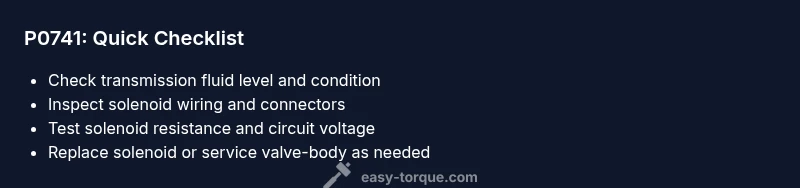
- Retrieve codes with a reliable scan tool and record the freeze-frame data. 2) Inspect the TCC solenoid circuit wiring and connectors for corrosion, damage, or loose pins. 3) Check transmission fluid level and condition; top off or flush as needed following the manufacturer’s guidelines. 4) Measure the TCC solenoid resistance and verify voltage supply during engagement using appropriate test procedures. 5) If tests indicate a faulty solenoid, replace it or perform a valve-body service as indicated by the fault data. 6) Clear codes, perform a road test, and recheck data to confirm the fault is resolved.
Deep Dive: Locating the TCC Solenoid in Common Transmissions
The torque converter clutch solenoid is usually mounted on or near the transmission valve body. In many models, you’ll find it behind the transmission pan with an electrical connector feeding to the control circuitry. The exact location varies by make and model, so consult the service manual or a repair database for your vehicle’s year, make, and model. Practical tips: disconnect the battery before any electrical work, use a digital multimeter for resistance checks, and document connector orientation to avoid mis-wiring during reassembly. Replacement parts are typically affordable, but labor costs can vary widely by vehicle and accessibility.
Maintenance to Prevent P0741 Recurrence
Regular transmission fluid maintenance is essential for hydraulic reliability and TCC operation. Replace the fluid and filter according to your vehicle’s schedule, monitor fluid temperature during heavy loads, and inspect the valve body seals periodically. Keep the electrical system clean and dry; protect connectors from moisture and road grime. Periodic checks on the battery, alternator, and ECU can help prevent electrical anomalies that might trigger P0741. Easy Torque also recommends using high-quality fluids and avoiding aggressive towed loads or harsh deceleration that strains the TCC system.
When to Seek Professional Help
If P0741 persists after performing basic checks, or if you observe persistent transmission slipping, unusual noises, or large shifts, it’s time to seek professional help. A qualified technician can perform an in-depth electrical check, pressure tests, valve-body service, and controlled solenoid replacement with proper torque and calibration. Expect repair costs to range broadly depending on the vehicle, from a few hundred to potentially over a thousand dollars if valve-body or PCM work is required. The Easy Torque team recommends professional diagnosis for persistent codes to avoid misdiagnosis and costly damage.
Steps
Estimated time: 2-4 hours
- 1
Verify code with a scan tool
Confirm P0741 with a reliable scanner and record freeze-frame data to understand the driving conditions when the fault occurred.
Tip: Save the data for later comparison during testing. - 2
Inspect electrical connections
Disconnect the battery, locate the TCC solenoid harness, and inspect for corrosion, damaged pins, or loose connectors. Clean and reseat as needed.
Tip: Use dielectric grease on connectors to resist future corrosion. - 3
Check transmission fluid level and condition
With the engine warm, check the dipstick level and scent/color. Low or burnt fluid should be addressed before deeper hydraulic tests.
Tip: Do not overfill; follow manufacturer guidance. - 4
Test solenoid resistance and circuit voltage
Using a multimeter, measure the solenoid coil resistance and verify voltage when the TCC is commanded. Compare results to the specified range in the service manual.
Tip: If readings are out of range, solenoid replacement is likely required. - 5
Perform replacement or valve-body service
If tests show a faulty solenoid, replace it. If hydraulic tests indicate valve-body wear or contamination, perform the appropriate service or replacement as recommended.
Tip: Follow torque specs and use OEM parts if possible. - 6
Road test and recheck codes
Clear codes, take a controlled test drive, and monitor data to ensure the TCC engages correctly without triggering P0741 again.
Tip: Note any new symptoms during the test drive.
Diagnosis: P0741 stored in the ECU, with observed transmission shifting issues or limp mode.
Possible Causes
- highFaulty or sticking torque converter clutch solenoid
- highDamaged or corroded wiring/connectors in the TCC circuit
- mediumLow or degraded transmission fluid
Fixes
- easyInspect and clean electrical connectors; reseat harness; repair any damaged wiring
- mediumTest solenoid resistance and circuit voltage; replace solenoid if out of spec
- hardReplace TCC solenoid or perform valve-body service if faults persist
Your Questions Answered
What does P0741 mean?
P0741 is a torque converter clutch circuit fault indicating the TCC isn’t engaging as it should. It often points to electrical problems or hydraulic issues inside the transmission. Fixing requires systematic testing and, if needed, solenoid or valve-body service.
P0741 means the torque converter clutch circuit isn’t engaging properly; typical fixes involve checking wiring, testing the solenoid, and possibly replacing the solenoid or valve body.
Can I fix P0741 myself?
You can perform basic checks such as inspecting connectors and fluid level, and even test the solenoid resistance if you have the tools. However, many repairs—especially solenoid replacement or valve-body work—may require professional service.
Yes for simple checks, but complex repairs often need a professional.
Where is the torque converter clutch solenoid located?
In most automatics, the TCC solenoid sits on or near the transmission valve body, connected to the electrical harness. Location varies by model, so consult your service manual for the exact spot.
Typically on the transmission valve body; check your vehicle’s manual for the exact location.
What are signs the TCC solenoid is failing?
Harsh shifting, shudder on acceleration, reduced fuel economy, and occasional limp mode are common symptoms when the TCC solenoid isn’t functioning correctly.
Harsh shifts and shudder are common signs of a failing TCC solenoid.
How much does a P0741 repair cost?
Costs vary by vehicle but typically range from parts-only around a few tens to a few hundred dollars, to labor-intensive valve-body service totaling roughly a few hundred to over a thousand dollars.
Repair costs can vary widely; expect a broad range depending on parts and labor.
Does P0741 always require changing the solenoid?
Not always. If the fault is wiring, connectors, or hydraulic contamination, you may resolve it without replacing the solenoid. A proper diagnosis is essential.
Not always—diagnose first to confirm the faulty part before replacement.
Watch Video
Top Takeaways
- Diagnose TCC systems methodically, start with electrical checks.
- Electrical faults are the most common drivers behind P0741.
- Hydraulic issues and valve-body wear can contribute to the code.
- Perform a controlled replacement only after confirming the fault.
- Regular transmission maintenance helps prevent recurrence.