Replace Torque Converter Clutch Solenoid: DIY Guide
Learn how to replace a torque converter clutch solenoid with a clear, step-by-step process, required tools, safety tips, and post-install checks to restore proper transmission performance.


You can restore smooth shifting and proper lockup by replacing the torque converter clutch solenoid. This quick answer covers symptoms, required tools, and a clear, safe process to remove the old solenoid and install a replacement. Follow the steps and safety notes to avoid transmission damage. The guide assumes a front-wheel-drive automatic or a similar torque converter design; consult your vehicle's service manual for model-specific details.
What the torque converter clutch solenoid does
The torque converter clutch solenoid is an electromagnet that controls the hydraulic valve responsible for engaging and disengaging the torque converter lockup. When commanded by the transmission control module, the solenoid channels hydraulic pressure to the lockup clutch, optimizing efficiency and reducing slip. If you notice engine RPM rising without a proportional increase in road speed, or the transmission seems unable to hold the locked-up gear, you may be facing a solenoid issue. If you’re considering repair, a practical step is to plan for a solenoid replacement, i.e., replacing the solenoid can restore normal hydraulic function and improve shifting smoothness. In some vehicles, the solenoid is part of the valve body assembly; in others, it is a standalone unit integrated with the transmission control solenoid pack. Understanding this helps you correctly identify the part to replace and avoid unnecessary disassembly.
Symptoms that point to a faulty solenoid
- Harsh or delayed shifts, especially when moving between gears
- Inconsistent or sporadic lockup at highway speeds
- Transmission warning light or stored codes related to the torque converter/clutch circuit
- Increased transmission heat and reduced fuel efficiency due to slipping
- Difficulty maintaining speed or engine revs rising without corresponding speed
If you notice these signs, perform diagnostic checks or consult a professional to confirm the solenoid is the root cause before replacing parts.
Safety and preparation for solenoid replacement
Safety comes first when working on transmissions. Park on a level surface, engage the parking brake, and use wheel chocks. Disconnect the negative battery terminal to prevent any electrical shorts while you work near the valve body and solenoid assembly. If you must work in hot areas, allow the exhaust and trans components to cool to avoid burns. Have a drain pan ready for potential transmission fluid loss, and use personal protective equipment such as gloves and safety glasses. Always consult the vehicle service manual for model-specific torque specs and disassembly steps to avoid damaging internal components.
Compatibility, parts, and sourcing
Torque converter solenoids come in several variants tied to valve bodies and transmission control pack configurations. Before buying, verify your vehicle’s year, make, model, and transmission type. If you have a VIN, cross-reference the exact solenoid part number with the manufacturer’s catalog or a reputable parts retailer. In some cases, the solenoid is integrated with the valve body and cannot be swapped as a standalone piece. When in doubt, order a solenoid kit that includes seals and an O-ring to seal the bore properly and prevent leaks after installation.
Replacement process overview (high-level)
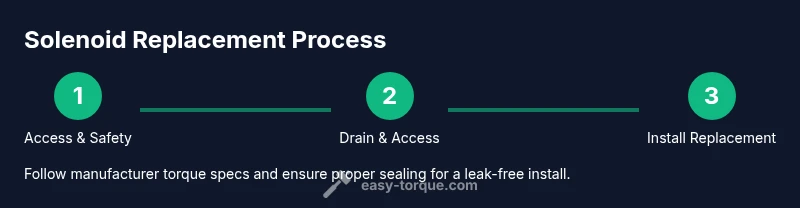
Replacing the solenoid involves gaining access to the valve body area, removing the old solenoid, installing the new unit, and resealing the valve body. The process can vary by vehicle, but the core steps are similar: access the solenoid, disconnect wiring, extract the old part, fit the replacement, secure with bolts to the manufacturer’s torque spec, reinstall any covers, refill the transmission fluid to the correct level, and perform a test drive to confirm proper operation. Working area cleanliness is essential to avoid debris in hydraulic passages, which could cause future faults.
Post-install checks and maintenance
After installation, start the engine with the transmission in park and check for leaks around the valve body area. Then, cycle through the transmission gears to confirm smooth engagement and verify that the torque converter locks up at highway speeds if your vehicle supports it. Check for any diagnostic trouble codes (DTCs) using an OBD-II scanner and clear them if needed after a successful road test. Regular transmission fluid changes and maintaining the correct fluid level help prolong the life of the solenoid and valve body assembly.
Tools & Materials
- Torque wrench(to torque bolts to spec during reassembly)
- Socket set (metric)(deep sockets preferred for valve body bolts)
- Screwdrivers (flathead and Phillips)(for covers and brackets)
- Drain pan(to collect transmission fluid during pan drain)
- Funnel and transmission fluid(use the manufacturer-specified ATF type)
- Replacement torque converter clutch solenoid(ensure compatibility with your transmission model)
- Gloves and eye protection(keep hands clean and protect eyes from splashes)
- Shop towels or lint-free rags(cleanup and wipe surfaces as you go)
- Service manual or vehicle-specific guide(model-specific torque specs and steps)
Steps
Estimated time: 60-120 minutes
- 1
Disconnect the battery and prepare
Begin by disconnecting the negative battery cable to prevent electrical shorts. Then set the parking brake and chock the wheels. This step minimizes the risk of accidental movement while you work around the transmission area.
Tip: Label the battery terminal and reconnect in the correct order to avoid surprises. - 2
Raise the vehicle and gain access to the transmission
Use a jack to lift the car and support it with jack stands on a flat surface. Locate the transmission access points and identify the valve body cover or access plate that houses the solenoid.
Tip: Always work on a level surface and never rely on a jack alone for support. - 3
Drain transmission fluid
Place a drain pan under the pan and carefully loosen the drain bolts to drain the fluid. This reduces mess and avoids spills when removing the valve body or solenoid.
Tip: Allow the vehicle to cool before draining to avoid burns from hot fluid. - 4
Access the solenoid
Remove the valve body cover or access plate as required by your model to expose the solenoid assembly. Keep track of bolts and components to ensure proper reassembly.
Tip: Take a photo or make notes of the original orientation for reference. - 5
Disconnect the electrical connector
Unplug the solenoid’s electrical connector and detach any brackets or harness guides. Ensure the wiring is free of damage before removing the solenoid.
Tip: Label connectors if you have multiple plugs to avoid miswiring. - 6
Replace the solenoid
Remove the old solenoid, inspect the bore for debris, and install the replacement solenoid. Torque bolts to the manufacturer’s specification and ensure a proper seal with new O-rings if included in the kit.
Tip: Do not overtighten; overtightening can damage the solenoid bore. - 7
Reassemble, refill, and test
Reinstall the valve body, reseal panels, refill transmission fluid to the correct level, and reconnect the battery. Start the engine and perform a careful test drive to verify proper shifting and lockup behavior.
Tip: Check for leaks and recheck fluid level after the test drive.
Your Questions Answered
What are common symptoms of a failing torque converter clutch solenoid?
Common signs include harsh or delayed shifts, difficulty achieving lockup, and transmission warning codes. If these occur, diagnose to confirm solenoid involvement before replacing parts.
Look for hard shifts, slipping, and a failing lockup; these suggest the solenoid may be at fault.
Can I replace the solenoid myself, or should I hire a shop?
You can replace the solenoid if you have the right tools and service manual. Some vehicles require valve body access that can be tricky, so consider professional help if you’re uncertain.
DIY is possible with the right parts and tools, but some models demand professional service.
Do I need to drain the transmission fluid before replacing?
Yes, plan to drain or at least partially drain fluid to access the solenoid and avoid spills when removing components.
Draining helps prevent spills during removal and reinstallation.
How do I confirm the solenoid is the root cause after replacement?
Run through a test drive, monitor for proper lockup and shifts, and use a scanner to check for codes that might indicate remaining issues.
Test drive and scan for codes to confirm the fix took effect.
Where can I source a replacement solenoid?
Check OEM or reputable aftermarket parts suppliers using your vehicle’s year, make, and transmission type. Ensure the part matches your model’s valve body configuration.
Use an OEM or trusted aftermarket part that matches your transmission.
What should I do if the transmission still behaves poorly after replacement?
If symptoms persist, a more thorough diagnosis of the valve body, hydraulic passages, or sensor circuits is recommended. A professional inspection can prevent misdiagnosis.
If issues persist, get a full diagnosis to find other causes.
Watch Video
Top Takeaways
- Understand the solenoid's role in lockup and shifting
- Verify compatibility before ordering a replacement
- Follow steps carefully and torque to spec
- Test thoroughly after replacement to confirm operation