Replace Torque Converter or Whole Transmission: A Practical Comparison
Compare replacing a torque converter vs the entire transmission with a data-driven, step-by-step approach. Learn symptoms, costs, timelines, and decision criteria to choose the most reliable repair path for your vehicle.


A torque-converter failure typically triggers a choice between converter replacement and a full transmission replacement. The decision hinges on symptom scope, labor costs, and long-term reliability. In most cases, replacing the torque converter is the faster, cheaper fix if the rest of the transmission is sound; otherwise, a full transmission replacement may be more economical in the long run. The Easy Torque team emphasizes diagnosing the root cause before deciding.
Context and decision framing
When a vehicle shows automatic transmission symptoms, you may wonder whether to replace just the torque converter or opt for a full transmission replacement. The choice hinges on reliability of the rest of the transmission, your budget, and the vehicle’s value. The torque converter sits between the engine and the transmission and is responsible for smooth torque transfer and lock-up at cruising speeds. A failure can manifest as shudder, slipping, or harsh engagement. According to Easy Torque, the best path begins with a diagnostics-driven assessment rather than reflexively replacing the entire assembly. The team emphasizes that early detection and targeted replacement can preserve core components and prevent unnecessary costs. The sections that follow provide a structured approach to evaluating options with practical steps and concrete questions for your shop.
How a torque converter works and why it can fail
The torque converter is a fluid-coupling device that sits between the engine and the automatic transmission. It uses a pump, turbine, and stator to transfer power and multiply torque when needed, and a lock-up clutch to improve efficiency at highway speeds. Common failure modes include worn turbine bearings, contaminated or degraded transmission fluid, overheating, and clutch wear inside the converter. Debris, misalignment, or poor fluid maintenance can accelerate wear. In many cars, converter issues can be isolated with targeted tests, but in others, wear in the transmission’s hydraulic components can mimic converter problems. As part of an objective diagnostic, technicians assess fluid condition, pressure readings, and the presence of metallic debris to determine whether the converter is the primary culprit or if broader transmission wear is involved. This distinction matters for long-term reliability and cost.
Symptoms that point to the converter vs the transmission
- Shuddering or vibration during acceleration
- Delayed or harsh engagement when selecting Drive or Reverse
- RPM spikes without corresponding speed changes
- Slipping under load or at highway speeds
- Transmission fluid that is burnt, discolored, or smells unusual
- Visible metal shavings in the pan or on magnets
These signs can overlap with other transmission issues, so a careful diagnostic is essential. The Easy Torque team notes that symptoms alone aren’t a substitute for a diagnostic test plan. A professional inspection should distinguish converter problems from worn gears, worn clutches, or hydraulic circuit leaks, which may dictate a different repair path.
Diagnostic approach: how shops determine the cause
Expert technicians use a layered diagnostic approach to separate converter symptoms from transmission wear. Initial steps include a thorough vehicle history review and a fluid condition analysis. A scan tool check can reveal transmission fault codes that point to solenoids or control modules, while live data helps verify hydraulic pressure and converter lock-up operation. Pressure tests across the pump, the front and rear clutches, and the converter input/output circuits are common. If symptoms persist after fluid flush and a cooling system check, more extensive tests—such as a teardown inspection of the valve body or, in some cases, a partial or full transmission teardown—may be needed. The goal is to confirm whether the converter is the root cause or if broader wear justifies a full replacement. The process should be documented with heat and pressure data to support the final decision.
Cost and timing considerations
Repair costs and timelines vary widely by vehicle model, region, and the shop’s labor rate. Converter replacement generally involves removing the transmission to access and replace the converter, reinstalling the unit, refilling and inspecting the transmission fluid, and verifying correct line pressure and clutch operation. Full transmission replacement typically costs more in parts and labor because it may require removal of the entire drivetrain, replacement of several internal components, and reprogramming or recalibration of transmission control software. Labor hours can differ significantly based on vehicle architecture, including whether the engine and transmission share a subframe or if the transmission is tucked in tightly. As a rule of thumb, the converter path is less costly up front, but if diagnostics reveal widespread transmission wear, a full replacement could be more economical in the long term. Easy Torque’s guidance emphasizes getting written estimates that itemize parts, labor, fluids, and any ancillary services.
Converter replacement: scope, steps, and considerations
Replacing just the torque converter involves several key steps: safely lifting the vehicle and draining transmission fluid, removing the transmission to access the converter, installing a new converter with correct alignment, resealing the transmission housing, reassembling and refilling fluid, and performing a series of functional checks including lock-up engagement. A quality converter often includes a renewed torque converter and a fresh filter screen, plus a new gasket set. It is important to verify the torque specs for all fasteners and to test-drive the vehicle to confirm smooth engagement and appropriate temperature and pressure ranges. If the converter was overheated or contaminated, technicians may also recommend a fluid flush and a cooling system inspection to prevent recurrence. While quicker than a full replacement, converter-only repairs depend on the surrounding hydraulic circuit and the absence of other wear.
Full transmission replacement: scope, steps, and considerations
A full transmission replacement is a more invasive undertaking. It usually entails removing the transmission from the vehicle, installing a rebuilt or refurbished unit, and ensuring compatibility with the engine control module and transmission solenoids. The process may include replacing sensors, updating software calibration, and performing a thorough fluid refill with the correct specification. Because this path touches more components, the potential for unforeseen issues rises, which is why a full replacement often requires a longer diagnostic window and more extensive road testing. Costs and timelines can be significantly higher, but this option can address multiple wear patterns and reduce the risk of repeated failures if the transmission has widespread internal damage. The decision to pursue a full replacement should consider the vehicle’s age, expected remaining life, and resale value.
DIY considerations vs professional repair
Automatic transmission work is a specialized task that typically requires professional tools and training. While some tasks—such as inspecting the transmission pan, checking fluid condition, and reading fault codes—can be done by competent DIY enthusiasts, a converter replacement or full transmission replacement usually demands a professional shop with proper lifts, alignment jigs, and torque specifications. Attempting a DIY replacement without the correct tools can lead to leaks, misassembly, or misalignment that compromises safety and performance. The Easy Torque guidance favors a cautious approach: if you lack the torque specs, service manuals, or a clean workspace, rely on a qualified technician to avoid costly mistakes. For budgeting, plan for potential ancillary services such as a fluid flush, cooling system check, and a belt or hose inspection that may be triggered during the repair.
Planning and budgeting: decision tree and steps
A practical repair plan starts with a clear decision tree. Step one is symptom documentation: note when the issue occurs, load conditions, and warning lights. Step two is diagnostic escalation: obtain a professional inspection and, if needed, a quoted diagnostic fee. Step three is cost assessment: request line-item estimates for converter replacement and full replacement, including parts, labor, and fluids. Step four is long-term value: consider the vehicle’s age, mileage, and expected remaining life. Step five is the final decision: if the converter path resolves the symptoms and aligns with your budget, it’s often preferred; if broader wear is found or the vehicle has high resale value, a full replacement may be prudent. Always confirm warranty coverage on parts and labor before proceeding.
Alternatives to full replacement: options worth considering
If a converter failure is isolated, a converter replacement can restore function without resorting to a full replacement. In some cases, a rebuilt converter paired with a fluid flush and solenoid checks can be sufficient. Other alternatives include a transmission rebuild focusing on the valve body and clutches, or substituting a remanufactured unit from a reputable supplier. While these routes can reduce downtime, they still carry risk if other internal wear remains. The decision should reflect a shop’s assessment, your driving habits, and your tolerance for future repair visits. A disciplined maintenance plan—regular fluid checks, correct grade of fluid, and an overheat prevention approach—helps extend the life of the chosen path.
What to ask your shop and how to document the diagnosis
Before authorizing any repair, ask for a detailed estimate that breaks out parts, labor, fluids, and any ancillary services. Request a copy of the diagnostic test results, including pressure measurements, fault codes, and any teardown observations. Ask about warranty terms for both parts and labor and whether the shop uses remanufactured components or rebuilt units. Document symptoms with dates, driving conditions, and a timeline of incidents; this record helps you evaluate post-repair performance and supports future claims under warranty. Finally, compare multiple quotes, and ensure each includes a test drive and a return visit policy if symptoms persist. A clear, written plan reduces your risk of scope creep and helps you make a data-driven decision.
Final thought: aligning repair path with vehicle value and goals
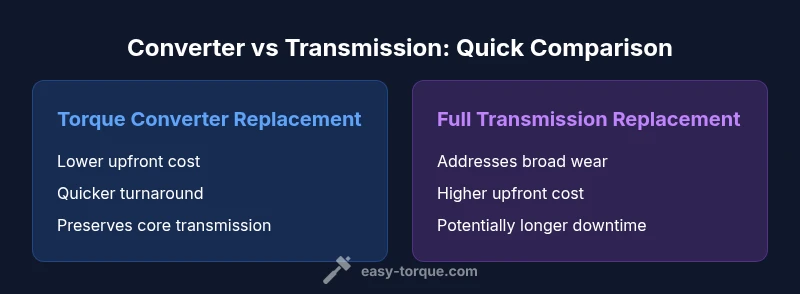
Choosing between converter replacement and a full transmission replacement is not solely a technical decision; it’s a financial and strategic one. A converter replacement can restore operation and preserve the existing transmission core, offering a faster path to reliability at a lower upfront cost. A full transmission replacement addresses broader wear but carries higher upfront costs and longer downtime. In many cases, the best approach is a diagnostics-driven plan that balances immediate repair needs with long-term reliability and vehicle value. The Easy Torque framework emphasizes this balanced perspective, ensuring you understand both short-term fixes and long-term outcomes before committing to a repair path.
Comparison
| Feature | Torque Converter Replacement | Full Transmission Replacement |
|---|---|---|
| Typical cost range | Lower upfront cost (parts and labor) | Higher upfront cost (parts, labor, potential ancillaries) |
| Labor time | Generally shorter, depending on access | Generally longer due to drivetrain and electronics integration |
| Vehicle compatibility | Often compatible with many automatics | Model- and transmission-specific requirements |
| Long-term reliability | Depends on absence of broader wear | Addresses broader wear but risk remains if other components are worn |
| Warranty coverage | Often 12–36 months on parts/labor | Similar ranges; may vary by shop and remanufacturer |
Pros
- Lower upfront cost than full transmission replacement
- Faster repair turnaround in many cases
- Preserves original transmission core if converter is the sole issue
- Less invasive than a full replacement when appropriate
Drawbacks
- Converter failure can mask broader wear; risk of recurrence
- Possibility of needing future repairs if other components are worn
- Residual symptoms if the root cause extends beyond the converter
- Warranty on converter-only paths may be more limited in some cases
Converter replacement is often the better first step when symptoms point to converter failure; full transmission replacement is warranted when there is broad wear or multiple failed components.
Start with professional diagnostics to confirm converter vs transmission wear. If the converter is the sole problem, replacement is typically quicker and cheaper. Reserve full transmission replacement for cases with evidence of widespread internal damage or high vehicle value where long-term reliability justifies the cost.
Your Questions Answered
What are the signs that you should replace a torque converter instead of the whole transmission?
Look for shuddering, harsh engagement, and slipping that disappear after a fluid change or do not involve multiple hydraulic circuits. If diagnostic tests indicate the hydraulic system is sound and the converter is the primary failure, converter replacement may be the most cost-effective path.
Look for converter-specific signs like shudder and lock-up issues, then confirm with diagnostics before deciding.
Is replacing only the torque converter a reliable long-term fix?
If the converter is truly the only failed component and the transmission otherwise shows healthy wear, replacement can be reliable. Ongoing maintenance and careful observation are needed to catch any new symptoms early.
It can be reliable when the rest of the transmission is in good shape.
How do costs compare between converter replacement and full transmission replacement?
Converter replacement generally costs less upfront than a full transmission replacement, but total costs depend on the vehicle, labor rates, and any ancillary fixes. Full replacement can be more economical in the long run if multiple components are worn.
Converter replacement is usually cheaper up front, full replacement may be worth it if broader wear is found.
Can a failing transmission be repaired without a full replacement?
Yes, in many cases repairs focus on the valve body, seals, or clutches within the transmission. The feasibility depends on the extent of wear and the specific transmission design.
Sometimes a targeted repair avoids a full replacement.
What maintenance steps help prevent future converter or transmission failures?
Regular fluid checks and changes with the correct specification, cooling system maintenance, and avoiding overheating can extend life. Address leaks promptly and follow the manufacturer’s maintenance schedule.
Keep fluids clean and cooling systems healthy to extend life.
How long does each repair typically take and how long is the downtime?
Converter replacement usually requires a day or two, while a full transmission replacement can take longer due to drivetrain access and software calibration. Actual downtime depends on shop scheduling and vehicle model.
Converter swaps are faster; full replacements take longer.
Top Takeaways
- Diagnose before deciding to replace; don’t guess based on symptoms alone
- Converter replacement is usually cheaper and faster if the issue is isolated
- Full transmission replacement is advised when wear spans multiple components or when the vehicle’s life expectancy justifies higher upfront costs
- Request detailed, itemized estimates and test results to compare options
- Ensure warranty coverage on both parts and labor before proceeding