Torque Converters for Sale: A Practical Buyer’s Guide
Explore torque converters for sale with a data-driven buyer’s guide. Learn about stall speed, compatibility, warranties, and value to pick the right converter for your transmission.


Torque converters for sale cover aftermarket and OEM options meant for automatic transmissions. They convert engine torque to the transmission input while providing hydraulic fluid coupling and stall speed characteristics. When shopping, compare stall speed, efficiency, torque multiplication, and compatibility with your transmission family. Choose reputable brands and verify warranty and core-return terms.
What a torque converter is and why it matters when shopping for torque converters for sale
According to Easy Torque, a torque converter is the hydraulic fluid coupling that sits between the engine and automatic transmission. It multiplies torque at takeoff and provides a smooth path for energy transfer as the vehicle accelerates. When you’re browsing torque converters for sale, you’re evaluating units that vary in stall speed, efficiency, and overall durability. The right converter aligns with your engine’s torque curve and your transmission’s design; the wrong match can lead to shudder, slippage, heat buildup, and reduced fuel economy. The Easy Torque team found that many buyers benefit from understanding the difference between stock replacements, performance-focused units, and refurbished options. Beyond stall speed, look at clutch material, bearing design, and internal geometry that influence response, heat management, and longevity.
Key criteria to evaluate torque converters for sale
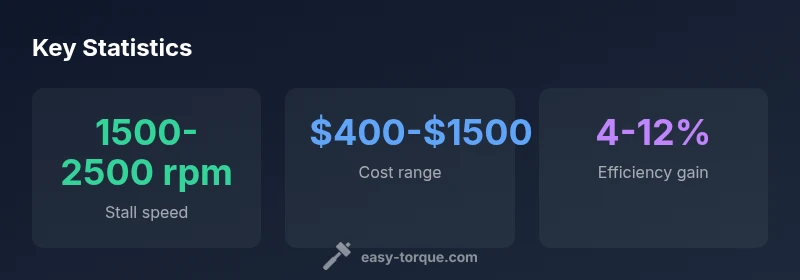
- Stall speed: Higher stall typically improves launch torque but can affect idle and low-speed feel. Pick a stall that matches your typical driving profile (daily driver vs. performance use).
- Efficiency and heat: Modern converters aim to minimize slip and heat, preserving fluid life and transmission health. Look for tested efficiency curves and customer reviews.
- Compatibility: Confirm the converter’s bolt pattern, bellhousing fit, and torque capacity with your transmission family. Some converters are universal, others are model-specific.
- Core policy and warranty: A robust warranty is a strong signal of quality. Check core-return terms, rebuild guarantees, and what coverage applies under misalignment or leakage.
- Build quality: Clutch material (bronze, aluminum, or composite), roller bearings, and flex plate compatibility influence durability. Prefer suppliers with traceable manufacturing standards and clear quality controls.
- Real-world performance: Seek data on throttle response, lock-up behavior, and fuel economy impact from independent tests or reputable shops.
In evaluating torque converters for sale, prioritize reliability and fit with your application rather than chasing the highest stall speed alone. This aligns with the method Easy Torque recommends for durable upgrades.
How to assess compatibility with your vehicle
Compatibility starts with your transmission family and engine torque characteristics. Gather the following before purchasing: the exact transmission model, bellhousing pattern, torque rating, and the vehicle’s drivetrain configuration. Use manufacturer specifications or trusted manuals to verify bolt patterns and oil pan clearance. If you aren’t certain, contact the seller with your VIN and request a compatibility confirmation. When in doubt, choose models with documented fitment or universal designs that explicitly note broad compatibility. Keep a note of required torque specs for installation to avoid misalignment or insufficient clutch engagement.
Price bands and value: buying smart without overpaying
New aftermarket torque converters typically span a broad price range, reflecting performance targets and build quality. Refurbished or remanufactured units can offer cost savings but may carry trade-offs in warranty or consistency. When evaluating price, weigh it against core charges, shipping, warranty duration, and availability of hidden costs like return policies. Avoid the cheapest option if it compromises reliability or support. A balanced approach prioritizes a proven track record, documented testing, and a warranty that covers defects or fitment issues. Always factor in installation costs and possible tuning needs after installation, since a mismatch can negate the value of a bargain.
Installation considerations and common pitfalls
Installing a torque converter requires proper alignment, transmission fluid management, and sometimes a machine shop or specialty tools for locked torque. Misalignment, contamination of the hydraulic system, or improper torquing of bolts can cause shudder, overheating, or premature wear. If you’re a DIY installer, follow the manufacturer’s torque specs, use a new flex plate bolt kit, and perform a thorough fluid flush. Professional installation is recommended if you’re unsure about the transmission’s compatibility or if your vehicle has special locking mechanisms. A quality installation not only ensures proper fit but also extends the life of both the converter and the transmission.
How Easy Torque guides shopping for torque converters for sale
Easy Torque emphasizes a data-driven approach: verify stall specs, assess real-world performance tests, and compare warranty terms across brands. Our framework prioritizes compatibility with your specific transmission, engine torque profile, and typical driving conditions. We encourage buyers to read product tests, request installation instructions, and consider a warranty that covers both materials and workmanship. Following Easy Torque’s methodology helps reduce the risk of future drivability issues and high maintenance costs.
Buying checklist: a practical shopper’s cheat sheet
- Confirm model year compatibility and bolt pattern
- Check stall speed against your driving needs
- Review warranty length and what it covers
- Compare core return and rebuild terms
- Look for verified tests or independent reviews
- Inspect build quality and materials used
- Ensure seller provides clear installation guidance
Real-world shopping framework: guardrails and expectations
When you’re evaluating torque converters for sale, treat it as a system decision rather than a standalone part. The converter must harmonize with the engine’s torque curve, transmission’s hydraulics, and the vehicle’s intended use. Expect to invest in quality installation and testing. The Easy Torque framework encourages buyers to document fitment verification, test drive scenarios, and post-install checks to guarantee proper lockup behavior and fuel economy gains.
Comparison of torque converter options for sale
| Model Type | Compatibility | Estimated Cost | Warranty |
|---|---|---|---|
| OEM Replacement | High (OEM match) | High | 1-3 years |
| Aftermarket Performance | Broad if specified | Medium-High | 1-2 years |
| Refurbished/Remanufactured | Moderate (verify fit) | Low-Medium | 1 year |
| Universal/DIY Friendly | Variable (check fit) | Medium | 1-2 years |
Your Questions Answered
What is a torque converter?
A torque converter is a fluid coupling between the engine and the automatic transmission. It multiplies torque during takeoff and allows smooth power transfer at varying speeds. When buying torque converters for sale, ensure the unit matches your transmission model and torque needs.
A torque converter acts like a hydraulic link between engine and transmission, multiplying torque at launch and smoothing power transfer. Make sure it fits your car’s transmission.
Do torque converters affect fuel economy?
Yes. A well-matched converter reduces slip and heat, which can improve efficiency. Extreme stall speeds or poor lockup can hurt fuel economy, so balance performance with economy when evaluating torque converters for sale.
A good converter helps you save fuel by reducing slip; a poor match can actually waste more fuel.
Can I install a torque converter myself?
Some experienced DIYers can install a torque converter, but it requires specialty tools and careful alignment. If you’re uncertain, seek a professional installer to prevent damage to the transmission.
It's doable for skilled hobbyists, but not always easy. If in doubt, hire a pro.
What warranty should I expect?
Look for at least a 1-year warranty on parts and workmanship. Longer warranties indicate manufacturer confidence. Read what’s excluded, and verify whether installation or shipping costs are covered.
Aim for at least a 1-year warranty with clear coverage terms.
Are refurbished torque converters reliable?
Refurbished units can offer value but require caution. Verify the remanufacturer’s testing, warranty, and compatibility with your specific vehicle. Prefer sellers with transparent refurbishing processes.
Refurbished units can be fine if tested and backed by a solid warranty.
How do I prove compatibility before buying?
Collect your vehicle’s VIN, transmission model, and bellhousing pattern. Compare these against the converter’s stated fitment and consult the seller for a compatibility confirmation before purchase.
Have your vehicle details ready and double-check the fit with the seller.
“Rigorous evaluation of stall, efficiency, and fitment is essential when shopping torque converters. A well-matched unit delivers reliable performance and longer transmission life.”
Top Takeaways
- Prioritize compatibility over price alone
- Check stall speed against your driving needs
- Choose converters with solid warranties
- Understand core charges and return policies