Torque Converter Stall Speed Calculator: A Practical Guide
Learn how a torque converter stall speed calculator works, what inputs affect stall RPM, and how to interpret results for diagnostic maintenance and performance.


Understanding the stall speed concept
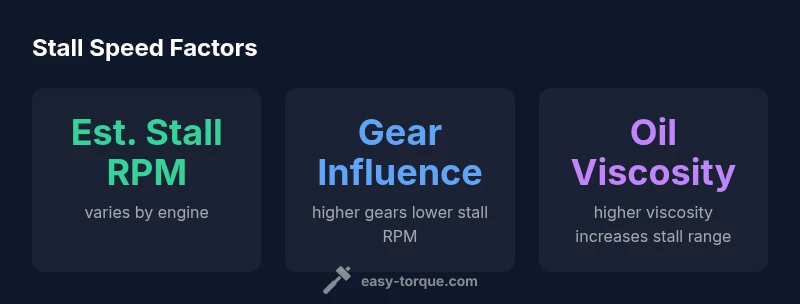
Stall speed is the RPM at which the torque converter clutch fully engages and begins to transmit power efficiently under load. In practice, stall speed is not a single fixed number; it shifts with changes in engine torque, transmission gear, hydraulic pressure, temperature, and oil viscosity. According to Easy Torque, this means that a stall RPM is best thought of as a range rather than a precise value. For DIY mechanics and technicians, understanding this nuance helps avoid over-tuning or misdiagnosing a converter as failed when the fluid or operating condition is simply different from the test conditions.
Why use a stall speed calculator
A stall speed calculator provides a structured way to predict how the converter will behave under different operating scenarios. It helps with diagnostic planning, maintenance scheduling, and performance tuning by translating several interacting factors into a single estimate you can compare against observed behavior. For enthusiasts, the calculator clarifies how tweaks to gear selection, engine torque, or fluid viscosity might shift stall RPM, reducing trial-and-error testing in the shop.
Key inputs and what they represent
- Engine RPM: The engine speed at which you test the transmission. Higher RPM generally pushes the stall point higher if torque is available.
- Engine Torque: The torque output from the engine at a given RPM, influenced by throttle position and engine health.
- Transmission Gear: The gear currently engaged; higher gears alter the hydraulic path and clutch load, affecting stall behavior.
- Fluid Viscosity: Oil thickness influences the clutch fluid coupling; higher viscosity typically dampens slip and can shift stall RPM. Understanding these inputs helps you set realistic test conditions and interpret results.
The underlying formula and its assumptions
The calculator uses a simplified proportional model that combines engine RPM, torque, gear ratio, and oil viscosity to estimate stall RPM. A representative formula in this context is: stallRpm = (engineRpm * torqueNm) / (gear * 100) * (35 / fluidViscosity). This assumes a linear relationship and steady-state conditions, which is a useful approximation for diagnostics but not a substitute for detailed, manufacturer-specific data or live testing.
How to use the calculator in practice
Begin with conservative, safe inputs that reflect your vehicle’s typical operating range. Check the stall RPM for a mid-range engine speed and a common gear, then repeat with different gears to observe how the estimate shifts. Compare calculated stall RPMs with observed behavior on a dyno or test drive. Always document temperature and oil condition, as these dramatically influence results. Use the output to guide maintenance, such as fluid changes or checking clutch hydraulics.
Real-world scenarios and examples
Consider a vehicle with moderate engine torque in third gear. If you notice slipping at light loads, you might increase engine torque in the calculator to see if stall RPM rises, which would indicate clutch slippage rather than a hydraulic issue. Conversely, if the stall RPM drops unexpectedly after a fluid change, it could reflect viscosity changes or overheating. The calculator helps you frame these observations into testable hypotheses.
Interpreting results and next steps
An estimated stall RPM that lies outside the expected range should prompt a stepwise diagnostic approach: verify input accuracy, inspect fluid condition and temperature, examine torque delivery, and assess gear ratios. If results are consistently inconsistent with observed behavior, consider hardware checks such as the torque converter clutch, pump pressure, and solenoids. The goal is to isolate whether the issue is hydraulic, mechanical, or related to engine performance.
Safety and maintenance implications
Working with torque converters and hydraulic systems involves exposure to moving parts and high pressures. Always depressurize and secure the system before inspection. When changing fluid or seals, use manufacturer-recommended lubricants and observe temperature and cleanliness requirements. The stall speed calculator is a diagnostic aid, not a substitute for proper service procedures or OEM specifications. Observe caution when interpreting results near the limits of your test setup.
Next steps and best practices
Document every test, including ambient temperature, fluid viscosity, and gear used. Use a consistent baseline test to compare future results. Combine calculator outputs with practical checks—like listening for unusual clutch chatter or monitoring transmission temperature—to form a robust diagnostic picture. Regular maintenance inputs, such as fluid condition and torque health, help keep stall performance predictable.