How to Tell Torque Converter Stall: A Practical Troubleshooting Guide
Learn to diagnose torque converter stall quickly with a step-by-step flow, practical checks, and safety tips from Easy Torque. This 2026 guide helps DIYers protect transmissions with a structured troubleshooting approach.


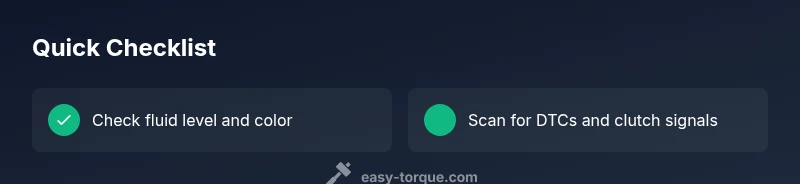
The likely culprits behind torque converter stall are fluid issues or a failing converter clutch. Begin with a quick fluid check (level, color, smell) and verify fluid temperature under load. Next, scan for diagnostic trouble codes and test whether the converter clutch engages smoothly. If the problem persists after these checks, plan professional diagnosis or a rebuild.
Symptom Overview
If you're wondering how to tell torque converter stall, the symptoms are often dramatic but not always obvious. You may notice the engine revving without the car moving, the transmission slipping, or a sudden shudder as you take off from a stop. In automatic transmissions, stall signs can appear when the torque converter fails to transfer engine torque efficiently. According to Easy Torque, recognizing stall early is critical to minimize damage, and the year 2026 brings improved diagnostic tools to confirm the issue quickly. This overview helps you distinguish stall from other driveline problems by focusing on load, speed, and sensor feedback. Expect changes in acceleration feel, temperature, and occasional erratic idle if the converter is failing.
Immediate Checks You Can Do First
Before diving into deep diagnostics, run through a few quick checks that cover the most common causes. Start with the basics and keep notes; this saves time if you need to escalate to professional service.
- Check transmission fluid level, color, and smell. Low fluid or burnt odor is a red flag.
- Look for obvious leaks under the vehicle and around the transmission pan.
- Observe engine idle quality and listen for unusual noises when you press the throttle.
- Confirm dashboard transmission warning lights or codes are present.
- Perform a gentle drive in first gear at light to moderate throttle and note if the stall is present under load or at idle.
Fluid Quality and Transmission Health
Fluid is the lifeblood of the torque converter. If the fluid is dirty, burnt, or degraded, the converter clutch may not engage or disengage cleanly, causing slippage and stalling. Check for contamination (metallic particles, grit), and determine if the fluid has become thicker or thinner than normal. In many cases, a simple fluid change with the correct specification helps restore performance. If contamination is found, also inspect the transmission filter and pan for debris. Fluid condition is often the first clue in how to tell torque converter stall and guide the next steps.
Code Scanning and ECU Signals
Electronic control units monitor numerous inputs to control torque converter operation. A readout of diagnostic trouble codes (DTCs) can pinpoint the faulty sensor, valve body issue, or converter clutch fault. If you have access to a scanner, pull codes related to transmission control, speed sensors, or torque converter clutch circuits. Note that some codes may be stored as history data; perform a live read if possible and confirm with a road test. In some cases, software updates or adaptions may be required to resolve the issue.
Mechanical and Hydraulic Checks
Beyond fluid and electronics, mechanical wear or hydraulic issues can cause stall. Inspect for worn seals, gasket leaks, or a damaged torque converter housing. A failing pump or clogged fluid passages in the valve body can also prevent proper hydraulic pressure buildup, preventing the converter clutch from locking properly. If you notice metallic debris or unusual vibrations, treat it as a warning sign—these symptoms strongly suggest deeper hardware problems that require professional evaluation.
Diagnostic Tools and Data You Need
A structured approach helps you avoid guesswork. Use a transmission pressure gauge to verify hydraulic pressures under idle and under load. If the converter clutch is supposed to engage, verify its actuation with a data stream from your scan tool. Throttle position, engine RPM, and vehicle speed data can reveal mismatches that point to stall causes. For DIY diagnostics, keep your source of information consistent and document each test—this makes the final repair path clearer and easier to justify to a repair shop.
Handling the Most Likely Cause: Quick Fix Overview
In many cases, the most effective fixes deal with fluid quality and converter clutch behavior. Start with a thorough fluid service if the level is low or the color/odor indicates contamination. If codes indicate a converter clutch issue, diagnose clutch engagement and actuator operation. In some instances, a worn or damaged torque converter may require replacement. The rest of the guide dives into step-by-step fixes for these common scenarios.
Safety, Warnings & When to Call a Pro
Working around a running transmission is hazardous. Always disconnect the battery before opening electrical connections and keep hands clear of rotating shafts. Avoid high-load testing if you hear grinding, grinding chatter, or feel a strong vibration through the driveline. If you’re unsure about hydraulic pressure testing or removing the transmission pan, it’s safer to seek professional inspection—some failures can lead to catastrophic transmission damage.
Prevention & Maintenance to Avoid Future Stalls
Preventing stall starts with regular maintenance. Schedule consistent fluid changes at the manufacturer-recommended intervals, use the correct fluid specification, and replace the transmission filter if applicable. Monitor thermostat and cooling system performance since overheating increases the risk of fluid degradation and clutch wear. Finally, perform periodic road tests to detect subtle changes in shift quality before a major failure occurs.
Steps
Estimated time: 90-180 minutes
- 1
Safety and initial prep
Park the vehicle on a level surface, engage parking brake, and disconnect the battery to prevent shorts. Raise the vehicle only if needed and support with stands. Gather tools and a quality transmission fluid.
Tip: Always wear eye protection and gloves; secure the work area to prevent slips. - 2
Check fluid level and condition
With the engine warm and idling, check the transmission dipstick level and color. If low, add the correct fluid to the proper level; if fluid is burnt or gritty, plan a full drain and fill and inspect for metal debris.
Tip: Note the fluid color; metallic scent or dark brown color indicates contamination. - 3
Scan for codes and test clutch engagement
Connect a scan tool and retrieve DTCs related to the transmission. Clear and recheck after a test drive. If the converter clutch engages unevenly or not at all, test the actuator with the tool and verify power and ground continuity.
Tip: Look for codes that point to speed sensors or the torque converter clutch circuit. - 4
Inspect hydraulic systems and valve body
If codes are clear but stall persists, inspect the valve body for sticking valves or blocked passages. Check seals for leaks and verify transmission fluid pressure at idle and under load with a gauge.
Tip: Small leaks can cause big pressure drops; replace worn seals and gaskets as needed. - 5
Road test with data logging
Take a controlled drive to reproduce stall conditions, logging RPM, speed, and fluid temperatures. Compare data against manufacturer specs to identify mismatches between engine and transmission behavior.
Tip: Avoid aggressive driving to prevent further damage; record exact stall conditions. - 6
Decide on repair approach
If the problem remains after fluid service and basic diagnostics, plan for a deeper service such as converter replacement or a transmission rebuild. Factor cost, vehicle usage, and expected lifespan into the decision.
Tip: Consult multiple shops for quotes and ask about core exchange options.
Diagnosis: Vehicle exhibits stall signs such as engine revs with little/no acceleration, shuddering, or harsh shifts
Possible Causes
- highLow or degraded transmission fluid
- mediumConverter clutch failure or sticking
- mediumWorn pump, valve body, or hydraulic leaks
- lowElectrical/ECU sensor or wiring fault
- lowExternal drivetrain binding
Fixes
- easyCheck fluid level and replace if needed; ensure correct spec is used
- easyScan for DTCs and verify converter clutch operation; address any clutch/actuator faults
- mediumInspect valve body, seals, and pump; repair or replace as needed
- mediumTest hydraulic pressures with a gauge kit and compare to spec; repair leaks
- hardIf clutch or converter damage is confirmed, plan replacement or rebuild
Your Questions Answered
What is torque converter stall, and how does it differ from transmission failure?
Torque converter stall happens when the converter fails to reliably transfer engine torque to the transmission, causing engine RPM to rise without expected vehicle speed. It is often caused by fluid issues or clutch faults, and it is not always a total transmission failure. Proper diagnosis focuses on hydraulics, electronics, and clutch engagement.
Torque converter stall is when engine revs rise but the car doesn’t accelerate as expected, usually from fluid or clutch faults. A quick check of fluid and codes helps differentiate from a full transmission failure.
Can a bad torque converter cause transmission slipping?
Yes, a failing torque converter or clutch can allow slippage, especially during acceleration. Slipping is a warning sign that the torque transfer isn’t consistent, which can lead to overheating and wear if not addressed.
Yes, a bad converter can slip, especially when you try to accelerate, and it can lead to overheating if not fixed.
How do I test my torque converter at home safely?
Safe home testing focuses on non-destructive checks: fluid condition, code scanning, and observing drive behavior in a controlled environment. Avoid disassembly or pressure tests without proper tools and knowledge; seek professional help for hydraulic or mechanical tests.
You can safely check fluids and read codes at home, but major hydraulic tests should be done by a pro.
When should I see a professional for torque converter stall?
If basic checks don’t resolve the issue, or you hear abnormal noises, notice metallic debris, or see persistent shuddering under load, it’s time to consult a transmission specialist. Early professional evaluation can save money by preventing further damage.
If basic checks don’t fix it or you hear unusual noises, see a transmission specialist.
Can normal wear cause stall in a high-mileage vehicle?
Yes, high-mileage vehicles can develop wear in the torque converter clutch or hydraulic system that leads to stall symptoms. Regular maintenance helps, but persistent issues with older transmissions usually require expert assessment.
Wear in the clutch or hydraulic parts of an old transmission can cause stall signs; maintenance helps, but big issues need expert care.
Will a fluid change always fix stall symptoms?
Not always. A fluid change can resolve issues caused by contamination or low levels, but if the converter clutch or hydraulic circuit is damaged, more extensive repair may be necessary.
Changing the fluid can fix many issues, but not all—converter or hydraulic damage may require more work.
Watch Video
Top Takeaways
- Identify stall symptoms early to prevent damage
- Fluid quality is often the first failure point
- DTCs guide you to electrical or sensor faults
- Detailed tests reduce diagnostic time and cost
- Professional help is advised for clutch/converter failures