How to Check Torque Converter Stall Speed: A Practical Guide
Learn how to check torque converter stall speed safely with a practical, DIY-friendly method. This guide covers equipment, setup, step-by-step procedure, interpretation of readings, and common pitfalls for reliable results.


By the end, you will be able to check torque converter stall speed safely and accurately, identify the correct test conditions, gather the right tools, perform the measurement, and interpret the stall reading to assess transmission health. This guide covers equipment, wiring, engine conditions, RPM targets, and practical troubleshooting tips.
What stall speed means for a torque converter
Understanding how to check torque converter stall speed begins with knowing what the term means in practice. Stall speed is the engine RPM at which the torque converter clutch fully engages under load, causing the engine RPM to plateau while the drivetrain transmits blend power to the transmission. For DIY diagnostics, a stable stall reading helps you assess whether the converter’s internal clutch packs and the transmission’s hydraulic circuit are behaving within expected limits. According to Easy Torque, a healthy stall response should be repeatable under controlled test conditions and should correlate with the vehicle’s service manual guidance. Inconsistent readings or large fluctuations can indicate slip, air in the transmission fluid, valve body issues, or worn clutches. When you check stall speed, you’re not just measuring RPM; you’re evaluating how the entire torque transfer path responds to load, slip, and engagement.
Tools and prerequisites
Before you start, gather the essential tools and data you need to perform a reliable stall speed check. A precise RPM reading is non-negotiable, so pair a digital tachometer with a way to verify RPM against the engine’s live data. You’ll also want a way to observe the actual engine and transmission behavior under load, which often means an OBD-II data logger or scan tool, and a reference stall spec from the vehicle’s service documentation. Based on Easy Torque analysis, the test benefits from a clean, controlled environment, a stable engine temperature, and documented results. Keep a notebook or digital log ready to record baseline idle, loaded RPM at stall, and any notes about vehicle condition. Safety is paramount; use wheel chocks, a secure parking brake, and appropriate PPE when testing.
Test setup and safety considerations
Safety and controlled conditions are the foundation of a valid stall speed check. Park on a flat, level surface and apply wheel chocks to prevent movement. Ensure the parking brake is engaged, and the transmission is in neutral or park as specified by the vehicle manufacturer. Start with a warm engine; cold starts change engine torque curves and can skew readings. Confirm you have a clear path to monitor RPM with your tachometer and the diagnostic data tool. If you’re not sure about the load method, consult your service manual for acceptable test loads or use a chassis dynamometer in a controlled environment. Always monitor fluid temperatures and avoid sustained high-load testing that could heat the transmission beyond normal operating ranges.
Step-by-step method overview
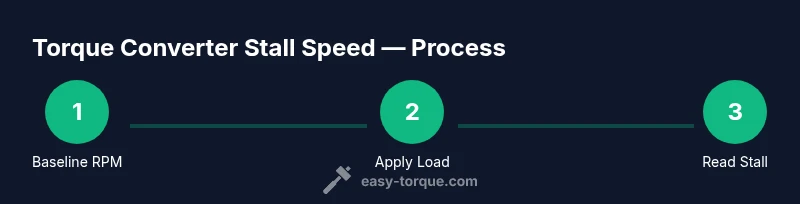
This section provides a high-level map of the process, which will be executed in detail in the dedicated STEP-BY-STEP block. The core idea is to bring the engine to a known operating condition, apply a controlled load to induce stall, and capture RPM readings from both engine and transmission perspectives. You’ll compare these readings to the manufacturer’s stall specification and look for repeatability across multiple trials. A well-documented procedure reduces the risk of misinterpreting transient spikes as true stall and helps pinpoint whether the issue lies in the torque converter, the transmission valve body, or related hydraulic circuits.
Interpreting stall readings
Interpreting stall readings requires context. A stall RPM that matches the factory spec under controlled test conditions generally suggests a healthy torque converter engagement. If stall occurs at a significantly higher rpm than expected, this may indicate excessive slip in the torque converter clutch or fluid pressure problems in the valve body. Conversely, a stall reading that’s too low can point to seized or partially engaged clutches, worn turbine or stator components, or transmission oil issues. Always correlate stall data with engine load, fluid temperature, and the overall driveline behavior observed during the test. Simple, repeatable readings taken under similar conditions build confidence in your diagnosis.
Common pitfalls and troubleshooting
There are several common traps to avoid when checking stall speed. Do not perform the test with a cold engine or after heavy driving, as heat and lubricants alter transmission behavior. Do not rely on a single reading; you should repeat the test to confirm consistency. Ensure the test load is applied gradually and within safe limits to prevent transaxle damage. If readings are inconsistent, verify sensor alignment, voltage supply, and ground connections for your diagnostic tools. Finally, ensure you’re comparing to a documented stall spec for your exact model and year; using generic numbers can lead to incorrect conclusions. By following these cautions, you reduce the risk of misdiagnosis and improve result reliability.
Tools & Materials
- Digital tachometer or RPM sensor(Prefer a non-contact unit; verify engine RPM accurately during the test)
- OBD-II scan tool or data logger(Capture RPM and engine load for comparison; ensure compatibility with your vehicle)
- Factory service manual or stall spec sheet(Have the manufacturer’s acceptable stall range for your model handy)
- Test load method (e.g., calibrated dyno or controlled chassis load)(Used to bring the engine to stall without harming the driveline)
- Wheel chocks and secure parking area(Prevent vehicle movement during testing)
- Safety gear (gloves and eye protection)(Personal protection during setup and testing)
Steps
Estimated time: 75-90 minutes
- 1
Prepare the vehicle and workspace
Park on a level surface, engage the parking brake, and place chocks on the wheels. Confirm the engine is cool enough for a safe test, then connect your testers so they’re ready to monitor RPM and transmission signals. This step establishes a safe baseline environment.
Tip: Document ambient temperature and parking brake status to help compare test results later. - 2
Warm up and establish baseline idle
Start the engine and bring it to normal operating temperature. Record idle RPM with the tachometer and confirm readings against expected idle values for your engine. A consistent baseline helps normalize subsequent stall measurements.
Tip: Allow at least 5-10 minutes of warm-up before recording baseline readings. - 3
Set transmission to neutral/park and safety check
Place the transmission in neutral or park as specified by the vehicle manual. Ensure the parking brake and chocks remain engaged. Re-check all connections on your tachometer and data logger before applying any load.
Tip: Double-check that the vehicle cannot roll during the test—safety first. - 4
Apply controlled load to reach stall
With the engine at operating temperature, gradually apply the load using the test method (dyno or calibrated load). Monitor engine RPM and look for the point where RPM stops rising despite increased load, indicating stall.
Tip: Increase load slowly in small increments to avoid sudden torque spikes that could harm the drivetrain. - 5
Record stall RPM accurately
Once you observe a stable stall condition, capture the engine RPM and the corresponding transmission readings. Record at least 2-3 consistent trials for reliability.
Tip: Take multiple measurements under the same conditions to verify repeatability. - 6
Compare readings to spec and interpret
Cross-check the measured stall RPM against the factory spec for your model. Look for consistency across trials and assess whether readings indicate normal slip or potential clutch/hydraulic issues.
Tip: If readings are significantly out of spec, plan further diagnostics on the torque converter or valve body. - 7
Wrap up and document results
Turn off engines and equipment, remove test gear, and log the results with date, temperature, load method, and any anomalies. Store your notes for future reference or ongoing maintenance planning.
Tip: Keep a maintenance log to track stall behavior over time and detect trends.
Your Questions Answered
What is torque converter stall speed?
Stall speed is the engine RPM at which the torque converter clutch engages under load, causing the engine to stay at a steady RPM while power is transmitted to the drivetrain. It’s a key diagnostic value for converter and transmission health.
Stall speed is the engine RPM where the torque converter engages under load, keeping RPM steady while power passes to the wheels.
Why does stall speed vary with engine load?
Stall speed changes with the amount of load, fluid temperature, and hydraulic pressure in the transmission. Variations help identify issues like clutch wear, fluid problems, or valve body faults.
Stall speed changes with load and temperature and can reveal clutch or hydraulic problems.
Can stall speed testing damage my transmission?
When performed carefully with controlled load and proper safety, stall speed testing should not cause damage. Avoid excessive loads and sudden bursts that can stress drivelines. Follow manufacturer guidance and use protective equipment.
If you test with control and care, it’s generally safe, but avoid overloads that stress the system.
What tools do I need to test stall speed?
You’ll need a reliable tachometer, an OBD/data logger, a safe load method (dialed-in dyno or equivalent), wheel chocks, and the vehicle’s stall spec from the manual. Ensure you have a safe workspace and proper PPE.
Get a tachometer, data logger, a safe load method, and the manufacturer’s stall spec.
How do I know if a stall reading is bad?
A stall reading that deviates significantly from the specified range under controlled test conditions, or readings that are inconsistent across trials, suggests a potential problem with the torque converter, fluid, or valve body.
If readings are off or inconsistent compared with the spec, there may be a problem.
Is stall speed the same for all vehicles?
No. Stall speed varies by model, engine torque, transmission design, and fluid conditions. Always compare to the factory spec for your exact make and model.
Stall speed isn’t universal; use your exact vehicle’s spec.
Watch Video
Top Takeaways
- Know what stall speed means for the torque converter.
- Prepare tools, references, and a safe test setup before starting.
- Apply controlled load and capture repeatable stall readings.
- Compare results to factory specs and consider driveline health implications.
- Document results and note any anomalies for future diagnostics.