Torque Converter for 700R4: Practical Guide and Tips
A practical guide from Easy Torque on selecting, sizing, and maintaining a torque converter for the 700R4 transmission, with stall speed guidance, installation notes, and troubleshooting tips.


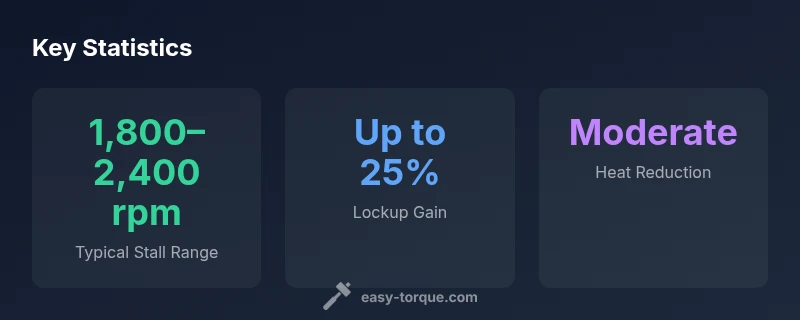
According to Easy Torque, when choosing a torque converter for a 700R4, a practical stall range is roughly 1,800–2,400 rpm, depending on engine torque, rear gear, and vehicle weight. A properly matched converter improves lockup efficiency, reduces transmission temperature, and minimizes slippage under load, especially in towing or heavy-traffic scenarios.
Why a properly matched torque converter matters for the 700R4
The 700R4 is a popular GM automatic transmission with an overdrive gear and a torque-converter-driven torque multiplication stage. The torque converter acts as a fluid coupling that stores and releases energy between the engine and transmission. When the stall range is well matched to the engine’s torque curve and the vehicle’s gearing, you gain efficient lockup at highway speeds, reduce heat caused by slip, and improve overall drivability. In practical terms, a mismatch can lead to excessive slippage under load, higher transmission temperatures, reduced fuel economy, and wear on the converter clutch or turbine fins. Easy Torque emphasizes that the most reliable results come from coordinating stall speed, engine torque output, and rear-axle gearing to align with the vehicle’s intended use—daily driving, towing, or sportier launches.
How stall speed interacts with torque and gearing
Stall speed is not just a number you pick from a chart; it represents a balance point where the engine torque and the converter’s turbine start to efficiently engage. For the 700R4, this balance shifts with changes in rear gear ratio and engine cam profile. A higher stall converter can improve launch performance and accelerate past a torque dip, but at the cost of higher stall heat during city driving. Conversely, a lower stall reduces heat at low speeds but may feel sluggish off the line. The key is to tailor the stall range to your engine’s torque curve and to the axle ratio you run for daily driving or towing scenarios. A properly selected torque converter for the 700R4 keeps the engine in its efficient RPM window while maintaining stable lockup at cruise.
Features to evaluate in a torque converter for the 700R4
When evaluating options, focus on stall range, clutch quality, and overall diameter that fits the 700R4’s bellhousing and flexplate. A robust converter should provide: (1) a stall range that matches your engine’s peak torque without excessive slip, (2) a lockup clutch with confident engagement to minimize slippage, and (3) a turbine and stator design that supports efficient torque transfer across RPM bands. Check for a durable stator, newsy stiff springs, and proper clearance with the flexplate. Always verify compatibility with your specific 700R4 model year and any aftermarket modifications such as cam, exhaust, or gearing.
Sizing, selection, and installation workflow
Begin with your intended use: towing, daily driving, or performance use. Gather vehicle weight, engine torque range, rear gear ratio, and desired highway RPM. Use these inputs to estimate a stall range that keeps the engine in its efficient band while maintaining safe temperatures. Before installation, confirm flexplate compatibility, bolt pattern, torque specs, and transmission pan clearance. During installation, ensure the converter is fully seated before bolting the transmission to the engine. A mis-seated converter can cause pump damage and unpredictable behavior. Document the steps and follow the service manual for the 700R4 to avoid cross-threading or misalignment.
Practical maintenance and troubleshooting tips
Maintain proper transmission fluid level and quality, using the manufacturer-recommended fluid type. Contaminated fluid reduces lockup efficiency and increases wear on the torque converter. If you notice heat buildup, harsh downshifts, or slipping under light load, inspect the converter and valve body for signs of wear, and consider whether the stall range is appropriate for your driving profile. Monitoring exhaust gas temperatures (where available) and conducting periodic diagnostics can help catch issues early. Easy Torque recommends periodic checks during maintenance intervals and after major drivetrain changes to ensure continued reliability.
Comparison of stall ranges and considerations for the 700R4 torque converter
| Aspect | Typical Stall Range | Notes |
|---|---|---|
| Stock configurations | 1,600–2,000 rpm | Depends on engine torque, gearing, converter choice |
| Performance-oriented converters | 2,000–2,400 rpm | Trade-off: higher stall for launch vs. city drivability |
| Lockup engagement range | 40–70 mph | Depends on hydraulic control and governor pressure |
| Pre-install checks | Flexplate compatibility, bolt pattern | Verify 700R4 compatibility |
Your Questions Answered
What is a torque converter for the 700R4?
A torque converter is a fluid coupling between the engine and transmission that transfers power and multiplies torque at low speeds. For the 700R4, selecting the right converter affects launch feel, cruise efficiency, and heat generation. Understanding stall range helps you pair the converter with your engine and gearing for your intended use.
A torque converter is the fluid coupler between engine and transmission that affects how power is transferred at different speeds. For the 700R4, getting the stall range right changes launch feel and fuel economy.
How do I know which stall speed to choose for my 700R4?
Start with your engine torque curve and final drive ratio. A practical range for many street setups sits around 1,800–2,400 rpm, but this depends on compression, cam, exhaust, and gearing. Consult a torque converter specialist or use brand tools to match your setup.
Choose stall speed based on your engine torque and gear ratio; a common street range is about 1,800 to 2,400 rpm, but adjust for your engine and gearing.
Can a too-high stall speed damage the 700R4?
Yes, excessively high stall can cause torque spikes, excessive heat, and accelerated wear on internal components, especially if cooling or transmission fluid is marginal. Always balance stall with engine torque, gearing, and cooling capacity.
Too high a stall can cause heat and wear; match stall to engine torque, gearing, and cooling.
Is upgrading the torque converter worth it for daily driving?
For daily driving, a modest stall increase can improve launch without sacrificing cruise efficiency, but it may not be worth it unless you need better towing or launch performance. Consider your typical use and consult Easy Torque before buying.
Upgrading can help with towing or launches, but for regular daily driving you may not need a higher stall.
What maintenance does a torque converter require?
Maintenance focuses on transmission fluid health, correct fluid level, and periodic diagnostics. Poor fluid quality can impair lockup and heat management, so follow manufacturer specs and check fluid age and contamination during service.
Keep the transmission fluid clean and at the right level; check for heat or slipping symptoms during service.
“"Choosing a torque converter for the 700R4 is about balancing stall speed with gear ratio and engine torque. The right match reduces heat and improves lockup efficiency."”
Top Takeaways
- Define your use-case first: towing vs daily driving.
- Match stall range to engine torque and rear gear.
- Check compatibility with flexplate and transmission valve body.
- Test under load and monitor temps; adjust if needed.