What Torque Converter Do I Need: A Practical DIY Guide
Learn how to choose the right torque converter for your engine, transmission, and use case with practical steps, specs to check, and a clear sizing workflow from Easy Torque.


To determine what torque converter you need, assess your vehicle, engine torque, and intended use. Key factors include stall speed, torque multiplication, transmission compatibility, and efficiency. Start by identifying your transmission model, check a reputable spec chart, and compare stall ranges for your driving style (street, towing, or performance). Having the right converter improves throttle response and fuel economy.
What a torque converter does and why sizing matters
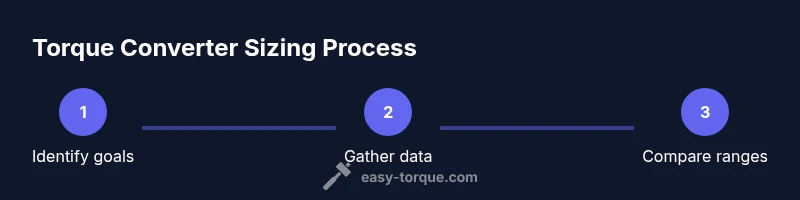
Understanding what a torque converter does is the first step to answering what torque converter do i need. According to Easy Torque, selection starts with your engine torque, transmission type, and the driving you do most. A torque converter is a fluid coupling that transmits engine torque to the transmission while allowing slip at low throttle. Sizing means matching the converter's stall speed and torque multiplication to your engine's torque curve and the vehicle's intended use. The biggest risks of poor sizing include lugging, shudder, and reduced fuel economy under load. The Easy Torque team recommends a data-driven approach: define your goals (daily driving, towing, or performance), gather your transmission code and torque data, then compare stall-speed ranges and gear ratios across options. A converter that's too aggressive for a daily driver can cause harsh engagement and overheating; one that's too mild for towing will stall under load. With solid data, you can confidently select a converter that fits your drivetrain and budget, a principle Easy Torque applies to every sizing decision.
Key factors that drive torque converter selection
Selecting the right torque converter hinges on several core factors. Stall speed is the most talked-about spec because it defines when the turbine will begin to lock up and multiply torque. Torque multiplication matters for engine-heavy tasks like towing, where you want more torque at lower RPMs. Diameter and internal clutch design affect efficiency, heat production, and the converter’s ability to fill and unload smoothly. Transmission compatibility is non-negotiable; even a perfect stall number won’t help if the converter won’t bolt up or maintains the wrong fluid pathway. Finally, driving goals – daily commuting, heavy towing, or performance launches – shape the ideal balance between throttle response, cruising efficiency, and reliability. Easy Torque emphasizes mapping your goals to a target stall range and then validating with cross-reference data from OEM specs and trusted charts.
Matching your engine torque and transmission
A key step in the sizing process is aligning engine torque with the transmission’s input characteristics. If you’re asking what torque converter do i need, start by locating your engine torque curve and the transmission code. Use the OEM service manual or manufacturer charts to identify the torque capacity and maximum stall range for the specific transmission model. Then compare these figures to the converter’s rated stall speed. The mismatch between torque capacity and stall range is the most common reason for poor performance: too much stall reduces idle quality and fuel economy, while too little stall limits acceleration and load-pulling ability. Cross-reference gears and ratio changes to ensure the converter’s behavior matches the vehicle’s gearing strategy.
Stall speed, duty cycle, and driving goals
Stall speed is not a single number; it varies with temperature, fluid, and wear. For daily drivers, a mid-range stall is often ideal to balance throttle response and idle smoothness. For towing, higher stall speeds can help maintain engine RPM in the optimal range under load, improving cooling and power delivery. For performance applications, a higher stall speed lets the engine reach peak torque more quickly, enabling quicker launches. When evaluating what torque converter do i need, consider your duty cycle: how often you tow, how you drive on hills, and how much you value efficiency at cruising speeds. Tie stall speed to your typical RPM range in each scenario and confirm with a cross-check against the vehicle’s torque curve.
How to measure and gather the right data
Accurate sizing starts with data collection. Gather your transmission model, VIN, and the exact torque specs from the OEM manual. Record the current stall range if you’re upgrading and note any symptoms such as slipping, shudder, or overheating under load. Measure clearances around the converter and check the pan and flexplate for compatibility. If you’re unsure, use manufacturer cross-reference charts and a trusted aftermarket catalog to map your data to candidate converters. Finally, document your measurements and predicted operating range to facilitate a clean comparison when you review options.
Interpreting common torque converter specs
Key specs include stall speed (rpm), torque multiplication (a ratio indicating how much torque is increased), transmission compatibility, and diameter. Stall speed is influenced by fluid temperature and pressure; higher stall speed typically means more torque at launch but less idle efficiency. Torque multiplication reflects how much the converter amplifies engine torque at a given RPM, which is critical for towing or heavy pulling. The lockup clutch reduces slip at cruising speed to improve fuel economy, but it can affect throttle response. Understanding these terms helps you translate a catalog listing into real-world performance for your car.
Practical paths for different use cases
- Daily driver: A balanced converter that preserves fuel economy with smooth engagement. Look for a moderate stall in the mid-range and good lockup behavior.
- Tow vehicle: A higher stall converter with robust cooling and transmission compatibility to maintain RPM under load and prevent overheating.
- Performance enthusiast: A high-stall converter paired with a strong torque curve, designed for quick launches and aggressive throttle response, while still offering driveability on the street.
Across all use cases, ensure the converter is compatible with your transmission’s valve body, drum size, and legal installation practices. Easy Torque recommends testing in a controlled environment and keeping a record of performance changes to reassess if your goals shift.
Common mistakes and pitfalls
One common pitfall is assuming a larger stall is always better. Oversizing stall can degrade idle quality and cause overheating, especially in city driving. Another mistake is neglecting transmission compatibility;
Sizing workflow checklist
- Identify your exact transmission model and engine torque range
- Gather OEM torque specs and cross-reference with converter charts
- Define your primary use case (daily, towing, performance)
- Compare stall speed ranges to your target RPM window
- Verify bolt pattern, diameter, and clearance in your vehicle
- Choose a converter with appropriate lockup behavior for cruising efficiency
- Plan installation with proper torque specs and safety precautions
Tools & Materials
- Vehicle service manual (transmission specs)(Exact model and torque specs for fastener locations)
- OEM torque spec chart or cross-reference(Locate stall speed and torque range data)
- Torque wrench or digital torque adapter(Verify fastener torque during installation)
- Safety gear (gloves, eye protection)(Personal protective equipment for shop work)
- Measuring tools (caliper or ruler)(Confirm clearances and diameters)
- Notes/Data sheet(Record measurements, part numbers, and data)
Steps
Estimated time: 2-6 hours
- 1
Identify your transmission model and engine torque
Locate the transmission tag and confirm the exact model. Retrieve the engine torque specification from the service manual and note the peak torque and torque curve shape. This anchors your sizing decisions.
Tip: If the tag is hard to read, use the VIN to cross-reference the model in the official manual. - 2
Gather relevant data for comparison
Collect stall speed ranges, torque capacity, and the recommended fluid type from OEM charts. Record your vehicle's typical load and driving conditions to map to a target RPM window.
Tip: Create a simple data sheet with fields for stall speed, torque multiplication, and your use-case score. - 3
Define your use-case priorities
Clarify whether daily driving, towing, or performance is the primary goal. This determines acceptable compromises between idle quality and launch power.
Tip: Assign a priority score (e.g., 1-5) to each use case to keep decisions objective. - 4
Compare stall ranges to target RPM window
Match stall speed to your desired operating RPM range for your most common loads. Avoid ranges that push the engine too high or too low in cruising gear.
Tip: Prefer a converter whose stall range sits comfortably in the middle of your RPM band at typical loads. - 5
Check compatibility and fitment
Verify bolt pattern, mounting diameter, fluid capacity, and pan clearance. Confirm that the converter’s lockup behavior aligns with your transmission’s control logic.
Tip: If in doubt, consult the converter manufacturer’s fitment guide or a trusted technician. - 6
Make a final selection and plan installation
Choose a converter that balances your goals and budget. Review warranty terms and recommended service intervals before purchase.
Tip: Prepare a short installation checklist and have a service manual handy during the job.
Your Questions Answered
What factors determine the right torque converter size?
Size is driven by engine torque, transmission model, and your use case. Stall speed, torque multiplication, and lockup behavior define the launch and cruising performance. Always cross-check with OEM specs and reputable charts before purchasing.
Size depends on engine torque, transmission type, and use. Check stall speed, torque multiplication, and lockup, and always verify with OEM specs.
Can I use a torque converter from a different model?
Only if the converter matches your transmission’s bolt pattern, fluid capacity, and control logic. Cross-reference part numbers and verify the stall range aligns with your engine torque and duty cycle.
Only if the bolt pattern, fluid capacity, and control logic match. Cross-check part numbers and stall ranges.
What is stall speed and why does it matter?
Stall speed is the RPM where the torque converter starts to multiply torque. A higher stall helps heavy loads but can hurt idle quality; a lower stall improves cruising efficiency but reduces launch power.
Stall speed is the RPM where torque multiplying begins. Higher stall helps towing; lower stall improves efficiency.
How do I measure the correct converter for my car?
Gather data from OEM charts, confirm transmission model, and measure the converter diameter and bolt pattern. Use a data sheet to plot options and compare against your torque curve.
Collect OEM data, confirm the model, and measure the converter’s size and bolt pattern. Compare options with your torque curve.
Is upgrading to a higher stall safe for daily driving?
It can improve towing and launch but may reduce idle quality and fuel economy. Ensure the rest of the drivetrain is capable and that you’re comfortable with potential trade-offs.
Higher stall can help towing but may reduce idle smoothness and efficiency. Be mindful of trade-offs.
Do torque converters affect fuel economy?
Yes, mainly through lockup efficiency and stall speed. A properly matched converter minimizes parasitic loss and improves cruising efficiency, especially at steady speeds.
Matched converters reduce losses and can improve highway fuel economy.
Top Takeaways
- Identify your exact transmission model and engine torque needs
- Compare stall speed to driving goals and load
- Verify compatibility with OEM specs before purchasing
- Consider cost, efficiency, and reliability trade-offs
- Document measurements for future maintenance