What to Do If Your Torque Converter Is Stuck: A DIY Guide
Learn practical steps to diagnose and address a stuck torque converter, with safety tips, required tools, and clear guidance on when to call a professional.


Quick Answer: If your torque converter is stuck, stop driving immediately and assess the symptoms safely. This guide walks you through safe checks, essential tools, and when to call a pro. Following these steps helps prevent further damage and saves time. It also outlines safety precautions, basic tests you can perform, and clear red flags that require professional service. Keep this as a quick-start reference.
Symptoms and what they mean
According to Easy Torque, a stuck torque converter often manifests as engine revving without movement, shuddering when shifting, or a transmission that won’t engage into drive. In some vehicles you may notice poor acceleration or a stall without power. These symptoms aren’t always caused by the converter itself; they can indicate a failing transmission, a bad torque converter seal, or clogged passages in the fluid circuit. Start by ruling out basic issues like misadjusted shift linkage, a bad lock-up solenoid, or low transmission fluid. A systematic check helps save time and directs you toward the right repair path.
In addition to the mechanical cues, note any changes in pedal feel, odd noises, or overheating odors. Jot down recent towing, heavy loads, or harsher driving conditions, as these can stress the torque converter and accelerate wear. A careful observation phase sets the stage for accurate diagnosis and safer decisions.
Safety first: do not drive a car with suspected converter problems
Any sign of stall or loss of forward motion can lead to drivetrain damage. The correct approach is to stop the vehicle in a safe place, engage the parking brake, turn off the engine, and wait for conditions to cool. If you must move the car to safety, use a tow and never attempt to push or run the engine while in gear. Wear eye protection and gloves; transmission fluid can be harmful. Disconnect the battery only if you are working near electrical connectors; otherwise skip. These precautions protect you and limit further damage. Safety should always come first when dealing with a suspected stuck torque converter.
Initial checks you can perform safely
Before pulling parts or disassembling anything, verify the obvious: is the transmission fluid level correct? Either a low level or burnt-fluid symptoms can mimic a converter problem. Check the dipstick with the engine warm and the car on level ground. Look for leaks around the transmission pan and observe color, smell, and consistency. A burnt or dark, gritty fluid indicates possible internal wear or overheating. Confirm the parking brake is fully engaged and wheel chocks are in place. Finally, test the shift linkage by moving the selector through Park, Neutral, Drive, and Reverse to ensure engagement feels normal and that the linkage is not binding.
Common causes behind a stuck torque converter
The torque converter can become stuck due to internal valve or turbine damage, a failed lock-up clutch, or contaminated transmission fluid. Debris in the fluid can clog passages and prevent the torque converter from decoupling, leaving the engine and transmission mismatched. Overheating due to heavy towing or sustained stop-and-go traffic can degrade the clutch; wear on the stator and turbine gears can also bind the converter. External causes include a sticky gear linkage or a failing transmission control module wiring harness. Understanding these causes helps you decide whether to proceed with DIY checks or call a pro.
Diagnosing beyond symptoms
Using an OBD-II scanner, retrieve transmission fault codes that relate to the TCC or transmission control module. Codes such as P0740 or P0760 may indicate torque converter or solenoid issues, but cross-check with your vehicle’s service manual since codes vary by make. If you have access to a service manual, follow procedures for testing the lock-up solenoid and fluid pressure at idle and at RPM. Basic checks include measuring fluid temperature, looking for metal particles in the pan, and ensuring the input shaft spins freely with the engine off. Many diagnostics require specialized tools and knowledge, so plan accordingly.
Step-by-step plan to address a stuck torque converter
- Stop driving as soon as you detect symptoms; continuing to drive can cause collateral damage.
- Gather essential tools and safety gear before beginning any work.
- Safely raise the vehicle, support with stands, and chock the wheels.
- Check and top up transmission fluid if needed; use the correct specification for your vehicle.
- Drain the transmission fluid from the pan to inspect for metal debris and wear.
- Remove the pan and inspect the filter and gasket for damage or contamination.
- Check the torque converter seal and the valve body for obvious leaks or blockages.
- Inspect electrical connectors to the transmission and TCC solenoid for corrosion or loose pins.
- Reinstall the pan with a fresh gasket, refill fluid to the correct level, and clear codes if applicable.
- Test-drive at a safe speed to confirm behavior; if symptoms persist, do not continue driving and arrange professional service.
Tip: Keep a detailed record of symptoms, fluid color, and any codes observed to help the technician diagnose faster.
When to stop and call a pro
If the vehicle fails to move, shudders excessively, or you notice metal shavings in the pan, stop and seek professional help. A stuck torque converter often requires transmission removal or internal component replacement, tasks that demand specialized tools and expertise. Do not attempt to disassemble or force components; the risk of dangerous failure and additional damage is high. Tow the vehicle if needed and share your symptom log with the shop.
Preventive maintenance to avoid future problems
Regularly monitor transmission fluid level and condition, replace the fluid and filter at the service intervals specified for your vehicle, and ensure the cooling system is functioning to prevent overheating. Avoid aggressive driving patterns that place extra load on the torque converter, especially during towing or heavy stop-and-go traffic. Address leaks promptly and replace worn seals before they degrade performance. A proactive maintenance plan helps keep the torque converter functioning and reduces the likelihood of future failures.
What to expect during professional service
When a shop handles a stuck torque converter, expect a thorough diagnosis that may include pressure tests, solenoid tests, and a test drive after repair. The typical repair path could involve fluid flush, replacing the torque converter, gasket/seal replacement, and possibly a rebuilt or remanufactured transmission if damage is extensive. Replacing the torque converter is not unusual in severe cases, and professional technicians will ensure the system is properly bled, filled, and aligned to spec. Document all findings and prior service history for reference.
Next steps and resources
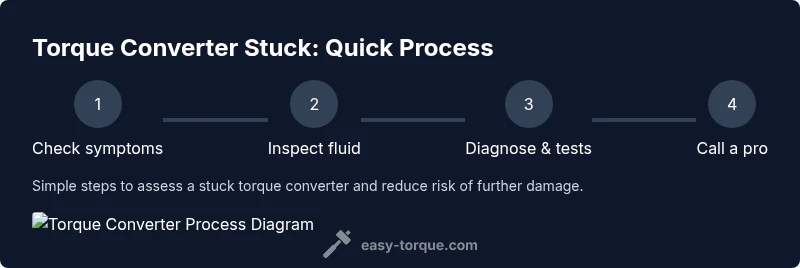
After resolving the issue, schedule a follow-up maintenance check to confirm the problem is fully addressed and avoid recurrence. Keep a maintenance log and hydrate your knowledge with trusted DIY resources such as service manuals and reputable automotive training sites. To keep the topic organized, you can refer to our comprehensive process for diagnosing and addressing torque converter problems, while remembering that safety remains paramount and professional help is available when needed.
Tools & Materials
- Drain pan(Large enough to hold transmission fluid; place under pan.)
- Wheel chocks(Two blocks; keep vehicle from moving.)
- Safety glasses and gloves(Protect eyes and hands from hot fluid.)
- Floor jack and jack stands(Safely lift and support vehicle.)
- Socket set and screwdrivers(Remove pan bolts and connectors.)
- Torque wrench(Torque pan bolts and other fasteners to spec.)
- Transmission fluid compatibile with vehicle(Check spec in owner manual.)
- New transmission filter and gasket(Optional; depends on model.)
- Shop rags and a flashlight(Clean work area and inspect for leaks.)
- OBD-II scanner( Helpful to read transmission codes.)
- Service manual / digital guide(Follow vehicle-specific steps.)
Steps
Estimated time: 2-5 hours
- 1
Assess safety and prepare
Identify a safe workspace, gather PPE, and ensure the vehicle cannot move. This step reduces risk during diagnostics.
Tip: Always start from a cold engine to avoid hot components. - 2
Secure the vehicle
Chock wheels, raise with a jack, and support with stands. Never rely on the jack alone.
Tip: Use wheel chocks on both sides of the wheels. - 3
Check fluid level and condition
With the engine warm, check transmission fluid level and color. Look for burnt odor or metal particles.
Tip: If fluid is contaminated, plan for a flush as part of service. - 4
Scan for fault codes
Use an OBD-II scanner to identify any transmission-related codes that point to TCC or valve issues.
Tip: Codes aren’t definitive; use them to guide testing. - 5
Inspect external components
Check shift linkage, connectors to the transmission, and visible seals for leaks or damage.
Tip: A binding linkage can mimic converter symptoms. - 6
Drain and inspect the pan
Carefully drain fluid, remove the pan, and inspect the filter and gasket for wear or debris.
Tip: Note any metal fragments or clutch material. - 7
Assess internal wear indicators
Look for unusual wear signs in the pan and consider professional testing if internal wear is suspected.
Tip: Some issues are not visible without disassembly. - 8
Decide on DIY vs professional path
If symptoms persist after basic checks, plan a professional service. Do not push beyond your skill level.
Tip: Document everything to help the technician. - 9
Reassemble and refill
Reinstall the pan with a new gasket, refill to the correct level, and clear any trouble codes after the service.
Tip: Double-check torque specs on pan bolts. - 10
Test drive and evaluate
Take a short, controlled drive to ensure proper engagement; monitor for unusual noises or slipping.
Tip: If problems return, stop and seek professional diagnosis.
Your Questions Answered
Is it safe to drive a vehicle with a stuck torque converter?
No. Driving with a stuck torque converter can cause significant transmission damage. Stop driving as soon as it is safe to do so and seek professional evaluation.
No. Drive only if you can do so safely; otherwise stop and seek professional help.
What are common signs of a stuck torque converter?
Common signs include engine revving without movement, shuddering, overheating odors, and loss of forward motion. These can also indicate other transmission problems, so thorough diagnosis is essential.
Engine revs but car won’t move and you might feel a shudder.
Can I fix a stuck torque converter myself?
Most stuck torque converter issues require disassembly and replacement of internal components, which is best left to trained technicians with the proper tools and safety precautions.
Often not a DIY job; professional service is usually required.
How long does a professional repair typically take?
Repair duration varies by vehicle and extent of damage; expect a multi-hour process including diagnosis, part replacement, and system recheck.
It can take several hours depending on the work needed.
What should I do to prevent this in the future?
Maintain proper transmission fluid level and condition, avoid overheating, and address leaks promptly. Regular maintenance reduces risk of converter problems.
Keep your transmission fluid healthy and watch for leaks.
Will a stuck torque converter damage the engine?
Yes, prolonged issues can transmit abnormal loads to the engine and other drivetrain components, potentially causing broader damage.
There is a real risk to the engine and gearbox if symptoms aren’t addressed.
Watch Video
Top Takeaways
- Identify symptoms early to avoid collateral damage.
- Prioritize safety and proper fluid management.
- Use codes and tests to guide diagnosis, not guesswork.
- DIY checks are limited; professional service may be needed for replacement.
- Document symptoms and steps to aid the technician.