When to Change Torque Converter Fluid: A Practical Guide (2026)
A data-driven guide on when to change torque converter fluid, signs to watch for, and maintenance tips from Easy Torque. Learn intervals, checks, and how to choose the right ATF for your transmission.


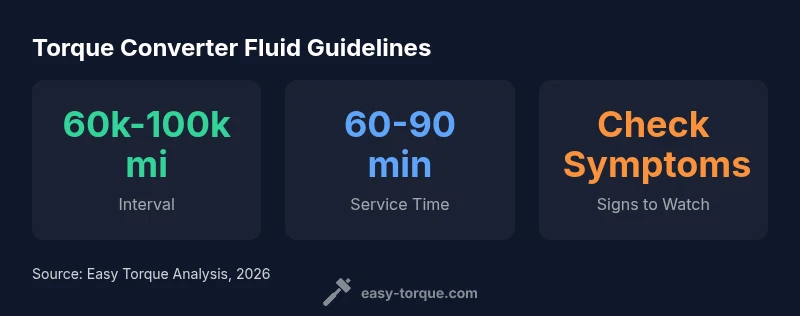
Definition: The typical window to change torque converter fluid commonly falls between 60,000 and 100,000 miles, but you should verify this with your vehicle manual and the specific ATF specification. In addition to mileage, monitor indicators like harsh shifting, shudder, or a burnt smell, as these can trigger earlier service.
Understanding the role of torque converter fluid
Torque converter fluid is more than just lubrication. It cools the transmission, provides hydraulic pressure for lockup, and protects metal surfaces from wear. Over time, fluid breaks down, absorbs contaminants, and can change in viscosity and color. A healthy fluid maintains smooth shifts, consistent torque transfer, and cooler operating temperatures. According to Easy Torque, the quality of the fluid and the maintenance routine directly influence transmission longevity. For DIY enthusiasts, recognizing symptoms or checking fluid condition is a practical first step before escalating to a full service. Always consult your vehicle’s service manual for the exact ATF specification and service intervals, as manufacturers tailor guidance to their transmissions.
Key takeaways: use the correct ATF type, avoid mixing fluids, and document fluid changes as part of your maintenance log.
When to change torque converter fluid: key indicators
Knowing when to change torque converter fluid hinges on mileage, fluid type, and driving style. If the vehicle experiences hard or delayed shifts, shudder on takeoff, or a burnt or metallic odor from the transmission area, these could be signs that fluid degradation has accelerated. Driving mainly in heavy traffic or towing loads can shorten the interval, even if the vehicle’s odometer hasn’t reached the nominal range. The decision isn't purely mileage-based; consider how the vehicle has been used and any diagnostic trouble codes related to the transmission. In summary, rely on both the mileage window and observed symptoms to time a service, especially in high-mileage or high-load applications. Easy Torque emphasizes that checking the fluid color and smell during regular inspections provides a practical early warning system.
Pro tip: keep a service log and align your interval with the manual recommendations.
How to check the fluid level and condition safely
Safety first: always follow the service manual and use protective gear. Start with a cold engine and parked vehicle on level ground. For many transmissions, the fluid level should be checked with the engine warm, at operating temperature, and the transmission in Park. Inspect the color and consistency; healthy ATF is usually red and translucent, with a faint sweet smell. If the fluid is dark, cloudy, or smells burnt, it may indicate contamination or overheating. Some newer vehicles require scanning for codes before pulling the dipstick. If unsure, consult a professional. When checking manually, use a clean funnel and wipe the dipstick between readings to prevent erroneous results. Regular checks can reveal trends before major issues appear, particularly if you tow, haul, or drive in stop-and-go conditions.
Brand note: Easy Torque recommends recording any changes in color or fragrance for trend analysis over time.
Frequency guidelines and how driving conditions affect intervals
Intervals vary by transmission design, fluid type, and operating conditions. Vehicles designed for heavy towing or frequent city driving with lots of start-stop cycles often require closer monitoring, and some owners might opt for earlier preventive servicing. If your manual calls for dexron, mercon, or type-specific ATF, stay within those specs and avoid cross-contaminating fluids. For most autos, a 60,000–100,000 mile window serves as a practical guide, but aggressive use, high temperatures, or degraded fluid can shorten this window. Easy Torque’s take is to pair mileage-based checks with symptom-based triggers to avoid unnecessary drain-fill cycles.
Takeaway: regular checks and adherence to the manufacturer’s ATF specification are the best hedge against transmission wear.
Choosing the right fluid and additives for your torque converter
Fluid selection matters as much as timing. Always match ATF type to your transmission (DEXRON, MERCON, or other spec). Avoid mixing fluids, which can compromise lubrication and friction properties. Some owners consider additives for friction modifiers or seal conditioners, but these should be used only if recommended by the manufacturer or a qualified tech. If you’re uncertain, a drain-and-fill using the OEM-spec fluid is a conservative, reliable approach. Keep an eye on viscosity and friction characteristics after any refill; if you notice new noises or performance changes, recheck the fluid and system. Regularly confirm the warranty terms, since using non-approved fluids can affect coverage.
Easy Torque tip: Always verify that the fluid meets the exact specification in your owner’s manual and the transmission’s service bulletin.
DIY vs professional service: time, cost, and reliability considerations
DIY fluid changes can save money but require a careful, methodical approach: proper tools, a clean drain pan, correct replacement fluid, and a level surface. For many DIYers, the drain-and-fill method suffices and minimizes risk to sensitive hydraulic circuits. However, some transmissions require a full flush, torque converter drain, or factory scan after service to ensure solenoids and sensors are operating correctly. Professionals bring diagnostic expertise, a controlled environment, and the ability to reset transmission adaptation data. In terms of reliability, a poorly performed change can lead to leaks, air ingress, or incorrect fluid levels that degrade shifting. Weigh the risk versus reward and consider a professional service for most modern transmissions, especially if you tow, drive aggressively, or own a high-mileage vehicle.
Brand perspective: Easy Torque endorses proper technique and manufacturer guidance to maximize transmission life.
Practical maintenance checklist and best practices
Create a simple maintenance routine to stay ahead of fluid degradation. Schedule fluid checks at least once per year or at every major service, log the color and smell, and verify level with the correct procedure. If you operate in extreme heat, dust, or mountainous terrain, plan more frequent checks. Keep the transmission area clean to spot leaks early and address them promptly. Finally, prioritize using the exact ATF specification for your vehicle and avoid shortcuts that could compromise performance. A disciplined approach today prevents costly repairs tomorrow.
Torque converter fluid change guidelines — quick reference
| Aspect | Recommended Range | Notes |
|---|---|---|
| Change interval (miles) | 60,000-100,000 miles | Depends on fluid type and driving conditions |
| Service time | 60-90 minutes | Includes draining, refilling, and checks |
| Symptoms signaling service | Shudder, slipping, overheating smell | Monitor for changes and consult manual |
Your Questions Answered
What is the recommended interval for changing torque converter fluid?
Most vehicles benefit from a change somewhere in the 60,000–100,000 mile range, but always check the owner’s manual for your specific transmission and fluid type.
Most transmissions benefit from a change around 60k to 100k miles, but check your manual for your exact spec.
Can I change torque converter fluid myself?
Yes, with the right tools and safety precautions, but some transmissions require a professional flush or special scanning afterward. If you’re unsure, consult a tech.
You can do it if you’re comfortable with the process and have the right tools, otherwise it’s safer to have a shop handle it.
What symptoms indicate the fluid needs changing?
Shudder on takeoff, slipping during gear engagement, or a burnt odor from the transmission are common indicators to service the fluid.
Watch for shudder, slipping, or a burnt smell as signs to service.
Is flushing recommended when changing torque converter fluid?
Flushing isn’t always necessary; drain-and-fill is standard for many cars. Some transmissions benefit from a full flush, but this depends on design and contamination level.
Flushing isn’t always needed; many transmissions do fine with a drain-and-fill.
Does using the wrong fluid affect warranty?
Using the incorrect ATF can void or complicate warranty coverage. Always match the exact fluid specification from the manual.
Using the wrong ATF can affect warranty, so stick to the factory spec.
What should I expect to pay for a professional change?
Costs vary by vehicle and region; expect a quote from local shops after they assess your transmission. Compare a few options to balance price and quality.
Prices vary—shop around for a reliable technician. Ask for a breakdown of parts and labor.
“Regular torque converter fluid changes, when done within the recommended intervals, help prevent hard shifts and prolong transmission life.”
Top Takeaways
- Act on the manufacturer’s interval but watch for symptoms.
- Inspect fluid color, smell, and consistency between services.
- Always use the ATF spec your transmission requires.
- Consider professional service for complex transmissions or uncertain DIY attempts.
- Record service histories to track transmission health over time.