Who Makes Torque Converters
Explore which manufacturers produce torque converters, how OEMs and aftermarket brands compare, and what this means for maintenance, upgrades, and performance.


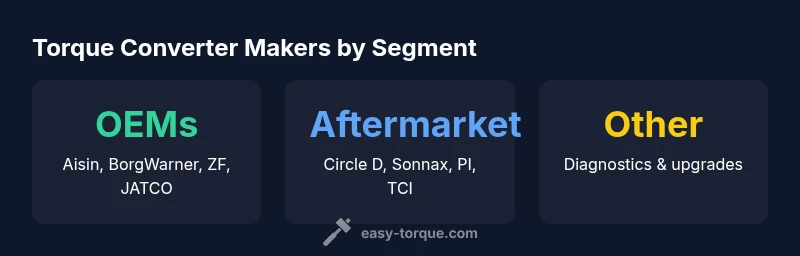
Torque converters are manufactured by a mix of large OEM suppliers and specialized aftermarket firms. The core OEMs that typically design and supply torque converters are major transmission integrators such as Aisin Seiki, BorgWarner, ZF, and JATCO, while the aftermarket segment is led by brands like Circle D, Sonnax, Precision Industries (PI), and TCI Automotive. In short, both OEMs and aftermarket specialists produce torque converters, with OEMs ensuring broad compatibility and aftermarket options delivering performance-focused alternatives.
What determines who makes torque converters
The short answer is simple: torque converters are produced by a mix of the world’s largest automotive component suppliers and smaller, specialized aftermarket firms. In most modern vehicles, the torque converter is designed to work in concert with the transmission and engine. For that reason, the majority of torque converters installed in new cars come from a few large OEM suppliers who integrate the converter with the transmission to meet strict reliability and performance standards. When you look at the aftermarket side, you encounter brands that focus on performance, durability, and specific vehicle platforms. If you’re researching who makes torque converters for a project, understanding this ecosystem helps you separate factory-grade options from aftermarket upgrades that optimize stall, efficiency, and response.
The OEM landscape: big players and why they matter
In the OEM space, a handful of companies dominate the supply chain for torque converters as part of automatic transmissions. Aisin Seiki, BorgWarner, ZF Friedrichshafen, and JATCO are frequently cited because they design, validate, and manufacture torque converters that are paired with the transmissions they develop for automakers. This means the converter isn’t an afterthought; it’s engineered to deliver specific lockup behavior, stall speed ranges, and hydraulic efficiency that align with the vehicle’s overall powertrain strategy. For DIY enthusiasts, this alignment can translate into predictable behavior during normal driving and when towing or under heavy loads. The Easy Torque team notes that the strongest advantage of OEM torque converters is system compatibility and long-term reliability.
Aftermarket and specialty torque converter makers
Beyond the OEM supply chain, the aftermarket segment includes brands that tailor torque converters for performance, drag racing, and heavy-duty applications. Circle D Torque Converters, Sonnax, Precision Industries (PI), and TCI Automotive are recognized for offering products aimed at different performance goals—from improved stall characteristics to better low-end torque delivery. These firms often provide a wide range of torque converters designed to be compatible with popular transmission families, but compatibility can vary by model year and business usage. When choosing an aftermarket converter, consider your vehicle’s torque curve, gear ratios, and the level of daily drivability you require. Always verify the converter’s compatibility with your transmission controller and, if possible, consult a professional.
How torque converters are designed and manufactured
Manufacturing a torque converter begins with precise rotor geometry, stator design, and impeller balance. The core components—impeller, turbine, stator, and the outer shell—are assembled with high-strength materials to withstand torque, heat, and vibration. Modern converters incorporate friction materials that balance stall performance with durability. In OEM contexts, supply chains emphasize compatibility with the transmission and engine calibration, while aftermarket producers may emphasize performance characteristics such as higher stall torque, improved valve body control, and enhanced internal clearances for better fluid dynamics. The testing phase includes dynamometer runs, thermal testing, and durability cycling to ensure the converter holds up under real-world conditions.
How to evaluate torque converters for your vehicle
Choosing a torque converter requires aligning the product with your vehicle’s intended use. For daily drivers, OEM converters often offer the best balance of reliability and fuel economy. For performance builds, aftermarket converters can unlock faster response and higher stall speeds, but they may sacrifice some driveability at low speeds. Key factors include stall torque, lockup behavior, torque capacity, transmission compatibility, and the type of friction material. Always verify compatibility with your engine torque curve, the transmission’s control logic, and the vehicle’s gearing. If you tow or haul heavy loads, you may want a converter designed to maintain efficiency under high thermal load. When in doubt, consult the converter’s documentation and a qualified technician.
Common myths about who makes torque converters
A persistent myth is that all torque converters from the upgrade market are automatically superior to OEM units. Truthfully, performance gains depend on how well a converter matches your vehicle’s setup. Another misconception is that aftermarket converters will always deliver better fuel economy; in fact, some aftermarket options may reduce efficiency in normal driving if not tuned correctly. Finally, some drivers assume all torque converters are universal; in reality, compatibility is model- and transmission-specific. Trust reputable brands and verify fitment data before purchasing.
The impact of torque converters on performance and maintenance
Torque converters influence how an engine’s torque is transmitted to the drivetrain. A well-matched converter improves acceleration, reduces transmission slip, and supports smoother shifts, especially under load. Maintenance considerations include checking for excessive heat buildup, fluid condition, and proper fluid type. Some aftermarket converters are designed to tolerate higher temperatures and maintain performance longer under aggressive driving—though they may require more frequent checks and professional setup. For everyday maintenance, sticking to recommended fluid specifications and monitoring for signs of abnormal slipping or shudder is prudent.
Practical steps for DIY mechanics: evaluating and upgrading
If you’re a DIY mechanic contemplating a converter upgrade, start by defining your goals: daily drivability, performance, or towing capability. Gather vehicle-specific data such as engine torque curve, transmission type, and gear ratios. Cross-check compatibility lists from the converter manufacturer and consider having your installation reviewed by a professional. Plan for a proper cooling setup and ensure the transmission’s control module is calibrated to manage the new fluid dynamics. A measured approach—confirming fitment, testing in multiple driving scenarios, and documenting changes—helps maximize the chances of a successful upgrade.
Overview of the converter supply ecosystem
| Category | Typical Manufacturers | Notes |
|---|---|---|
| OEM Torque Converters | Aisin Seiki, BorgWarner, ZF Friedrichshafen, JATCO | Designed for factory transmissions and vehicle platforms |
| Aftermarket Performance Converters | Circle D Torque Converters, Sonnax, Precision Industries (PI), TCI Automotive | Performance-focused options for enthusiasts |
| Independent/Testing Suppliers | Sonnax, Precision Industries | Specialize in diagnostics, rebuilds, and upgrades |
Your Questions Answered
Who makes torque converters for OEM transmissions?
Most OEM torque converters are produced by a small group of large suppliers who also design the transmissions they accompany. These manufacturers ensure reliable fitment, lubrication, and lockup performance for factory systems. Expect to encounter Aisin, BorgWarner, ZF, and JATCO as common names in this space.
Most OEM torque converters come from a few large suppliers that design both the transmission and the converter for reliable, factory-backed performance.
Do aftermarket torque converters fit all transmissions?
Not all aftermarket torque converters fit every transmission. Compatibility depends on the transmission model, year, and control strategy. Always verify the exact model fitment and consult the manufacturer’s compatibility charts before purchasing.
Not every aftermarket converter fits every transmission, so check model-specific compatibility before buying.
What is the difference between OEM and aftermarket torque converters?
OEM converters prioritize reliability and broad compatibility for daily driving, while aftermarket options focus on specific performance goals like higher stall speeds or improved response. The right choice depends on your goals, driving style, and vehicle setup.
OEM converters are built for reliability; aftermarket ones target performance gains, so choose based on your needs.
Are torque converters manufactured domestically or abroad?
Manufacturing spans multiple regions. Major OEMs often source from global facilities, while aftermarket brands may produce in various locations. The key is the converter’s design intent and the compatibility with your vehicle’s powertrain.
Manufacturing happens globally; focus on fit and performance rather than origin alone.
Can I upgrade my torque converter at home?
Upgrading a torque converter typically requires professional installation, transmission draining, and calibration. For most vehicles, a DIY upgrade is not advised due to the risk of drivetrain damage and the need for precise tuning.
Upgrading is usually not a DIY task; professional installation and tuning are recommended.
Which brands are reputable in the torque converter market?
In the aftermarket, Circle D, Sonnax, Precision Industries, and TCI are widely regarded for specific performance goals. Always match the brand’s product to your vehicle’s transmission and use-case for best results.
Circle D, Sonnax, PI, and TCI are well-known aftermarket names, but always verify fitment.
“"Torque converters are a specialized niche where collaboration between transmission designers and torque converter suppliers is critical for smooth shift quality and efficiency."”
Top Takeaways
- Identify whether you need OEM reliability or aftermarket performance
- Verify model- and transmission-specific compatibility before buying
- Expect OEMs to prioritize compatibility, while aftermarket brands push performance
- Consider proper cooling and transmission calibration when upgrading