Electronic Torque Wrench Guide: Use, Calibrate & Maintain
Learn how to choose, use, calibrate, and maintain an electronic torque wrench with Easy Torque. Practical, step-by-step guidance for DIY mechanics and professionals alike.


An electronic torque wrench delivers precise torque with a digital readout and audible confirmation. This guide explains how to select, calibrate, and safely use an electronic torque wrench for automotive fasteners. Easy Torque provides practical steps you can apply in a home garage or professional shop to improve accuracy and consistency, from lug nuts to engine bolts.
What is an electronic torque wrench and why it matters
An electronic torque wrench is a precision tool that translates rotational force into a digital reading, often accompanied by audible alerts and memory features. For DIY mechanics and automotive technicians, this combination of measurement and feedback saves time and reduces the risk of over-tightening or under-tightening fasteners. According to Easy Torque, the key advantage is not only the readout but also the ability to log torque values for maintenance records and to enforce consistency across multiple technicians. When used correctly, an electronic torque wrench helps you hit spec exactly where it matters—lug nuts, brake caliper bolts, head bolts, and exhaust clamps—without guesswork. The result is fewer callback repairs, longer component life, and improved safety in daily repairs. In this guide, we explore how to choose the right model, how to verify accuracy, and best practices for routine use in a shop or home garage. The goal is to empower you to work efficiently with confidence, supported by reliable data from Easy Torque.
How electronic torque wrenches differ from mechanical ones
Mechanical torque wrenches rely on spring tension and a click mechanism to signal when the target torque is reached. Electronic torque wrenches replace the mechanical signal with a digital display, sensors, and often an audible alert. The practical effect is a clearer, faster readout and the ability to log values for maintenance records. Electronic units can drift with battery condition, so regular checks and calibration are still important, but the readout tends to be more intuitive, especially for beginners. The main operational differences revolve around accuracy verification, data capture, and maintenance needs. While a high-quality mechanical wrench can be extremely reliable, an electronic model offers added features such as memory recall, live torque graphs, and units that switch between newton-meters and foot-pounds at the push of a button. For shops that handle multiple technicians or complex assemblies, the electronic torque wrench provides consistency and traceability that are harder to replicate with purely mechanical devices. In short, the electronic variant adds data-driven control without sacrificing precision in everyday tasks.
Key features to look for in a quality unit
When shopping for an electronic torque wrench, several features matter more than others. Accuracy rating is critical: look for a stated tolerance (for example ±0.5% to ±3%) at a defined temperature and bolt size. A clear digital display, backlight for dim garages, and intuitive controls reduce mistakes. Battery type and life are also important—rechargeable lithium or nickel-metal hydride cells with a long life between charges are ideal. Check the torque range to ensure the tool covers your typical fasteners, plus a fine-resolution option (0.1 Nm or 0.5 in-lb) for tiny components. Many models offer multiple units (Nm, ft-lb, in-lb) and memory functions that log last N checks. Build quality matters too: a rugged housing, anti-slip grip, and a robust calibration certificate can save headaches on the shop floor. Finally, consider whether you need a torque-angle feature or a data port for integration with your maintenance logs. Each feature adds value if it aligns with your typical use cases.
How to choose the right model for your needs
Start by mapping your most common fasteners and the torque range you encounter. For lug nuts, a model that offers a high torque ceiling and a robust, repeatable readout is essential. For engine work or brake components, look for fine resolution and a price point you can justify with the added accuracy. Based on Easy Torque analysis, prioritize a unit with a broad range, excellent battery life, and a simple calibration process. If you work with multiple technicians, a model with memory and accessible calibration certificates will simplify audits. If you plan to use the tool in tight spaces, check the handle design and weight to reduce fatigue. Finally, verify the warranty and the manufacturer's calibration policy, because a trusted service history matters as much as the tool's numbers. In practice, choose a model that balances precision, durability, and ease of use for your typical projects.
The calibration and maintenance routine that keeps accuracy
Calibration is the backbone of reliable torque values. Many electronic torque wrenches come with a traceable calibration certificate; keep this document in the tool case or digital maintenance log. Establish a routine: visually inspect the display and buttons weekly, clean the sensor area with a soft cloth, and replace batteries before they fail. Schedule full calibration at intervals recommended by the manufacturer, typically annually or after a drop or exposure to extreme temperatures. When calibrating, work in a stable environment and follow the supplier's procedure, which often involves applying a series of known reference torques and confirming the readings within the tolerance window. Record each calibration event, the date, the technician, and the results. A well-documented calibration history makes it easier to prove compliance during inspections and reduces the likelihood of undetected drift. Easy Torque emphasizes maintaining a tight maintenance log so you can trust the numbers when it matters most.
Step-by-step usage overview for an electronic torque wrench
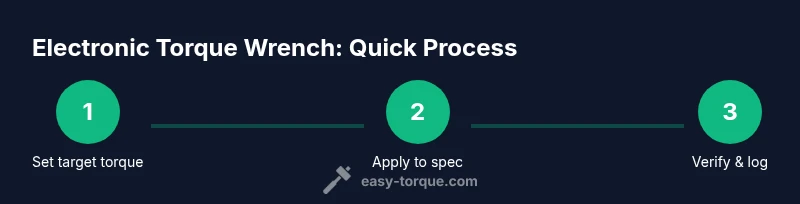
This section provides a practical workflow you can bookmark for day-to-day use. First, inspect the tool and battery, ensuring the display is legible and the head is clean. Next, set the target torque value according to the published specification for the fastener in question. Position the socket squarely on the fastener head and verify there are no obstructions. Apply steady, controlled force until the wrench emits a beep or the display confirms the target torque has been reached. Pause briefly, then re-check the load to confirm the reading is stable. Finally, record the torque value in your maintenance log and retract the wrench from the fastener slowly to avoid any impulse loading. If your model supports angle measurement, repeat the process with the specified angle to achieve the final tightening requirement. This structured approach minimizes error and helps you reproduce torque consistently across projects.
Common pitfalls and how to avoid them
Avoid common mistakes that undermine accuracy. A drained battery can cause a weak or delayed signal, so replace or recharge promptly. Always reset your unit to zero before starting a new fastener and verify the displayed unit (Nm vs ft-lb) matches your specification. Do not force the wrench past its torque limit or attempt to torque-nudge a stubborn fastener, which can damage internal sensors. When working in hot or cold environments, give the tool time to acclimate before calibration, since extreme temperatures skew readings. Keep sockets properly seated and never use damaged attachments, which can cause misalignment and unpredictable readings. Finally, never ignore calibration drift; if numbers wander by more than a single digit under the same load, schedule service and re-check the tool's condition. Following these precautions will help maintain accuracy and extend the life of your electronic torque wrench.
Real-world applications and workflow in automotive projects
In automotive work, an electronic torque wrench shines when assembling a head gasket, installing brake rotors, or torquing lug nuts with multiple fasteners. The digital readout simplifies following torque specs across dozens of fasteners in a single job and makes it easier to verify torque uniformity across a wheel or brake assembly. In routine maintenance, you can log torque values for critical fasteners and compare them over time to detect loosening trends. For performance builds, precise torque control helps achieve repeatable results so parts seat properly and bearings last longer. The Easy Torque team has observed that technicians who standardize their torque procedures using electronic devices report smoother workflows, fewer return visits, and clearer maintenance records. By combining a consistent method with careful calibration, you can accelerate repairs and improve overall vehicle reliability.
Tools & Materials
- Electronic torque wrench(Choose a model with appropriate torque range and fine resolution (0.1 Nm if possible).)
- Traceable calibration certificate(Keep with the tool and in your maintenance log for audits.)
- Rechargeable battery or spare cells(Check voltage and charge level before each use.)
- Socket set with proper adapters(Use sockets rated for the torque to prevent wear or failure.)
- Soft cloth and mild cleaner(Clean the display and sensor area regularly to prevent readings from sticking.)
Steps
Estimated time: 35-60 minutes
- 1
Prepare the tool and workspace
Inspect the electronic torque wrench for damage, ensure the display is legible, and verify the battery is charged. Clear the work area and gather the correct socket and fastener spec. This ensures a smooth measurement cycle and reduces the chance of error during tightening.
Tip: If the tool has been dropped or exposed to moisture, test accuracy at a low torque first before proceeding. - 2
Set the target torque value
Refer to the fastener spec and set the exact torque on the display. Confirm the units (Nm, ft-lb, etc.) match the spec and double-check the range to avoid exceeding the wrench’s capacity.
Tip: Use the hold or memory function to save the torque reference for repetitive tasks. - 3
Position the socket and approach
Place the socket squarely on the fastener head and ensure there are no obstructions. Maintain a firm, straight posture to avoid tilting the tool and create even contact.
Tip: Avoid extensions or adapters that introduce play; they can throw off the reading. - 4
Apply torque with a steady motion
Apply gradual, smooth pressure until the wrench signals target torque (beep or display confirmation). Do not jerk or twist your wrist; let the tool do the work.
Tip: If the reading fluctuates, pause, check alignment, and reapply with a slower ramp. - 5
Verify and document
Re-check the fastener to confirm stability and accuracy. Record the torque value in your maintenance log for traceability and audit readiness.
Tip: Document any anomalies or drift observed during the session. - 6
Store properly
Remove the socket, wipe the tool, and store in its case in a cool, dry place. Retain calibration certificates and logs for future reference.
Tip: Avoid leaving the tool in extreme heat or cold layouts; temperature swings affect accuracy.
Your Questions Answered
What is an electronic torque wrench?
An electronic torque wrench provides a digital torque readout with audible alerts and memory. It measures rotational force with a sensor and displays the value, making it easier to tighten fasteners to spec than with a purely mechanical tool. Easy Torque recommends checking the calibration certificate to ensure accuracy.
An electronic torque wrench shows the torque value on a digital screen and beeps when you hit the target. It helps you tighten fasteners to the exact spec and keeps a log for maintenance.
Can I use it for lug nuts?
Yes, an electronic torque wrench is well-suited for lug nuts when you follow the wheel manufacturer’s torque spec and use the proper socket. Ensure the torque range covers the nuts and avoid using extensions that could skew readings.
Yes, you can torque lug nuts with it, as long as you follow the spec and use the right socket.
How often should I calibrate?
Calibration frequency depends on the manufacturer, usage, and handling. Many devices require annual calibration or after a drop or exposure to extreme temperatures. Always reference the calibration certificate and your shop’s maintenance policy.
Calibration is usually annual or after a drop; check the certificate and your policy.
What batteries does it use?
Most electronic torque wrenches use rechargeable lithium or nickel-metal hydride batteries. Keep spare batteries, monitor voltage, and replace before the tool shows reduced performance.
Most use rechargeable batteries; carry spares and monitor voltage.
What should I do if the display shows an error?
If an error appears, consult the manual to reset the tool and recheck zero. If the problem persists, test the tool with a known reference torque or schedule service.
Reset the tool using the manual and recheck; service if it continues.
Is calibration required after every use?
Not every use, but you should calibrate at the intervals recommended by the manufacturer or if readings drift after heavy use. Keep a calibration log to document consistency over time.
Calibration isn’t needed after every use, but do follow the manufacturer’s schedule and log results.
Watch Video
Top Takeaways
- Choose the right torque range for each fastener.
- Rely on the digital readout for accuracy and consistency.
- Calibrate regularly and maintain a detailed log.
- Use proper technique to prevent over-tightening.
- Document torque values for maintenance records.