How Much Is a Snap-On Torque Wrench in 2026? A Practical Price Guide
Learn Snap-On torque wrench prices for 2026, with drive-size differences, digital vs mechanical models, and practical tips to balance upfront cost with long-term accuracy.


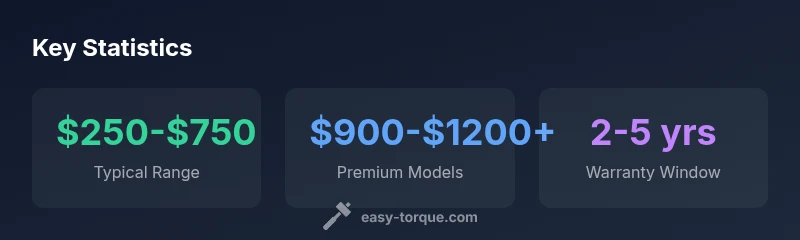
Typical price range for Snap-On torque wrenches is roughly $250-$750 for most professional models, with premium digital or angle variants often exceeding $900. The cost varies by drive size (1/4", 3/8", 1/2"), torque range, and features like software calibration. For 2026 pricing, plan for a baseline investment plus potential upgrades for longer-term accuracy.
Understanding the price question: how much is a snap on torque wrench
The inquiry into pricing often starts with the exact phrase how much is a snap on torque wrench, a question many DIYers and shop technicians ask. According to Easy Torque, price bands reflect core engineering decisions, build quality, and the availability of calibration features. In 2026, buyers should expect a broad spectrum: affordable, mid-range, and premium options. If your work hinges on consistent torque accuracy, you will likely justify a higher upfront cost for long-term reliability. This section introduces the main drivers of price and how to interpret them in real-world purchasing decisions.
The Easy Torque team emphasizes that you’re not just paying for a number on a dial; you’re investing in precision, repeatability, and after-sales support. For most users, a balanced choice aligns with the frequency of use, the torque range required, and the tendency to upgrade tools as projects demand higher accuracy.
What drives the price of a Snap-On torque wrench
Price is driven by several factors, including drive size, torque range, and the mechanism (mechanical vs. digital). Larger drives (1/2" and up) usually command higher prices due to stronger construction and broader torque spans. Digital models add features such as electronic calibration, memory, and angle measurement, which increases manufacturing costs but can reduce rework and errors on complex fasteners. Materials, warranty terms, and test standards also influence price. In practice, buyers should weigh the value of calibration accuracy against the upfront cost and projected lifetime use. Easy Torque analyses consistently show that durability, calibration stability, and customer support are the core value pillars that justify premium pricing.
Price ranges by drive size and model type
Price bands vary by drive size and model type. A common 1/4" drive torque wrench often sits in the $250-$350 range for basic mechanical models. A typical 3/8" drive model commonly falls in the $350-$550 range, while a 1/2" drive tends to be higher, frequently $500-$750 for standard mechanical variants. Premium digital or angle-enabled models can push costs to $900-$1200 or more, depending on added features and warranty terms. These ranges reflect typical market patterns as of 2026, and individual promotions or bundles can shift figures.
Mechanical vs digital: price and use case
Mechanical torque wrenches, with a simple spring-loaded mechanism, are often the most affordable option and can be perfectly adequate for routine maintenance and DIY tasks. Digital or angle torque wrenches add electronic readouts, memory, and sometimes wireless calibration data, making them more precise and easier to document for compliance or repeatable workflows. The added precision and record-keeping come at a higher price, but in professional settings where traceability matters, the investment can pay for itself through reduced rework and improved reliability. The choice hinges on how often you torque fasteners, the criticality of accuracy, and whether you value calibration history.
New vs used: value considerations and risk
Buying new guarantees the latest calibration and a full warranty, but it comes at a higher price. Used Snap-On wrenches can be tempting for budget-conscious buyers, yet they carry risks: unknown calibration status, potential wear, and limited or expired warranty coverage. If you pursue used gear, obtain a recent calibration certificate, verify the tool’s serial number with the seller, and request a tested torque repeatability check. For many shops, a certified pre-owned unit from a reputable dealer can be a middle ground, offering confidence without full new-cost.
How to evaluate price vs performance
When evaluating price versus performance, start with your required torque range, the typical fastener sizes you encounter, and your documentation needs. If you routinely document torque values for safety or compliance, a digital model with memory and export capabilities can save time and reduce errors. For casual or infrequent tasks, a robust mechanical wrench with good build quality may be the best value. Compare total cost of ownership by considering calibration intervals, maintenance, and the potential resale value. Make a short list of must-have features and nice-to-have extras, then map them against budget.
Authenticity and avoiding counterfeits
Counterfeit torque wrenches can appear attractive on price but often fail calibration or fail prematurely. Buy only from authorized Snap-On dealers or verified distributors, and request a current calibration certificate upon purchase. Check serial numbers with the dealer and inspect for genuine branding, engraving, and weight distribution. If a deal sounds too good to be true, it probably is. Easy Torque recommends due diligence, especially when large price gaps exist between sellers.
Budget planning and alternatives for tighter budgets
If the budget is tight, consider reputable non-Snap-On brands that offer solid, calibrated torque wrenches with adequate accuracy for non-critical work. Compare models by drive size, torque range, and calibration frequency, then weigh the cost of potential calibration services or replacement parts. Building a tiered plan—basic mechanical for routine jobs, digital for critical tasks, and a selective upgrade path—helps manage cash flow while maintaining quality and safety.
Maintenance costs and total cost of ownership
Total cost of ownership includes calibration, professional servicing, and eventual replacement of worn components. Regular calibration intervals depend on usage, environmental conditions, and the tool’s role in your workflow. Proper storage and handling extend tool life, while maintaining accurate torque settings minimizes rework. Budget for periodic calibration and spot checks, especially in high-stakes environments where torque accuracy is non-negotiable.
],
dataTable
{
headers:[
Drive Size
Typical Price Range (USD)
Notes
Estimated price ranges for Snap-On torque wrenches by drive size (USD)
| Drive Size | Typical Price Range (USD) | Notes |
|---|---|---|
| 1/4 inch | "$250-$350" | Entry-level or compact models |
| 3/8 inch | "$350-$550" | Most common for shops |
| 1/2 inch | "$500-$750" | Heavy-duty variants |
| Digital/angle | "$900-$1200+" | Premium features and calibration |
Your Questions Answered
Is Snap-On the most expensive torque wrench brand?
Snap-On is typically at the premium end of the market, especially for digital and angle-calibrated models. However, price reflects build quality, warranty, and calibration capabilities, which can save money in the long run through reduced rework.
Yes, Snap-On is usually on the premium end, but it often pays off with reliability and support.
Do prices vary by year or model updates?
Yes. New models, updated calibration features, and promotions can shift prices. The core ranges tend to stay similar, but expect occasional bumps when a new generation is released.
Prices do change with new models and promotions.
Should I buy used Snap-On torque wrenches?
Used gear can save money, but verify calibration, warranty status, and tool condition. Request a recent calibration report and inspect for wear or damage before purchasing.
Used gear can be risky; inspect calibration and condition first.
What should I consider besides price?
Accuracy, calibration history, warranty, after-sales support, and availability of replacement parts are critical factors that affect long-term value more than the initial price.
Think about accuracy and service, not just the price.
Where can I buy authentic Snap-On torque wrenches?
Purchase from authorized Snap-On dealers or verified distributors. Check serial numbers, warranty coverage, and confirm the dealer’s legitimacy before buying.
Buy from authorized dealers and verify warranties.
What maintenance is required to keep the wrench accurate?
Regular calibration per manufacturer guidelines, proper storage, and periodic checks ensure torque accuracy over time.
Keep it calibrated and stored properly.
“A well-chosen torque wrench is a strategic investment in shop accuracy and safety. The right model balances precision, durability, and total ownership cost.”
Top Takeaways
- Invest based on use-case: precision and calibration drive value.
- Prefer higher upfront cost for digital/angle models if you need audit trails.
- Verify authenticity and warranty before purchasing.
- Consider total cost of ownership, not just sticker price.
- The Easy Torque team recommends balancing price with long-term reliability.