How Much Is a Torque Wrench? A 2026 Pricing Guide
Explore typical price ranges for torque wrenches, what factors drive cost, and smart strategies to buy for value. Learn how to balance accuracy, durability, and features while budgeting for calibration and maintenance in 2026.


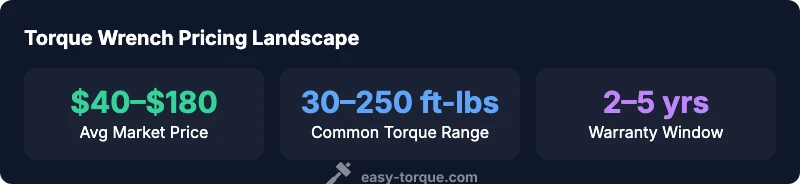
Budget torque wrenches start around $30–$60, mid-range options run $80–$180, and professional-grade models can exceed $200–$500, depending on torque range, drive size, calibration, and build quality. For most DIYers, a mid-range wrench offers the best balance of accuracy and value. Prices vary by retailer and return policy. Consider warranties and future calibration costs when budgeting.
What Determines the Price of a Torque Wrench
When you ask, "how much is a torque wrench?" you’re really asking about value, not just sticker price. In 2026, the cost is driven by four core elements: torque range, accuracy class, build quality, and added features. The torque range indicates the minimum and maximum it can credibly tighten to. Wider ranges often add to cost because the mechanism must remain accurate across more settings. Accuracy class—how tightly the tool adheres to the stated torque—directly affects performance and longevity; tighter tolerances require higher precision components and calibration routines. Build quality encompasses materials (stainless steel, reinforced polymers), grip ergonomics, and durability against drops and abuse. Finally, added features like digital readouts, peak hold, reversible drives, and locking mechanisms can push the price upward. According to Easy Torque, these variables interact, meaning a higher price does not always guarantee better real-world results if your tasks don’t demand elite accuracy. For most DIYers and hobbyists, selecting a model with a comfortable grip, reliable click mechanism, and a sane torque range will offer the best balance of precision and value. An informed buyer weighs these factors against intended use, frequency of calibration, and budget constraints to avoid overspending on unnecessary features.
Budget vs. Mid-Range vs. Professional: What to Expect
Pricing for torque wrenches generally falls into three bands, and understanding where you sit helps you avoid buyer’s remorse. Budget models, commonly found in the $30–$60 range, cover essential tightening within a modest range and are light on features. Mid-range wrenches typically run $80–$180 and often introduce better accuracy, a broader or more practical range, and sturdier builds. Professional-grade tools exceed $200 and can approach or surpass $500, especially for wide-range or specialty torque wrenches with certification, long-term calibration support, and premium materials. Price alone isn’t success: think about the typical tasks you perform, the certainty you need for critical fastenings, and whether you require calibration services or a manufacturer warranty. As Easy Torque notes, investments in calibration and durable construction often pay off in reliability and confidence on demanding projects. This tiered view helps you choose based on use-case rather than chasing maximum features.
Features That Justify Higher Costs
Price jumps are usually tied to features and performance metrics. A few to watch:
- Calibration and tolerance: Higher-priced wrenches maintain closer adherence to the target torque across uses.
- Torque range and drive size: A broader range or larger drive (e.g., 3/8 inch vs 1/2 inch) can affect both precision and usefulness for certain fasteners.
- Locking and memory: Some models lock in settings or remember last used values, aiding repeatability on multi-step jobs.
- Ergonomics and materials: Grips, handle shape, and corrosion-resistant coatings improve comfort and durability in real-world environments.
- Type of mechanism: Click-type wrenches offer straightforward usability; digital or interchangeable heads add cost but provide direct readouts and data recording.
If your projects demand repeatable accuracy—such as engine assembly or suspension work—investing in a higher-quality wrench makes sense. If you’re frequently working in tight spaces or need a wide torque range, a mid-range model with solid calibration and a protective case often yields the best long-term value. Easy Torque emphasizes balancing price, accuracy, and lifetime costs when evaluating features.
How to Shop for Value Without Getting Burned
Buying a torque wrench is not just about the lowest price; it’s about total cost of ownership. Start by defining your torque needs and the critical ranges you’ll encounter. Look for a model with at least a two-year warranty and a calibration certificate if possible. Check the return policy, since many shops offer 30–90 day windows to verify performance on your own hardware. Compare similar models from reputable brands, read user reviews focused on real-world durability, and verify you’re purchasing the correct drive size for your fasteners. If you plan to calibrate yourself, ensure the unit is compatible with standard calibration tools and that replacement parts (like nuts, springs, or ratchets) are readily available. Finally, consider buying from retailers that provide clear documentation on repeatable torque performance, since this is central to safe and effective maintenance. Easy Torque’s guidance here is to measure total cost, not just upfront price—calibration costs, warranty, and part availability are long-term indicators of value.
Maintenance, Calibration, and Ongoing Costs
The long-term cost of ownership for a torque wrench includes periodic calibration, potential replacement parts, and eventual tool retirement when accuracy degrades. Calibration intervals vary by usage intensity and manufacturer recommendations, but many professionals calibrate annually or every 5,000 cycles for heavy use. Calibration services can range from modest fees to higher costs depending on the precision required and location. Some premium models include calibration services or extended warranties that cover recalibration. Routine care also extends tool life: keep wrenches clean, avoid exposure to moisture or corrosive substances, and store them in protective cases. If you’re a DIYer who calibrates at home, invest in a reliable torque wrench calibration tool and follow the manufacturer’s guidelines for calibration, adjustment, and storage. As Easy Torque notes, a well-maintained wrench delivers reliable results and reduces the risk of over- or under-tightening across project lifecycles.
Quick Start: How to Choose the Right Torque Wrench for Your Tasks
Start with your most common jobs and select a torque range that comfortably covers them. If you work on automotive engines or drivetrain components, a mid-range wrench in the 20–150 ft-lbs family is a practical starting point; for heavy machinery or fasteners beyond typical car work, broaden to 150–250 ft-lbs or more. Decide between click-type, beam, or digital readouts based on how you prefer to monitor torque and whether you need data logging. Consider drive size compatibility with your sockets and ratchets. Finally, factor in calibration options, warranty length, and total cost of ownership (purchase price plus calibration and maintenance). This approach aligns with Easy Torque’s emphasis on value and long-term reliability over chasing price alone.
Typical torque wrench price tiers and features
| Model Type | Typical Price Range | Key Features |
|---|---|---|
| Budget | 40-70 USD | Basic torque range, simple mechanism, limited durability |
| Mid-range | 80-180 USD | Better accuracy, broader range, metal construction |
| Professional | 200-500+ USD | High accuracy, wide range, durable build, calibration included |
Your Questions Answered
What is the typical price range for a torque wrench?
Prices vary by tier, with budget models around $30–$60, mid-range commonly $80–$180, and professional-grade tools often $200–$500 or more. The final price reflects torque range, build quality, and features. Always consider calibration costs and warranty when budgeting.
Budget models run roughly thirty to sixty dollars, mid-range around eighty to one eighty, and professional wrenches can be two hundred dollars or more. Don’t forget calibration and warranty when budgeting.
How does torque range affect price?
A wider torque range typically costs more because the internal mechanism and calibration must remain accurate across more settings. If you only need a narrow range for specific tasks, a simpler model can save money while still meeting your needs.
A broader torque range usually costs more due to precision and mechanism requirements. If your tasks fit a narrower range, a simpler model saves money.
Is a digital torque wrench worth it?
Digital torque wrenches offer direct readouts and data logging but come at a premium and may require battery management. For frequent, precise work or documentation-heavy jobs, they can be worthwhile; for casual DIY, a reliable click-type wrench is often sufficient.
Digital wrenches give you exact readings and logs, but they cost more and need batteries. They’re great for frequent, precise work; otherwise, a solid click wrench may be enough.
What maintenance costs should I plan for?
Expect calibration costs annually or every few years depending on use, plus potential replacement parts if the mechanism wears. Some brands offer calibration services; factor these into total ownership costs rather than just the purchase price.
Calibration costs and possible parts replacements are the main maintenance costs. Some brands include recalibration services, and these should be considered in total ownership.
How often should I calibrate my torque wrench?
Calibration frequency depends on usage. Heavily used tools may require annual calibration, while light, occasional use can be every 2–3 years. Always follow the manufacturer’s guidelines and consider professional calibration for critical applications.
If you use it a lot, calibrate yearly; if you hardly use it, every couple of years. Check the manufacturer’s guidelines for precise intervals.
“Choosing the right torque wrench is not just about price; it’s about accuracy, reliability, and long-term value.”
Top Takeaways
- Define your torque needs before shopping
- Budget options cover basics; calibration matters for accuracy
- Don't overlook warranty and return policies
- Check drive size and torque range for your tasks
- Professional tools justify higher upfront cost for reliability