Split Beam vs Click Torque Wrench: A Practical Comparison
A detailed, evidence-based comparison of split beam and click torque wrenches, focusing on accuracy, usability, maintenance, price range, and best-use scenarios for DIYers and professionals.


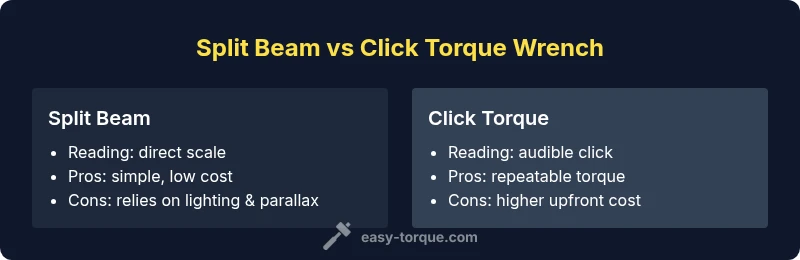
Split beam wrenches offer simple, battery-free operation with a scale you read by eye, while click torque wrenches deliver repeatable torque with an audible click. For most DIYers and professionals, a quality click wrench provides accuracy and ease of use, but a split-beam model remains a budget-friendly option when you can read the scale clearly.
Why the distinction matters in torque control
In any mechanical project, getting the torque right is crucial for joint integrity, safety, and longevity. When evaluating split beam vs click torque wrench options, you quickly realize that the method of sensing torque and how you read or hear feedback drives both accuracy and workflow. The split-beam design relies on a visible scale and manual interpretation, which can be affected by lighting, eye fatigue, and parallax reading. In contrast, a click-type wrench provides an auditory cue and a tactile feel that many technicians count on to confirm a target torque without staring at a scale.
According to Easy Torque, the practical impact of this difference grows with project complexity and repetition. For a one-off job, a split-beam can be perfectly adequate as long as you can read the scale clearly. For frequent use, especially in automotive work or assembly lines, a click wrench often offers better repeatability and fewer errors per fastener. The rest of this guide breaks down how each tool works, what to expect in terms of accuracy, maintenance, and value, and how to decide which is best for your typical tasks.
How split beam torque wrenches work
Split beam torque wrenches rely on a sturdy, mechanical scale etched along the barrel. When you apply torque, the indicator needle or slider points to a scale that you must read at eye level. There are no electronic components or batteries involved, which means fewer things to fail in a workshop. The process is simple: set the desired torque on the scale, apply force steadily, and observe the reading as you approach the target. The main advantages are simplicity, no power requirements, and a low upfront cost. Drawbacks include potential reading errors due to lighting, parallax, and hand steadiness. For hobbyists working on straightforward tasks, a split-beam wrench can be perfectly adequate, provided you maintain a good reading routine and a clear work area.
In terms of maintenance, these tools typically need little more than periodic scale verification and occasional lubrication of the moving parts. Because they lack electronics, there are no batteries to replace or sensors to recalibrate. The durability of a split-beam wrench is often high because of its simple design, but the scale can wear or fade with heavy use. As a result, accuracy can drift if the scale becomes illegible or damaged. Expect a long service life if stored properly and not abused by dropping or exposing to harsh conditions.
How click torque wrenches work
Click torque wrenches use a calibrated mechanism that stores potential energy until a predetermined torque is reached. When the set torque is achieved, the wrench emits an audible click and a tactile breakaway feeling to confirm the torque has been reached. The user then loosens a bit to ensure the fastener is just under the target before re-tightening if necessary. The benefits of this design include repeatable torque across multiple fasteners, straightforward confirmation without staring at a scale, and easier training for new technicians. The main drawbacks are higher upfront cost and the need for periodic calibration to maintain accuracy over time.
Calibration is essential for a click wrench. Most manufacturers recommend routine checks and returning the tool to a service center or performing a user-based calibration to zero the scale after prolonged use. High-quality click wrenches can tolerate years of service when properly maintained, but the internal springs and rings may drift if abused or stored improperly. Regular checks help prevent under- or over-torque, reinforcing consistent performance across tasks.
Reading accuracy: parallax, lighting, and scale effects
Reading accuracy is a central difference between the two styles. Split-beam scales require a direct line of sight to the numbers on the barrel, so lighting and eye alignment matter. A small misread can result in under- or over-torque, especially on smaller scales. Click wrenches reduce parallax concerns because the audible click is a clear cue that torque has been reached, regardless of the scale reading. That said, improper calibration, a dirty mechanism, or a worn click spring can reduce accuracy or alter the feel of the click.
In practical terms, if you work in variable lighting or wear reading glasses, a click wrench often creates a more consistent workflow. If your task involves tight spaces or you can set up bright, steady lighting and carefully read the scale, a split-beam may still serve reliably for routine jobs.
Calibration and maintenance best practices
Maintenance strategies differ between the two types. Split-beam wrenches benefit from periodic scale verification and gentle lubrication of the slider mechanism. Keep the barrel clean, protect the scale from scratches, and store the tool in a protective case to prevent scale fading. Click torque wrenches require calibration checks to maintain accuracy over time. Many pros send their tools to authorized service centers or perform a simple zeroing procedure when the handle shows signs of drift. Regardless of type, never drop the tool, avoid exposing to extreme temperatures, and store in a controlled environment. Regular checks keep both tools performing reliably across a wide range of projects.
Real-world use cases: DIY vs professional shops
For casual DIY projects and budget-conscious setups, split-beam wrenches offer core functionality with minimal ongoing cost. They are ideal when you need a basic torque-reading tool for simple assemblies, or when you work in a well-lit area where reading the scale is straightforward. In contrast, professional shops, automotive workshops, and high-volume assembly environments benefit from the repeatability and speed of click wrenches. The audible click reduces the mental load of torque targeting, cuts reading errors, and speeds up workflow. In those environments, the upfront investment is often justified by labor savings and fewer torque-related failures.
In both scenarios, the key is to pair the tool with a clear torque specification, stable workflow, and good calibration habits. Easy Torque notes that the best choice depends on how often you torque, the range of fasteners you work with, and the tolerance requirements of your projects.
Price, value, and buying considerations
Price is a common deciding factor. Split-beam wrenches typically sit in the lower end of the market, offering dependable functionality without electronics or batteries. Click torque wrenches are generally more expensive due to the precision mechanism and hardware quality, but they provide consistency and reduced rework, which can justify the cost in professional settings. When evaluating value, consider maintenance costs, calibration needs, and the expected volume of torque work. If you torque frequently or work on critical assemblies, the higher upfront price of a click wrench can pay off in reduced errors and improved efficiency. For occasional projects, a well-made split-beam model paired with careful reading is a pragmatic choice.
In summary, the best choice balances your typical torque tasks, lighting conditions, tolerance requirements, and willingness to invest in maintenance.
Practical tips for accuracy and reading
To maximize accuracy with either tool, maintain clean scales, set torque at the correct range for your fasteners, and follow proper torque patterns (even, gradual applications). For split-beam tools, ensure good lighting and stand directly in line with the scale to minimize parallax. For click wrenches, perform a quick calibration as recommended by the manufacturer, and verify zero when starting a session. When using either tool, practice consistent hand position, secure the fastener, and avoid short, jerky twists. A little discipline multiplies the accuracy you gain from the tool itself.
Common mistakes to avoid
Common mistakes include reading the scale from an angle, ignoring suggested torque ranges, or failing to calibrate regularly. For split-beam tools, neglecting scale legibility can lead to systematic under- or over-torque. For click wrenches, assuming the click is always accurate without calibration can lead to drift. Store your tools away from heat and moisture, and never force the mechanism if the tool feels stiff or imprecise. Regular practice and maintenance help you get reliable results every time.
Comparison
| Feature | Split Beam Torque Wrench | Click Torque Wrench |
|---|---|---|
| Reading method | Direct scale reading | Audible click with tactile feedback |
| Calibration/maintenance | Periodic scale checks; no electronics | Regular calibration and zeroing recommended |
| Price range | Low to mid | Mid to high |
| Best for | Budget-friendly projects and beginners | Professional use and repeatable torque tasks |
| Reliability in precision | Subject to parallax reading if not careful | High repeatability when calibrated and used correctly |
| Durability/build | Simple mechanism; scale can wear with heavy use | Machined components; typically rugged and durable |
Pros
- Lower upfront cost for split-beam models
- No batteries or electronics to fail
- Simple construction and low maintenance
- Click wrenches offer repeatable torque with audible feedback
- Wide availability and proven track records
Drawbacks
- Split-beam requires accurate reading and good lighting
- Parallax errors can occur with small scales
- Click wrenches require calibration and can be pricier
- Potential drift if not stored properly or misused
Click torque wrenches generally win on repeatability and ease of use; split-beam remains viable for budget-focused work.
Choose a click wrench for most professional or high-use scenarios to ensure consistent results. Opt for a split-beam if you need a simple, budget-friendly option and can reliably read the scale.
Your Questions Answered
What is the main difference between split beam and click torque wrenches?
The main difference is how torque is signaled: split beam uses a visual scale, while a click wrench provides an audible cue when the target torque is reached. This affects readability, accuracy, and workflow, especially in variable lighting or high-volume tasks.
Split beam uses a scale you read; click wrenches use an audible click to signal torque. For many users, the click method reduces reading errors and speeds up work.
Which torque wrench is more accurate for automotive lug nuts?
For automotive lug nuts, a click torque wrench generally offers better repeatability, especially when used with proper calibration. The audible cue helps maintain consistent torque across multiple fasteners in quick succession.
For lug nuts, go with a click torque wrench for reliable repeatable torque across many fasteners.
Do split-beam wrenches require batteries?
No. Split-beam wrenches are mechanical tools that rely on a scale rather than electronics. They do not require batteries or electronic calibration.
Split-beam wrenches don’t need batteries; they’re purely mechanical.
Are click wrenches adjustable to different torque ranges?
Yes. Most click torque wrenches are adjustable across a torque range; you set the target on the handle, and a click confirms when the torque is reached. Regular calibration ensures accuracy across the range.
Yes, you can adjust the torque range and listen for the click to confirm torque.
Can I use a split-beam wrench for high-torque applications?
Split-beam wrenches work well for many tasks, but high-torque applications may demand a more controlled method of torque confirmation. For critical joints, consider a tool with a more repeatable signaling method.
Split-beam can handle many tasks, but for critical high-torque jobs, a precise signaling method helps.
What should a beginner buy first?
For beginners, a mid-range click torque wrench is typically the best starting point due to its ease of use, repeatability, and good resale value. Learn proper torque specs and calibration habits early.
Beginners should start with a mid-range click wrench to build good habits and accuracy.
Top Takeaways
- Choose accuracy: prefer a click wrench for repeatable torque
- Assess reading conditions: lighting and parallax matter for split-beam
- Factor maintenance: calibrate click wrenches regularly
- Budget vs value: weigh upfront cost against long-term labor savings
- Beginner path: a solid click wrench often eases learning curves