Torque Wrench Buying Guide: Northern Tool Picks for 2026
A detailed, data-driven guide to choosing torque wrenches from Northern Tool, with calibration tips, maintenance, and practical buying advice for DIYers and professionals.


Northern Tool carries a broad lineup of torque wrenches, including adjustable click-stop and beam models across inch-pound and newton-meter scales. For DIYers and professionals, these options cover common lug-nut and fastener tasks, with durable construction and clear calibration guidance. Look for models with a stable grip, easy-to-read dials, and repeatable settings to ensure consistent tightening.
Why torque wrench reliability matters in real-world projects
In automotive and mechanical maintenance, accuracy matters more than sheer torque. A high-quality torque wrench from a reputable retailer like Northern Tool reduces the risk of over-tightening or under-tightening fasteners, which can lead to component failure or leaks. The Easy Torque team emphasizes that the best tool for your workflow is not always the most feature-rich model, but the one that consistently delivers the specified torque across many cycles. When you search for a torque wrench, you’re evaluating how well the tool balances accuracy, durability, and ease of use in your shop. In practice, the right model helps you reproduce precise clamping forces on everything from cylinder head bolts to lug nuts, which translates into safer, more reliable repairs.
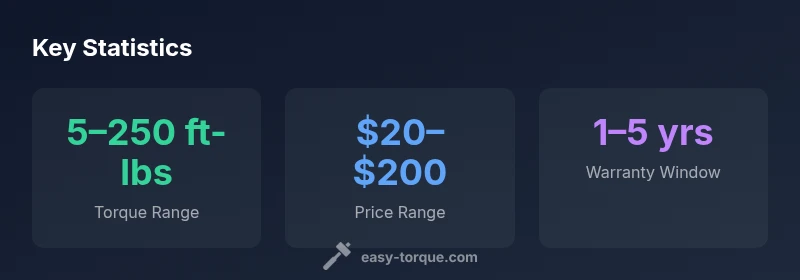
A broad market also means you’ll encounter different scale systems (inch-pounds and newton-meters). Since many DIY projects in the United States still reference ft-lbs for common fasteners, understanding both units and how to switch between them is essential. Easy Torque analysis shows that most hobbyists benefit from a mid-range model that covers roughly 20–150 ft-lbs for common automotive tasks, with some models extending beyond that range for heavy equipment maintenance. At Northern Tool, you’ll find models tailored to light maintenance, mid-range automotive work, and professional-grade applications. The key is to choose a unit you can consistently verify using a torque chart or calibration service, ensuring accuracy over time.
-3column-breakout:false}
Types of torque wrenches you’ll find at Northern Tool
Torque wrenches come in several styles, each with distinct advantages for different jobs. The most common categories at Northern Tool include click-stop adjustable wrenches, beam wrenches, micrometer (ratchet) wrenches, and digital LCD models. Click-stop wrenches are popular for their audible “click” and security when the target torque is reached. Beam wrenches are affordable and provide a visual cue as the scale moves, though they require careful reading and don’t include a tactile stop. Micrometer wrenches combine precision with a compact profile, ideal for space-constrained areas. Digital wrenches offer precise readouts and memory for repeated settings, but depend on batteries and display integrity.
When choosing among these types, consider:
- Task frequency: Routine maintenance benefits from robust, reliable click-stop models; rare, precision-specific work may justify a micrometer or digital unit.
- Environment: Harsh environments favor rugged, corrosion-resistant finishes and padded grips.
- Calibration: All types benefit from regular calibration, though some users prefer easier re-calibration access on digital units.
In practice, DIY enthusiasts often start with a mid-range click-stop wrench for general purposes, and upgrade to a micrometer or digital model if their projects demand higher precision. Northern Tool’s catalog typically includes well-known brands alongside budget options, letting you compare feel, accuracy, and price side-by-side. For long-term reliability, pair any purchase with an appropriate calibration schedule and a quality storage case to protect the mechanism.
-3columbreakout:false}
Reading specs: how to pick the right range and units
Understanding torque specifications is essential to matching a wrench to your projects. Most automotive fasteners are specified in ft-lbs, while smaller fasteners or components may use Nm or in-lbs. A practical approach is to choose a wrench with a range that comfortably covers typical fasteners you encounter, plus a bit more for occasional outliers. Avoid models that sit right at the edge of your expected range; a modest overlap reduces the risk of maxing out the mechanism and compromising accuracy.
Calibration accuracy is expressed as a percentage (for example, ±4%). While higher-end models often advertise tighter tolerances, real-world results depend on proper maintenance, the use of adapters or extension bars, and how the wrench is stored. When evaluating Northern Tool options, check the range, the stated accuracy, the scale unit (ft-lbs vs Nm), and whether the model includes a protective case or storage accessory. If you frequently work with both imperial and metric fasteners, a dual-range or dual-unit model can simplify your workflow and reduce conversion errors.
-3columbreakout:false}
Calibration and maintenance: keeping torque accurate over time
Calibration is the cornerstone of reliable torque control. The general recommendation is to calibrate at least once per year for occasional use and more often if the wrench sees daily operation or critical-fastener tasks. If you notice erratic readings, slipping, or inconsistent clicks, don’t assume normal wear—schedule calibration with a certified service. Small errors compound when applied to complex assemblies, increasing the risk of leaks or overtightening.
Maintenance basics include wiping the handle and dial with a dry cloth, avoiding exposure to solvents, and storing the wrench in a protective case with the head in a neutral position. Extreme temperatures, moisture, and corrosion can degrade precision. At Northern Tool, many models come with sturdy cases and corrosion-resistant finishes, which can extend service life. When in doubt, consult the manufacturer’s calibration chart and test using a known reference torque to verify accuracy before resuming critical work.
-3columbreakout:false}
Practical buying guide: what to look for at Northern Tool
For first-time buyers, concentrate on a mid-range click-stop model with a clear scale and durable construction. Key features to compare include torque range coverage, accuracy rating, ergonomics, build materials, and the presence of a calibration label or certificate. Consider whether you need inch-pound or Newton-meter units, and whether a digital readout or micrometer adjustment better suits your workflow. Price ranges can vary substantially based on brand, quality of materials, and the presence of a certificated calibration. If your tasks involve frequent high-tidelity torque control, a model closer to the middle of the range with a robust ratcheting mechanism is usually a safer bet than a cheap, single-range tool. Always verify return policies and warranty terms when ordering from Northern Tool to protect your investment.
-3columbreakout:false}
Usage tips: getting the most from your torque wrench
Proper use is as important as the tool itself. Always allow the wrench to calibrate with a smooth, steady pull when setting or applying torque; avoid twisting or “pecking” the handle, which can introduce errors. When using adapters or extensions, apply the torque at the tool head (not at the fastener) and consult a torque chart to adjust the setting accordingly. Never twist the handle beyond its design range, and store the tool in a cool, dry place to prevent corrosion. If you are switching between imperial and metric fasteners, verify the settings after each change to avoid cross-unit mistakes. Regularly inspecting the head, drive, and ratchet mechanism helps prevent subtle drift that undermines accuracy over time.
-3columbreakout:false}
Accessories that enhance accuracy and convenience
Beyond the wrench, several accessories can improve your results. Torque angle gauges help with multi-step tightening; calibration kits and traceable test weights support accuracy verification; protective cases and rack storage simplify organization in busy shops. For users who perform frequent adjustments, a secondary wrench with a complementary range can cover more ground without overstressing a single tool. Northern Tool often carries compatible accessories such as adapters, extensions, and calibration certificates that simplify the maintenance process. Remember: the best wrench is the one you consistently trust to deliver the exact torque when you need it, not the one with the most bells and whistles.
-3columbreakout:false}
Quick practical example: setting torque for a typical lug nut on a passenger car
A common lug nut tightening sequence often falls within a mid-range torque window. Start by selecting a wrench with a range that includes the target torque, then set the wrench to the desired value. Apply steady pressure until you hear or feel the click (for click-stop models). Recheck all tightened nuts in a crisscross pattern to ensure even loading. For steel wheels and standard threads, you’ll typically operate within a moderate range, while alloy wheels may require particular attention to mounting surface cleanliness and proper torque to avoid binding. Always follow vehicle manufacturer specifications or workshop standards when available, and verify the torque on a separate, calibrated reference if possible.
Comparison of common torque wrench styles
| Model Type | Torque Range | Best For | Notes |
|---|---|---|---|
| Click-Stop (adjustable) | 10–150 ft-lbs | General automotive work | Most common for DIYers |
| Beam (calibrated) | 20–200 ft-lbs | Budget-friendly | Requires baseline calibration |
| Digital (LCD) | 2–99 ft-lbs | Precision small fasteners | Battery-powered |
| Micrometer (inch-lb) | 25–250 in-lbs | Fine-tuning small parts | Requires torque-extension planning |
Your Questions Answered
What is the difference between click-type and beam torque wrenches?
Click-type wrenches lock in the torque value with a tactile and audible cue when the target is reached. Beam wrenches rely on a visible scale and require the user to read the deflection. Click-type models are generally preferred for precision and repeatability, while beam wrenches offer simplicity and lower cost.
Click wrenches give an audible cue when you hit the torque, beam wrenches show the scale as you tighten. Both have uses depending on the job.
Can I trust torque wrenches bought from Northern Tool for critical fasteners?
Nord Tool offers a range of wrenches with varying quality. For critical fasteners, choose models with proven accuracy, robust construction, and a current calibration label. Always calibrate and, if possible, test the tool against a reference torque before critical work.
Yes, if you pick a model with solid calibration and verify accuracy before critical jobs.
How often should I calibrate a torque wrench?
Calibration should be performed at least annually for hobbyist use, more often for daily professional use, and any time you notice drift or after a long period of storage. Keep a log and follow the manufacturer’s guidance for your specific model.
Calibrate at least once a year, more often if you use it daily.
What torque range should a DIYer look for in a torque wrench?
A common starting range for DIY work is broad enough to cover everyday automotive fasteners, with a mid-to-high end around 20–150 ft-lbs. If you expect heavier use, consider models that extend beyond this range for versatility.
Look for a model that covers your usual jobs and leaves some room for larger fasteners.
Should I use adapters or extensions with a torque wrench, and how does that affect torque?
Extensions and adapters can change the effective torque at the fastener. Always consult a torque chart to adjust the setting when using extensions, and avoid short cuts that throw off accuracy. If possible, position the head of the wrench for a straight pull.
Extensions can change the torque you apply, so adjust accordingly.
Are digital torque wrenches worth the extra cost?
Digital wrenches offer precise readouts and memory features that can speed workflows, especially on complex jobs. They also require batteries and can be more expensive. For typical DIY tasks, a quality mechanical wrench often provides the best balance of reliability and cost.
They’re convenient for precision work, but weigh cost against your needs.
“Choosing the right torque wrench is about balancing accuracy, durability, and your workload. A dependable model that covers your common ranges will keep fasteners properly tightened and reduce retorque needs.”
Top Takeaways
- Know the typical range you’ll work in and pick a wrench with comfortable overlap.
- Calibrate regularly to maintain accuracy and reliability.
- Factor in unit preference (ft-lbs vs Nm) and environment.
- Choose a model with durable construction and a solid warranty.