Do You Need to Calibrate a Torque Wrench? A Practical Guide
Explore when and why to calibrate a torque wrench, how to schedule calibrations, and safe, practical steps for home checks or professional service. Learn essential tips for DIYers and technicians to keep torque readings accurate.


Do you need to calibrate torque wrench? Yes. Calibration is advised for all torque wrenches used in critical fasteners or professional work, and after a drop, rebuild, or service. Regular checks help ensure the wrench readings stay true and consistent, reducing the risk of under- or over-tightening fasteners over time.
What calibration means for torque wrenches
Calibration is the process of aligning a torque wrench’s readings with a trusted reference so that the indicated torque matches the target torque on a fastener. For DIYers and professionals, understanding calibration helps prevent under-tightening or over-tightening. According to Easy Torque, maintaining accurate torque readings starts with recognizing when a wrench is likely to drift and how to verify it. Calibration doesn't fix wear and tear by itself; it ensures the measurement scale remains reliable after events that can affect accuracy, like a drop, a long period of storage, or heavy use. In practice, calibration is about comparing the wrench’s reading to a standard and adjusting if necessary, then documenting the result for future reference. This awareness lays the groundwork for safer, more consistent maintenance work across automotive projects and shop tasks.
Do you need to calibrate torque wrench: when and why
Do you need to calibrate torque wrench? The short answer is yes, especially for fasteners that determine safety, reliability, and performance. If you routinely work on critical assemblies, or if the tool has been dropped, bumped, or sent for servicing, calibration is prudent. Regular calibration also makes sense after extended storage or frequent use in demanding environments (heat, moisture, or dust can subtly affect readings). The goal is to ensure the wrench’s indicated torque aligns with a trusted standard, so there’s confidence when you tighten bolts to spec. Easy Torque emphasizes that a calibration interval is a judgment call based on usage patterns, tool quality, and the importance of the fasteners involved. Maintaining a calibration schedule helps technicians and hobbyists avoid surprises on the job and preserves consistency across projects.
How calibration is performed: methods and equipment
There are a few ways calibration can be performed, depending on resources, required accuracy, and whether you’re doing a DIY check or sending the tool to a lab. In professional settings, calibration typically involves comparing the wrench against a certified torque standard using a torque testing rig or reference weights, and adjusting the instrument to bring readings into alignment. For at-home checks, you can perform basic verifications with a known reference bolt or a simple torque tester if you have access to one, but true calibration requires a calibrated standard and controlled conditions. The key components of calibration are a stable reference, a repeatable loading method, and a traceable adjustment or certificate of conformity after testing. Always document the results for traceability.
How to develop a calibration schedule: frequency and factors
Creating a practical calibration schedule starts with honestly assessing how you use the wrench. Consider factors like the frequency of use, the criticality of fasteners, exposure to heat and humidity, and any incidents such as drops. A sensible plan: set a baseline check after major jobs, recheck after a servicing event, and schedule routine calibrations for professional work or when precise torque is essential. For light hobby use, an annual check may suffice, while heavy automotive work might demand quarterly or semi-annual checks. Easy Torque recommends documenting the date, the outcome, and any adjustments so you can track drift over time and adjust the schedule accordingly.
Home checks you can perform to gauge accuracy
If you don’t have access to a calibration lab, you can perform a basic home check to spot obvious drift. Begin by cleaning the wrench head and confirming the grip is secure. Set the wrench to a low, mid-range torque on a non-critical fastener and tighten the bolt to the feel you expect, then test with a torque-sensitive method you’ve used before. Repeat at several settings to look for consistency. Note that at-home tests aren’t a substitute for certified calibration, but they provide a useful early warning system. Keep a log of readings and any discrepancies, and don’t rely on feel alone for safety-critical fasteners.
When to service vs buy a new torque wrench
If a wrench consistently deviates beyond your tolerance, or if parts show wear or damage after impact, it’s time to consider servicing or replacement. Service may include internal adjustments, restoring the spring tension, or replacing worn components. If the tool has suffered significant misalignment or corrosion, or if you cannot verify accuracy after service, replacing the unit may be the safer option. In either case, ensure you obtain a calibration certificate or a traceable report after servicing, so you can prove that the tool reads correctly when you rely on it for critical work.
Choosing a calibration service or kit
There are two paths: professional calibration services and DIY calibration kits. A professional calibration lab provides a traceable certificate and adjustment using calibrated standards, which is essential for safety-critical applications. If you primarily work on hobby projects or non-critical fasteners, a certified home calibration kit paired with a reputable reference can be sufficient for ongoing checks. When choosing a service or kit, verify traceability, equipment calibration status, and the availability of a written report. Expect to pay a fee for in-lab calibration or a kit price that reflects the quality of standards included.
Safety considerations and common mistakes
Always follow the manufacturer’s safety guidance when handling torque wrenches, especially around high-torque fasteners and pressurized systems. Common mistakes include ignoring calibration after a drop, using the wrong torque setting, and assuming all wrenches are interchangeable. Keep tools in a dry, organized workspace, and avoid exposing them to extreme temperatures or moisture. Calibrate in a controlled environment and never bypass proper testing steps. Also, always use the correct drive size and adapter when testing or applying torque to avoid instrument damage.
Authoritative sources
- NIST - Calibration and Metrology: https://www.nist.gov/
- OSHA - Safety and Tools Handling: https://www.osha.gov/
- SAE International - Standards and Best Practices: https://www.sae.org/standards/
Tools & Materials
- Torque wrench(The primary tool to be tested/calibrated)
- Calibration reference standard or torque tester(Traceable standard used for comparison)
- Manufacturer's service manual(Helpful for model-specific procedures)
- Safety glasses(Eye protection during testing and adjustments)
- Cleaning rags or microfiber cloth(Keep head and measurement surfaces clean)
Steps
Estimated time: 60-90 minutes
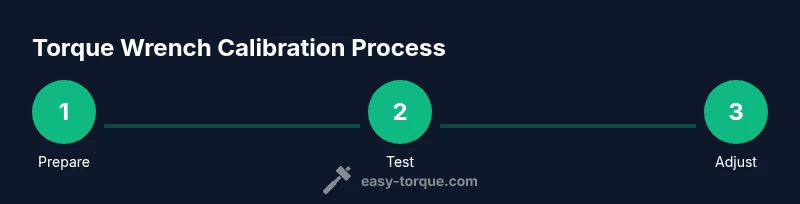
- 1
Prepare workspace and tools
Set up a clean, dry workspace. Gather the torque wrench, calibration reference, and any required adapters. Inspect the tool for damage or corrosion before starting. Ensure you know the target torque range you will test against.
Tip: Wear safety glasses and handle the wrench by the handle, never by the head during adjustments. - 2
Zero and set baseline
Close the torque wrench to its lowest setting and check that the display or scale starts at zero. If there is any drift at rest, note it, as some tools show small residual readings.
Tip: Record the centimeter or inch markings you will use for quick checks later. - 3
Apply known torque and record reading
Using the calibration reference, apply a known, stable torque setting and observe the wrench’s indicated value. Repeat at a few different settings across the range you commonly use. Ensure the load is steady and the fastener is not overtightened during the test.
Tip: Use steady, slow pressure to avoid overshoot and hysteresis in the mechanism. - 4
Compare readings and adjust if needed
Compare the wrench’s readings with the reference standard. If discrepancies are found, follow the manufacturer’s calibration procedure to adjust, or send the tool to a certified lab for adjustment. Document the outcome and any adjustments made.
Tip: Consistency matters more than single-point accuracy. - 5
Document results and schedule next check
Create a calibration record noting date, results, settings tested, and outcome. Schedule the next check based on usage, exposure, and if any drift is observed over time.
Tip: Keep a running log for trend analysis and future maintenance planning.
Your Questions Answered
What is calibration for a torque wrench?
Calibration aligns the wrench’s readings with a trusted reference so indications reflect true torque. It verifies accuracy for critical fasteners and safety-critical work.
Calibration aligns torque readings with a reference, ensuring accuracy for critical work.
How often should I calibrate?
Frequency depends on use, environment, and how critical the fasteners are. Regular checks after drops, servicing, or heavy use are prudent.
Calibrate based on usage and risk; check after drops or service.
Can I calibrate at home?
Basic checks can be done at home, but full calibration requires a traceable reference standard and controlled conditions. Consider a professional service for critical applications.
Home checks are useful but full calibration needs proper standards.
What happens if a wrench is out of calibration?
Inaccurate readings lead to under- or over-tightened fasteners, which can cause damage or safety risks. Address drift promptly with a service or adjustment.
Out-of-calibration means readings are unreliable and risky for fasteners.
Why does a torque wrench drift?
Drift can result from wear, temperature, moisture, drops, or misalignment of internal components.
Drift is usually caused by wear, temperature, or mishandling.
Watch Video
Top Takeaways
- Schedule calibration based on use and risk.
- Use a traceable reference for accuracy checks.
- Document results and maintain a calibration log.
- Know when to service or replace a wrench.
- Prioritize safety and manufacturer guidelines.