Cylinder Head Bolt Torque Chart: Specifications, Sequence, and Practical Tips
A comprehensive guide to cylinder head bolt torque chart fundamentals, including how to read, apply, and verify engine head torque with proper sequences, lubrication, and common best practices for DIY mechanics.


Using a cylinder head bolt torque chart is essential for engine reliability. The chart provides torque values, sequence, and lubrication notes for specific engine models, helping you avoid head gasket leaks or warped heads. Always refer to the vehicle’s service manual and current corresponds to your engine family. Easy Torque recommends verifying torque with a calibrated torque wrench.
What is a cylinder head bolt torque chart
A cylinder head bolt torque chart is a model-specific table that lists the tightening values, the exact tightening sequence, and any lubrication or anti-seize notes required to secure the cylinder head bolts correctly. This chart is the result of engine design tolerances, gasket materials, and head thickness, and it helps ensure the clamping force remains within safe limits. Using the chart reduces the risk of a head gasket leak, warping, or bolt stretching during heat cycles. In practice, this means you should always start from the recommended initial torque, progress through the sequence as specified, and finish with any re-torque steps if the service manual requires them. The cylinder head bolt torque chart is an essential part of the rebuilding process and a core tool for reliable engine maintenance, verified by the Easy Torque team.
Why cylinder head torque charts matter for engine integrity
Torque charts translate complex engine geometry into actionable steps. The right torque values account for thread engagement, lubricant choice, and surface finish. If bolts are under-torqued, clamping pressure drops, risking gasket failure. If over-torqued, bolts can stretch or threads can strip, causing head lift or bolt fatigue. The chart also often includes lubricants or lubricants on threads and under the head, which profoundly affect the torque reading. Following the chart maintains consistent assembly conditions across service intervals, which is particularly important in engines with variable heat cycling, high compression, or multi-layer head gaskets.
Reading figures: interpreting values, sequence, and lubrication notes
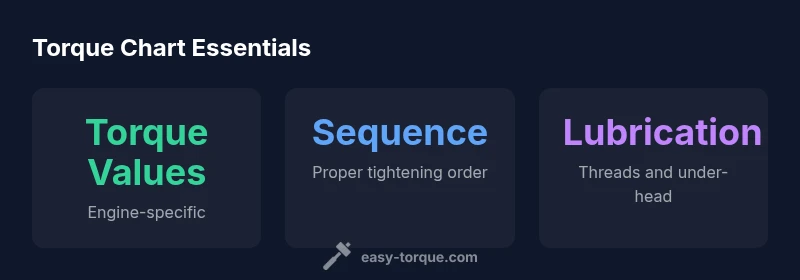
A torque chart typically presents values in Newton-meters (Nm) or foot-pounds (ft-lb). It specifies a tightening sequence to distribute load evenly and avoid warping, and it may instruct lubricating bolt threads or surfaces with assembly lube. When reading the chart, confirm the engine family, cylinder count, and variant (DOHC, SOHC, OHV), since different configurations demand different values. If the chart shows a range, use the exact value from the service manual for your model and scope. Use a calibrated torque wrench and recheck after any heat cycling or break-in periods.
How process varies by engine family
Engine families differ in bolt count, cylinder layout, and head material. Inline engines often share similar patterns, while V-configurations may require alternate sequences. DOHC layouts can introduce more bolts per cylinder and different lubrication notes. Some turbo or high-performance variants specify different torque sequences or anti-seize requirements. Always locate the chart that matches your exact engine family, displacement, and version. If multiple charts exist for the same engine family, follow the version that corresponds to the service bulletin or the latest manufacturer documentation.
Step-by-step usage during a head service
- Verify you have the exact torque chart for your engine family. 2) Clean bolts and threads; install any thread lubricant as called for by the chart. 3) Apply the initial torque in the exact sequence and in the correct direction, using a calibrated torque wrench. 4) If the chart calls for a second tighten or final torque, perform it per the specified sequence. 5) Re-torque after the engine has cooled or after a specified break-in. 6) Document the procedure and keep the service manual accessible for future maintenance. 7) After assembly, perform a final leak test and verify no coolant or oil leakage at the head gasket area.
Common mistakes and how to avoid them
- Skipping the tightening sequence or guessing torque values. Always follow the chart. - Mixing up bolts or using the wrong chart version. Confirm the model, year, and variant. - Forgetting to lubricate threads or faces as required. Lubrication is essential for accurate torque. - Reusing head bolts that require replacement. Check the service bulletin and manufacturer guidance. - Not rechecking torque after coolant system pressure changes or break-in. Re-torque if specified.
Easy Torque’s practical tips and recommendations
A robust practice is to keep the torque chart accessible in the workshop and cross-check with a verified service manual. Use a torque wrench that is calibrated at regular intervals. Document all steps, especially any deviations from the chart, and maintain a consistent lubrication protocol to ensure repeatable results. According to Easy Torque, engine reliability starts with disciplined torque control and correct sequence.
Illustrative torque ranges by engine family
| Engine Type | Torque range | Lubrication |
|---|---|---|
| Inline-4 DOHC | 60–90 Nm | Oil or assembly lube per manual |
| V6/V8 DOHC | 95–125 Nm | Apply lubricant per manufacturer spec |
| Diesel/High-strength | 120–180 Nm | Lubricate threads and under head washer per spec |
Your Questions Answered
What is a cylinder head bolt torque chart and why do I need it?
A cylinder head bolt torque chart lists model-specific torque values, tightening sequence, and lubrication notes for securing the cylinder head bolts. It ensures proper clamping force and prevents head gasket leaks or warping. Always use the chart that matches your engine family from the service manual.
A torque chart shows the exact values and order for your engine bolts. Follow it with a torque wrench.
How do I know which torque value to use for my engine?
Identify your engine family and model in the service manual; torque charts are model-specific. Do not apply generic values. Cross-check the exact spec range and lubrication guidance in the manual.
Look up your engine model in the manual to get the exact torque.
Can I reuse old cylinder head bolts after torquing?
Head bolts are typically one-time use on many engines. Always follow the manufacturer's guidance or service bulletin; reuse is only permissible if explicitly allowed with specific re-torque procedures.
Usually, replace the bolts unless the manual says otherwise.
What lubrication is required for head bolts?
Most torque charts require applying assembly lubrication or engine oil to threads and under the head washer. Follow the manual’s exact instruction to achieve correct clamping.
Lube the threads as the manual says.
Why do torque sequences matter?
Torque sequences distribute clamping force evenly, preventing head warp and gasket leaks. Follow the exact order listed in the chart to ensure consistent results.
The order matters to avoid warping.
What should I do after torquing the head bolts?
Re-torque may be required after a specified break-in or coolant system pressure. Check the service manual and perform any mandated re-torque steps.
Check if re-torque is needed after running.
“Accurate cylinder head torque relies on following the chart's sequence and lubrication notes, not just a single torque value. Always verify with a calibrated torque wrench and the engine manufacturer's service documentation.”
Top Takeaways
- Consult the exact cylinder head bolt torque chart for your engine family
- Follow the prescribed tightening sequence to avoid head warp
- Use a calibrated torque wrench and correct lubrication per manual
- Verify final torque and re-torque if required after service