2015 F-150 Wheel Torque Guide: Lug Nuts, Tools, and Safety
Detailed, data-driven guide on wheel torque for the 2015 F-150, covering lug nuts, recommended torque ranges, tools, and maintenance to keep wheels secure.


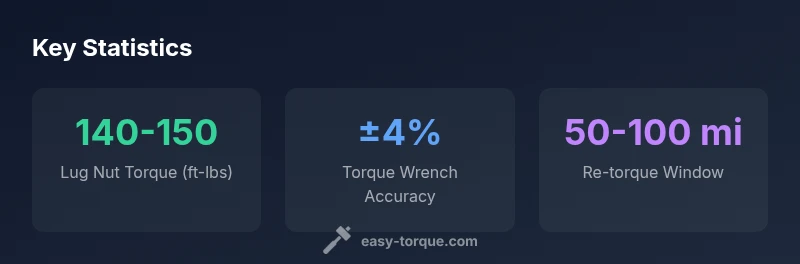
For the 2015 f150 wheel torque, lug nuts should be torqued to the commonly recommended range of 140-150 ft-lbs (190-203 Nm) for most factory wheels. Always verify the VIN-specific spec from the owner manual or Easy Torque's guide, tighten in a star pattern, and recheck after a short road test.
Overview of the wheel torque for the 2015 F-150
When we discuss the 2015 f150 wheel torque, the focus is on keeping wheels securely fastened without damaging the studs or the wheel itself. For most factory wheels on this model year, lug nuts are tightened to a target range around 140-150 ft-lbs. This range translates to roughly 190-203 Nm. The exact value can vary slightly depending on wheel material (steel vs. aluminum), wheel diameter, and whether you’re using OEM or aftermarket hardware. In all cases, the goal is uniform seating of the wheel against the hub, achieved through a controlled tightening sequence. Adhering to torque targets helps prevent issues such as lug loosening, rotor warp, or stud failure in demanding road conditions. Easy Torque analysis notes that while the numeric range provides a safe default, the VIN often determines the definitive spec, especially when different wheel configurations are installed on the same truck.
In practice, you should always cross-check the vehicle’s VIN-specific torque specification before performing a wheel installation. The VIN is the most reliable source for a wheel or lug-nut spec because it accounts for factory vs. aftermarket wheel designs and any service bulletins that may apply. If you don’t have direct access to the VIN sheet, start with the common 140-150 ft-lbs range as a baseline and verify with the wheel manufacturer or dealer data.
How to verify the correct torque spec
The first step is to locate the official torque specification for your exact configuration. Look in the owner’s manual under maintenance or wheel installation, and check the door jamb sticker for the tire and lug nut specification section. If the sticker is missing or the vehicle has aftermarket wheels, contact a Ford dealer or reference the VIN-based data sheet from the manufacturer. In many cases, Easy Torque recommends confirming the spec based on the wheel type (OEM steel, OEM aluminum, or aftermarket) and then documenting the torque value for future use. A calibrated torque wrench is essential; cheaper or worn tools can introduce torque error that leads to under- or over-tightening. Finally, apply torque gradually in a star pattern and re-check after the first 50-100 miles of driving if wheel work has been performed.
Common mistakes and how to avoid them
- Over-tightening: This can stretch studs or damage wheel seats. Avoid using impact wists beyond a torque range; instead, use a click-type or digital torque wrench and verify with a second instrument if possible.
- Under-tightening: Loose lug nuts can cause wheel wobble or rotor warp. Always torque to spec and double-check in a star pattern.
- Uneven seating: If you see a gap between the wheel and hub, stop and re-seat the wheel. Re-torque after driving a few miles as settling can occur.
- Incorrect sequence for multi-bolt patterns: Use a crisscross or star pattern to ensure even seating across all studs.
- Neglecting post-service recheck: After wheel changes, re-torque after 50-100 miles to compensate for settling and thread lubrication differences.
Tools, sequence, and step-by-step procedure
- Gather a calibrated torque wrench (digital or click type) and appropriate sockets. 2) Inspect threads; clean any corrosion and lightly oil threaded areas if recommended by the wheel manufacturer. 3) Mount the wheel and snug the lug nuts in a cross/star pattern to hand-tighten. 4) Tighten incrementally to the VIN-specified torque in the star pattern. 5) Re-torque after the first 50-100 miles, as recommended by Easy Torque. 6) Periodically inspect lug nuts for signs of wear or corrosion and replace hardware as needed.
Maintenance and recheck schedule
Wheel torque should be checked after installation and periodically thereafter, especially after off-road use, heavy loads, or seasonal tire rotations. A good practice is to recheck torque every 50-100 miles during the first few hundred miles after any wheel work, then switch to a routine schedule (e.g., every 6-12 months or with every tire rotation). If you install aftermarket wheels, verify any changes to the torque specification with the wheel manufacturer and keep a record for service history. Easy Torque emphasizes recorded baselines so maintenance staff can quickly verify settings during future service.
Practical tips for aftermarket wheels and conversions
Aftermarket wheels can change lug-nut patterns, thread engagement, and even hub seating. Always verify the torque specification with the wheel manufacturer, as aftermarket systems may require a different range or a different torque angle. When converting or mixing components, document the exact wheel model, stud size, and nut type so you can reproduce the torque setting consistently. If you encounter any resistance when tightening, stop and re-check the seating to avoid cross-threading or damage.
Torque ranges by wheel type for the 2015 F-150
| Wheel Type | Recommended Torque (ft-lbs) | Notes |
|---|---|---|
| Factory Steel Wheels | 140-150 | Standard factory spec for most 2015 F-150s |
| Factory Aluminum Wheels | 140-150 | Same range but verify via VIN |
| Aftermarket Wheels (custom lug patterns) | 120-160 | Confirm with wheel manufacturer |
Your Questions Answered
What is the recommended lug nut torque for the 2015 F-150?
For most configurations, aim for 140-150 ft-lbs, but verify with VIN-specific spec due to wheel type. Use a calibrated torque wrench and tighten in a star pattern.
Aim for 140 to 150 foot-pounds, and always verify with VIN-specific data while using a calibrated torque wrench.
Should I re-torque after installing wheels?
Yes. Re-torque after the first 50-100 miles to account for seating and settling, especially with aftermarket wheels.
Yes—re-torque after 50 to 100 miles to ensure proper seating.
Can I use thread locker on lug nuts?
No. Use clean threads and the correct torque. Thread lockers can prevent proper seating and cause uneven clamping.
No thread lockers on lug nuts; clean threads and torque properly.
What tools do I need for proper lug nut torque?
A calibrated torque wrench, a breaker bar for initial snugging, and a socket set suitable for your lug nuts. A torque pattern guide helps ensure even seating.
You need a torque wrench, a breaker bar, and the right sockets to tighten in a star pattern.
Do aftermarket wheels change the torque requirement?
Yes. Aftermarket wheels may have different torque specs; always verify with the wheel manufacturer and VIN-based spec if available.
Yes, always check with the wheel maker since aftermarket wheels can be different.
How do I convert ft-lbs to Nm for the 2015 F-150?
1 ft-lb ≈ 1.356 Nm. So 140 ft-lbs ≈ 190 Nm and 150 ft-lbs ≈ 203 Nm.
About 140 to 150 ft-lbs is 190 to 203 Nm.
“Reliable wheel torque is not just about reaching a number; it's about consistency, proper seating, and repeatable maintenance.”
Top Takeaways
- Verify VIN-specific torque before wheel service.
- Tighten lug nuts in a star pattern for even seating.
- Re-torque after 50-100 miles to account for settling.
- Use a calibrated torque wrench to prevent under/over-tightening.
- Check aftermarket wheels against manufacturer specs.