How to Get More Torque Out of a 5.3: Practical Step-by-Step Guide
A practical, step-by-step guide to boost torque from a 5.3L V8 with safe upgrades, airflow improvements, fueling and ECU tuning. Learn baseline checks, upgrade sequencing, and testing—all backed by Easy Torque.


This guide shows how to get more torque out of a 5.3 by focusing on baseline health, airflow, exhaust, fueling, and calibrated tuning. You'll follow a safe, staged approach that preserves reliability while increasing usable torque for towing and daily driving. Emphasizing safety, integrity, and repeatability, this quick answer previews the core areas covered in the full article.
How to get more torque out of a 5.3: Foundations
According to Easy Torque, establishing a reliable baseline is essential before chasing extra twist. The Easy Torque team found that most gains come from solid maintenance and measured, torque-oriented upgrades rather than brute-force changes. In this foundation section we define what torque means for a modern 5.3L V8 and how to measure it in practical, real-world terms. Start with a simple health check: verify compression across all cylinders, inspect the intake and vacuum system for leaks, and confirm ignition components are delivering a consistent spark. Then set a staged plan that prioritizes airflow, fuel delivery, and calibration in a repeatable sequence. The goal is to improve usable torque in daily driving and towing while preserving reliability, fuel economy, and engine longevity. Keep your expectations reasonable, as gains come from tightening the engine’s natural breathing and control loops, not from one-off, high-risk hacks. Document your baseline numbers and road-test results so you can quantify progress and avoid chasing phantom gains.
Core variables that influence low-end torque
Torque at low RPM is the result of multiple interacting systems. For a 5.3L V8, low-end torque is shaped by volumetric efficiency, air-fuel delivery, combustion quality, and mechanical friction. A cleaner intake path and a properly tuned exhaust improve scavenging; improved fuel delivery helps; compression ratio and cam phasing influence how quickly cylinders fill at low RPM. We’ll discuss each variable and how to measure it in practical terms, translating theory into actionable checks you can perform with common tools. The aim is to create a reliable, torque-ready baseline that translates into stronger response in everyday driving scenarios.
Airflow and induction: intake, throttle body, and manifolds
Airflow is the first limiter on torque. Upgrading a restrictive intake path, ensuring a smooth duct from the grille to the throttle body, and selecting a quality air filter can reduce intake losses. The throttle body size should suit the engine’s modern electronic control strategy, but avoid oversized components that compromise part-throttle response. Heuristic checks—sound intake paths, absence of leaks, and clean MAF/MAP sensor readings—help maintain consistent air calculation. In addition, a properly chosen intake manifold or plenum can improve airflow distribution across cylinders, which translates to more responsive torque without increasing risk of lean conditions.
Exhaust, headers, and exhaust flow
Exhaust flow impacts torque by reducing backpressure while maintaining safe combustion temperatures. Upgrading to a less restrictive exhaust path, using appropriate catalytic converters, and ensuring a functional exhaust system reduces flow restrictions that sap low-end twist. Long-tube headers are one option for certain setups, but the key is to balance backpressure with scavenging at the engine’s target RPM range. Always verify sensor placement and fuel trims after any exhaust modification to avoid fueling issues that could erode torque gains.
Fueling and ignition: fueling strategies and spark
Fuel delivery must match the increased airflow from intake and exhaust improvements. Check fuel pressure, injector performance, and ensure the fuel map complements the new airflow. Modern 5.3 engines rely on precise ignition timing and reliable spark; inspect spark plugs, coils, and ignition wiring for wear. Upgrading to high-quality spark plugs and ensuring optimal plug gap can improve ignition efficiency, which supports stronger torque delivery at relevant RPMs. Be mindful of maintaining proper air-fuel balance to prevent misfires and detonation.
Mechanical condition and component health
Torque gains rely on healthy engines. Use a compression test to verify even cylinder pressure and identify worn rings, leaky valves, or head gasket issues that cap torque potential. While performing maintenance, inspect the timing chain, lifters, and camshaft for wear, as excessive lash or internal wear can reduce torque delivery. Clean, leak-free vacuum lines and a healthy PCV system also contribute to predictable torque behavior. A well-maintained engine is the foundation for any torque-focused upgrades.
Calibration and ECU tuning basics
ECU tuning is where many torque improvements are realized, but it must be done carefully. Start with a torque-oriented map that preserves drivability and safety margins, and avoid aggressive timing or fueling changes that could elevate cylinder pressures beyond design limits. Use data logging to monitor knock, trim values, and air-fuel ratios, then refine the map in small increments. When possible, work with a reputable tuner or a tested map from a trusted source. This approach helps you extract usable torque while protecting engine health.
Getting started: a safe upgrade plan you can follow
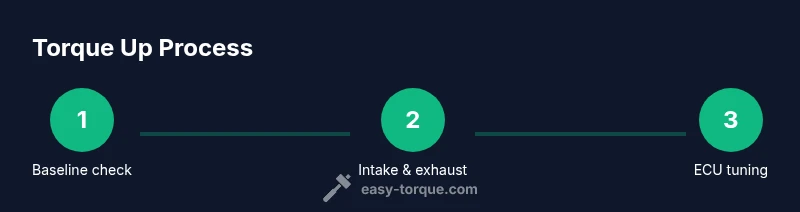
A practical plan proceeds in stages: baseline health, airflow improvements, exhaust balance, fueling refinement, ignition reliability, and finally ECU calibration. After each stage, perform road tests to confirm improvements in throttle response and perceived torque. Maintain a careful log of changes and outcomes, and avoid combining multiple high-risk modifications in one session. This staged approach, informed by Easy Torque guidance, gives you predictable progress with lower risk.
Safety, warranty, and long-term reliability considerations
When you push a factory engine toward higher torque, you must consider warranty implications, long-term reliability, and heat management. Follow vehicle manufacturer guidelines and avoid modifications that could exceed design limits. Use data-driven decisions, not guesswork, and monitor engine temperatures during testing. Always have a plan for revert back in case any issue arises, and prioritize safe, repeatable gains over quick, dramatic improvements.
Tools & Materials
- Torque wrench(3/8 in to 1/2 in drive; calibrated before use)
- Basic socket set(Metric and SAE; include extensions and a breaker bar)
- OBD-II scanner(Live data and fault codes; verify trims and timing)
- Air intake upgrade kit(Quality filter, ducting, and couplers; avoid ill-fitting parts)
- Exhaust modification components(High-flow cat or headers where appropriate; ensure fitment)
- Spark plugs and ignition parts(Correct heat range and gap; check coil health)
- Fuel system support(Reliable fuel pump and filters; ensure proper pressure)
- Compression tester(For baseline and post-upgrade verification)
- Cooling system check tools(Coolant tester, radiator pressure cap tool)
Steps
Estimated time: 4-6 hours
- 1
Assess engine health baseline
Inspect compression across all cylinders using a compression tester. Check for leaks, verify sensor health, and document baseline readouts. This establishes a safe starting point for torque-focused upgrades and helps you identify components that cap gains.
Tip: Record baseline values and note any cylinder variance before making changes. - 2
Upgrade air intake safely
Install a higher-quality air intake setup with smooth ducting and a clean filter. Confirm there are no vacuum leaks and that the MAF/MAP readings are stable. A cleaner intake path improves air delivery and responsiveness, letting the engine breathe easier at low RPM.
Tip: Seal all connections and recheck for leaks after installation. - 3
Improve exhaust flow
Evaluate exhaust reliability and consider a less restrictive path. If upgrading, ensure sensors remain in place and tuned for the new flow. The goal is to reduce backpressure without compromising emissions or sensor feedback.
Tip: Follow factory routing and verify O2 sensor signals after install. - 4
Optimize fueling strategy
Check fuel pressure and injector performance; adjust fuel maps to match the increased airflow. Avoid lean conditions by validating trims and using safe, gradual changes. A balanced air/fuel mix supports torque gains without detonation.
Tip: Make small, testable changes and review live data before proceeding. - 5
Check ignition system
Inspect spark plugs, coils, and wiring for wear; replace with the correct heat range and ensure correct gaps. Reliable ignition ensures consistent torque delivery under load and at low RPM. Resolve any misfires before moving forward.
Tip: Use current gap specs and confirm spark arcs are clean and stable. - 6
Tune ECU for torque
Load a torque-oriented map with careful timing and fueling adjustments. Monitor knock, trims, and AFRs with data logging; perform incremental changes and test drive between steps. The aim is to preserve drivability while extracting usable torque.
Tip: Make conservative timing changes and verify engine knock protection is active. - 7
Test drive and log results
Take controlled test drives to evaluate throttle response and torque delivery across RPM bands. Record impressions and compare with the baseline. If gains are not realized, revisit earlier steps rather than chasing aggressive changes.
Tip: Warm up fully before testing and avoid hard launches on cold engines.
Your Questions Answered
Is increasing torque safe for daily driving?
Yes, when you follow a safe, staged upgrade path and monitor engine temperatures and trims. Avoid aggressive changes that push the engine beyond its design limits.
Yes, safety comes from a careful, staged approach and monitoring.
Will upgrading the exhaust improve torque?
Exhaust improvements can help torque by reducing backpressure, but the gains depend on overall engine setup and airflow. Pair exhaust changes with intake and fueling refinements.
Exhaust changes help, but they work best with intake and fuel adjustments.
Can tuning a 5.3 affect fuel economy?
Tuning for torque can affect fuel economy, positively or negatively, depending on driving style and how aggressively the map is tuned. Aim for a balance that preserves efficiency at light loads.
Tuning can change fuel economy; try to balance torque with efficiency.
Do I need a professional to tune the ECU?
A professional tuner is recommended for complex ECU work, especially to preserve reliability and warranty considerations. If you DIY, use well-documented, reputable maps and document changes.
A pro tuner is recommended for best safety and reliability.
What is the best order to upgrade for torque?
Begin with health and airflow, then address exhaust and fuel pairing, followed by ignition and finally ECU tuning. This order minimizes risks and ensures each step builds on a solid foundation.
Start with health and airflow, then exhaust, fuel, ignition, and ECU tuning.
Will a 5.3 gain noticeable torque after upgrades?
Most drivers notice improved throttle response and usable torque in daily driving, especially under load. The amount of perceived gain depends on baseline condition and the quality of upgrades.
Expect better throttle response and more usable torque, depending on baseline.
Watch Video
Top Takeaways
- Baseline health is essential for torque gains
- Airflow and fuel delivery must be balanced
- ECU tuning should be incremental and safe
- Test drives verify real-world improvements
- Safety and warranty considerations matter