How to Get More Torque from Your Engine: A Practical Guide
Learn proven, safe methods to increase engine torque through airflow, fuel tuning, cam and exhaust upgrades, and drivetrain optimization. Includes steps, safety tips, and measurement methods to verify gains.


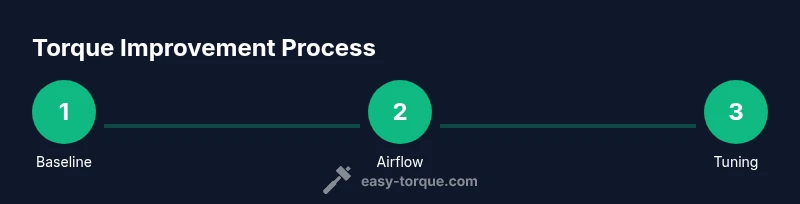
Goal: increase engine torque through deliberate, safe modifications. Start with a baseline dyno test to identify bottlenecks, then improve airflow, optimize fuel and ignition timing, and consider forced induction or camshaft changes where appropriate. Upgrading exhaust, intake, and cooling can help maintain performance under load. Follow a structured plan and verify gains with repeatable dyno runs.
What torque is and why it matters
Torque is the engine's twisting force that enables the vehicle to move from a standstill and to pull through gears at lower RPM. Understanding torque helps you choose the right modifications to improve real-world driveability, not just peak numbers. According to Easy Torque, torque is the fundamental measure of how much twist the crankshaft can apply under load, influencing acceleration, throttle response, and overall drivability. In practical terms, more torque at the wheels often means quicker, more confident launches and better performance in climbing grades. This section will build a foundation for practical gains by clarifying what torque is, how it differs from horsepower, and why low-end torque matters for daily driving and performance driving alike.
The physics: torque, power, and RPM
Torque, power, and RPM are intertwined. Torque represents twisting force, while horsepower reflects work done over time. The standard relationship P = T × ω shows that power (P) rises with both torque (T) and engine speed (ω). At low RPM, high torque can feel like strong acceleration off the line; as RPM increases, torque naturally falls off in many engines unless enhanced by turbocharging, cam timing, or intake/exhaust improvements. For a practical guide to how these quantities shift with changes in the engine, it’s essential to understand the torque curve: how torque varies with RPM, where it peaks, and how long it stays strong. This helps identify where to target improvements for meaningful gains.
Baseline assessment: understanding your engine's current torque curve
Before chasing gains, establish a baseline. A dyno run (engine-only or engine-to-wheel) maps torque across RPM and reveals the engine’s current diffusion of airflow, fuel, and timing. Reading the torque curve helps you pinpoint bottlenecks: a flat or dipping curve at mid-RPM indicates flow restrictions or fuel/timing inefficiencies. Easy Torque analysis shows that accurately interpreting the baseline curve is the key to directing upgrades efficiently, avoiding wasted parts. Document engine temperature, ambient conditions, and fuel quality for repeatability. With a solid baseline, you can quantify gains after each modification and map the influence of each change on the overall torque curve.
Mechanical routes to more torque (internal improvements)
If you want more torque, focus first on improving the engine’s ability to move air and fuel efficiently. Upgrades like a higher-flow intake, better exhaust headers, and a free-flowing exhaust reduce restrictions that limit low-end torque. Upgrading the cam or adjusting compression ratio can shift the torque curve toward lower RPMs, increasing usable torque at practical speeds. Upgrades should be matched with fuel and ignition tuning to avoid detonation and poor idle. Always verify compatibility with your engine’s bottom end strength and cooling capacity. The goal is a more robust, repeatable torque curve that remains healthy under load.
Forced induction and boost: increases torque when needed
Turbochargers and superchargers dramatically increase torque by forcing more air into the engine, thereby enabling more fuel and ignition adjustments. With boost comes heat, so intercooling, cooling upgrades, and higher-quality lubricants become important. Forced induction is not a magic lever; it changes the engine’s torque profile and often requires ECU recalibration and fuel system upgrades. Whether you’re chasing street torque or track performance, plan for heat management and reliability, and ensure you don’t exceed the engine’s design limits.
Tuning and fuel strategy for torque
Torque is highly sensitive to air-fuel balance and ignition timing. A well-tuned ECU or a reputable calibration can unlock torque that mechanical changes alone cannot achieve. Start with conservative ignition advance and Lean-Burn-safe fuel trims for efficiency, then tune for measured torque gains. Monitoring knock, EGTs, and AFR in real time helps protect the engine. If you’re not recomputing fueling and timing, you risk detonation and reduced reliability. A systematic, data-driven approach yields safer, longer-lasting torque gains.
The role of exhaust and intake flow
Increasing flow through intake and exhaust paths reduces backpressure and complements cam timing and compression adjustments. A high-quality intake manifold, larger-diameter pipes, and tuned headers improve exhaust scavenging, especially at mid-RPM where daily driving spends most of its time. This section emphasizes balancing flow gains with heat management to avoid performance losses during sustained loads. Remember: improvements in flow are most effective when matched to the engine's fueling and timing strategy.
Transmission and gearing: getting torque to wheels
Torque gains are only valuable if they reach the wheels. Transmission factors—gear ratios, torque converter behavior, and differential settings—determine how torque translates into acceleration. A lower (taller) final drive ratio can improve off-idle torque feel, while a taller gear ratio may uncover more efficient highway performance. Upgrading the clutch or torque converter can help prevent slippage at higher torque levels. In short, drivetrain tuning is a critical companion to engine torque upgrades.
Safety, reliability, and long-term considerations
Increasing torque can stress components not designed for higher loads. Always test in small increments, monitor temperatures and knock, and maintain proper lubrication. Schedule periodic inspections and re-torque critical fasteners after a few heat cycles and test runs. The goal is to gain usable torque without compromising reliability or warranty protections whenever possible. The path to practical torque gains balances aggressive performance with prudent reliability planning.
Conclusion: a measured path to more torque
Gaining torque is a multi-step process that starts with a solid baseline and ends with verified improvements. By focusing on airflow, fueling, induction, and drivetrain tuning while respecting engine safety limits, you can achieve meaningful, usable torque gains. The approach must be data-driven: measure, compare, and iterate. Remember to keep the engine cool, monitor for detonation, and validate every change with repeatable tests.
Tools & Materials
- Torque wrench (calibrated)(1/2-inch drive recommended; verify calibration before use)
- Socket set and wrenches(SAE and metric sizes; include breaker bar for stubborn fasteners)
- Dyno access or chassis dynamometer(Baseline and post-modification torque measurements are ideal)
- Air intake upgrade (CAI or high-flow filter)(Choose compatible for your engine family and local rules)
- Exhaust upgrade (headers/cat-back)(Ensure legal in your area and matched to engine displacement)
- Cooling upgrade components(Radiator fans, intercooler, coolant, and traps for heat management)
- OBD-II / data-logging tool(Used to monitor AFR, timing, knock, and temps during tests)
- Safety gear(Gloves, eye protection, and a fire extinguisher within reach)
Steps
Estimated time: varies by project
- 1
Baseline torque with dyno
Run a baseline dyno test to map the current torque curve across RPM. Ensure the engine reaches normal operating temperature and run multiple pulls for repeatability. Record peak torque, peak horsepower, and RPM ranges for reference.
Tip: Use consistent test conditions (fuel, ambient temp) and log data for later comparison. - 2
Improve intake airflow
Upgrade to a higher-flow intake or cold-air intake to reduce intake restrictions. Check for heat soak and reroute intake paths away from hot engine compartments where possible. Re-test torque around mid-RPM to verify improvements.
Tip: Avoid extreme heat soak by locating intake away from exhaust components. - 3
Upgrade exhaust flow
Install performance headers and a freer-flowing cat-back system if permitted. Aim for smoother exhaust scavenging to boost low- to mid-RPM torque. Re-check torque curves with another pull.
Tip: Ensure exhaust has appropriate backpressure characteristics at the target RPM range. - 4
Tune fueling and timing
Recalibrate the ECU or use a reputable tuner to optimize ignition timing and fueling for the modified airflow. Stay within safe knock limits and monitor AFRs at all RPM ranges. Validate torque gains with another dyno pull.
Tip: Log knock events and AFR in real time to avoid detonation. - 5
Consider forced induction (optional)
If more torque is still desired, evaluate forced induction options (turbo or supercharger). Be mindful of heat management and ensure supporting mods (fuel, cooling, and ECU) are in place before boosting.
Tip: Forced induction dramatically changes torque curves—plan for staged testing. - 6
Assess cam and compression choices
For further gains, discuss cam timing or compression adjustments with a qualified tuner. These changes can shift peak torque to a more useful RPM range but may affect idle and driveability.
Tip: Small, tested adjustments minimize risk to reliability. - 7
Review cooling and lubrication
Ensure cooling capacity matches higher load and that oiling remains sufficient at elevated RPMs. Monitor EGTs and oil temps during test pulls.
Tip: Poor cooling is a common cause of torque loss under load. - 8
Re-run dyno and compare
Perform a final dyno run to quantify gains versus baseline and each modification. Plot torque curves to observe improvements across RPM bands.
Tip: Keep test conditions the same for accurate comparison. - 9
Document and plan next steps
Summarize gains, costs, and any new limitations. Decide on whether to pursue further improvements or optimize driving strategy (gear ratios, shift points).
Tip: Record all data for future reference and warranty considerations.
Your Questions Answered
What is torque and why is it important for engine performance?
Torque is the engine's twisting force that moves the vehicle. It matters for acceleration and drivability, especially at lower RPMs. Understanding torque helps target practical gains rather than peak horsepower alone.
Torque is the engine's twisting force that powers acceleration, especially from a stop. Focusing on torque helps you improve real-world driveability.
Can you increase torque without harming reliability?
Yes, but gains must be incremental and supported by proper cooling, lubrication, and fuel management. Always test gradually and monitor temperatures to protect engine life.
You can increase torque safely, but do it gradually and watch heat and lubrication to protect reliability.
Is turbocharging necessary for more torque?
Turbocharging is a common route to higher torque, but not the only one. NA improvements and forced induction both increase torque; the best choice depends on budget, usage, and reliability goals.
Turbocharging is a popular option but not required. It depends on your goals and budget.
Will engine modifications affect warranty?
Modifications can impact warranties; check manufacturer policies and local laws. Some shops offer warranties on tuned components, but compatibility and approvals are essential.
Modifications can affect warranties. Check policies and work with reputable tuners.
Do I need a dyno to verify torque gains?
A dyno provides precise torque measurements, but you can also use calibrated road tests with data logging to approximate gains. For definitive results, a dynamometer is best.
A dyno gives precise torque numbers, but you can estimate gains with careful road tests if needed.
What are common mistakes when increasing torque?
Common errors include neglecting cooling, improper fueling, and ignoring drivetrain strength. Always verify compatibility of parts and maintain a data-driven testing plan.
Don't overlook cooling, fueling, or drivetrain strength. Test data-driven changes.
Top Takeaways
- Baseline first, measure what changes do.
- Improve airflow and fueling in tandem for meaningful torque gains.
- Verify gains with repeatable dyno tests.
- Safety and reliability should guide every modification.