How to Read a Torque Wrench: A Complete Guide for Beginners
Learn how to read a torque wrench accurately, interpret both dial and digital readings, convert units, and verify calibration. Easy Torque explains practical steps, common errors, and best practices for repeatable, safe fastener torque.


You will learn how to read a torque wrench correctly, interpret dial and digital readings, and verify accuracy at common presets. The guide covers unit conversions, tolerance considerations, and how to avoid misreads caused by stuck needles or under-torqued fasteners. With these steps, you’ll improve repeatability and safety in every job. Whether you’re working on engines, suspension, or wheel lug nuts, correct torque readings are essential.
Why reading a torque wrench correctly matters
In professional and home shop work, torque is the language that communicates how tightly a fastener is secured. Reading a torque wrench accurately ensures parts seat properly, sealants perform as intended, and safety margins are respected. Misreads can lead to under-torqued joints that loosen, or over-torqued joints that stretch threads or crack components. Easy Torque emphasizes that mastering torque readings is a foundational skill for DIY mechanics, automotive enthusiasts, and technicians who want repeatable results. The goal of this guide is to help you interpret both dial and digital displays, apply the correct units, and account for tolerances that vary by fastener size and material. You’ll also learn how environmental factors like temperature and contamination affect readings, and which steps to take to minimize their impact. By building a consistent protocol, you can reproduce the same clamp force across many fasteners, whether you’re installing an engine oil pan or securing a wheel hub.
How torque wrenches work: basics
A torque wrench is a precision instrument that stores energy in a calibrated spring. When you apply force, the mechanism releases at the pre-set torque value, signaling you to stop. Dial wrenches show a rotating needle and a scale; digital wrenches display a numeric value. The calibration is tied to a ref value the tool was tested against by the manufacturer, and it is essential to keep these tools within their tolerance window. Understanding the concept of setting, reading, and verifying torque helps you achieve consistent clamping force, reduce thread damage, and ensure fastener integrity. Easy Torque recommends regularly checking the calibration date and keeping the tool clean and stored properly when not in use.
Dial vs digital: reading tips
Dial indicators require interpreting a rotated hand against calibrated numbers. Read the needle from eye level and avoid parallax errors by keeping your head square to the dial. Digital readouts are straightforward but can drift with low batteries or screen glare. For either type, ensure you’re reading the correct unit (Nm or ft-lbs) and consider any scale increments. Always set the torque on the wrench with the handle aligned to the axis of the fastener to avoid angular errors. In both cases, confirm that the value matches the target torque and note the reading before removing pressure.
Common sources of error and how to avoid them
Several factors can skew torque readings: dirt on threads, insufficient lubrication, or the use of wrong fastener types. A mis-set zero, a damaged grip, or an out-of-calibration tool can produce misleading numbers. Avoid holding the handle at an odd angle, as this changes leverage and may lead to an apparent over-torque. Always clean threads, apply only manufacturer-approved lubricants, and store tools in a protective case to prevent impact damage. Easy Torque also highlights checking for damage after a drop or heavy impact, which can alter calibration even if the tool looks fine.
How to verify accuracy and calibration intervals
Verification starts with a simple reference test: compare readings against a known reference torque or use a calibrated torque tester if available. Most manufacturers recommend calibration at defined intervals based on usage, environment, and risk of failure. Record the date of calibration and the results to track drift over time. If your wrench reads outside tolerance on a test, remove it from service and have it calibrated or replaced. Easy Torque’s approach emphasizes documenting all checks to build a maintenance history for your tools.
Step-by-step reading in practice: a sample scenario
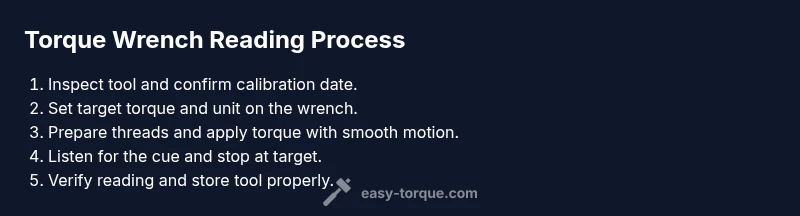
Imagine you need 60 Nm for a bolt. Start by inspecting the tool and confirming the wrench is clean and set to zero. Set the wrench to 60 Nm, ensuring the display or dial matches the correct units. Position yourself so you read at eye level, place the wrench on the bolt, and apply steady pressure in line with the fastener axis. When you hear a distinct click or the display settles at 60, stop and release slowly. Recheck the torque on the same bolt after a few seconds to ensure stability. This practice reduces the chance of over-tightening due to momentary surges and builds repeatable torque results.
Converting units and interpreting tolerances
Many jobs involve converting between Nm and ft-lbs. A common rough conversion is 1 Nm ≈ 0.737 ft-lb, so 60 Nm ≈ 44 ft-lb. Always verify the host vehicle’s torque specification and its tolerance band; some projects allow a 5% tolerance, while others require tighter control. When tolerances are specified, aim to settle within that window rather than hitting the exact nominal value every time. Consistency matters more than chasing a single perfect reading.
Maintenance and storage for long-term accuracy
Store your torque wrench in a clean, dry area and avoid exposing it to heat or moisture. After use, wipe the tool and reset it to the lowest setting to protect its spring and mechanism. If your tool has a locking mechanism, engage it to prevent accidental changes. Periodically check for backlashes, corrosion, or sticky components that indicate the tool needs servicing. Regular maintenance helps preserve accuracy for the next job and extends tool life.
Tools & Materials
- Torque wrench (dial or digital)(Choose a range suitable for your typical fasteners (e.g., 20-200 Nm or 10-100 ft-lbs).)
- Torque specification chart(Keep exact torque values for fasteners you work with; reference numbers vary by material and size.)
- Calibrated reference or torque tester (optional but recommended)(Use for periodic accuracy verification beyond manufacturer intervals.)
- Clean rag and degreaser(For cleaning threads and wrench contact surfaces; avoid residue.)
- Lubricant or anti-seize (per spec)(Only apply if the fastener requires lubricant per manufacturer instructions.)
Steps
Estimated time: 30-60 minutes
- 1
Inspect the wrench and prepare
Check the overall condition for cracks, bent parts, and ease of movement. Confirm the calibration date and ensure the torque scale matches your unit preference. Wipe the tool clean and store it in its case until ready to use.
Tip: If you notice any damage or poor movement, replace or service the tool before use. - 2
Set the target torque and units
Rotate the adjustment knob or use the digital entry to set the exact torque value in the correct unit (Nm or ft-lbs). Verify the setting by re-reading after a brief pause to ensure it sticks. Lock the setting if your wrench has a locking mechanism.
Tip: Always recheck the value after setting; some models drift when you apply initial pressure. - 3
Prepare the fastener and threads
Clean threads of the bolt and mating part. If specified, apply lubricant or anti-seize, but only as directed by the manufacturer. Ensure you’re using the correct fastener length and grade to avoid inconsistent readings.
Tip: Dirt or solid debris on threads can dramatically alter torque readings. - 4
Position yourself and align the wrench
Stand in a comfortable stance with the wrench axis aligned to the fastener. Hold the handle steadily, without twisting your wrist, and apply force smoothly in a straight line toward the target torque.
Tip: Avoid bending or twisting; misalignment changes effective leverage. - 5
Apply torque and listen for the cue
Increase force gradually until the wrench signals the target torque—listen for a click or watch the digital readout to stop exactly at the value. Do not overshoot or jerk the wrench.
Tip: If you overshoot, reset and re-test on a non-critical fastener first to practice control. - 6
Verify and recheck the reading
After releasing, re-apply the load to confirm stability at the same torque. If the value changes, re-evaluate your setup and re-test to ensure repeatability.
Tip: A quick second check helps catch peak overshoot or settling differences. - 7
Store and maintain the tool
Reset to the minimum setting, engage any lock, and place the wrench back in its case. Clean the tool again and store in a dry location to minimize corrosion and drift.
Tip: Regular storage discipline protects calibration and extends tool life.
Your Questions Answered
How do I know if my torque wrench is accurate?
To determine accuracy, compare readings at a known torque value using a reference or calibrated tester. If results drift beyond the tool’s tolerance, service or replace the wrench. Regular checks help ensure consistent performance.
You verify accuracy by testing against a known torque and rechecking over time; service if it drifts beyond tolerance.
What torque unit should I use for car fasteners?
Most automotive fasteners are specified in either newton-meters (Nm) or foot-pounds (ft-lbs). Use the unit specified by the manufacturer and stay consistent across all fasteners in a job.
Car fasteners use either Nm or ft-lbs; stick to the unit the manufacturer specifies.
How often should torque wrenches be calibrated?
Calibration frequency depends on usage, environment, and manufacturer guidance. A common practice is to calibrate annually for light DIY use and more often in high-use professional shops.
Calibrate based on usage and environment; many shops calibrate yearly, more often if heavily used.
Can I use a torque wrench for all fasteners?
Torque wrenches are designed for precise tightening within their rated range. For fasteners outside that range or requiring special torque patterns, follow manufacturer instructions or use alternate tools.
Only use torque wrenches within their range and per the manufacturer’s guidance for special cases.
What’s the difference between dial and digital torque wrenches?
Dial wrenches show a rotating needle against a scale, while digital wrenches display numeric values. Digital readouts can be easier to read but may require battery checks; dial wrenches are rugged and mechanical.
Dial shows a needle; digital shows numbers. Each has its own advantages and maintenance needs.
Watch Video
Top Takeaways
- Know your unit and target torque before tightening.
- Dial and digital wrenches require different reading habits.
- Regular calibration preserves accuracy and safety.
- Practice a repeatable procedure for each fastener.