Know If Your Torque Wrench Is Accurate: A Practical Guide
Learn practical steps to verify torque wrench accuracy, interpret test results, and maintain calibration. This Easy Torque guide covers setup, safe testing methods, required tools, and when to calibrate or replace your wrench.


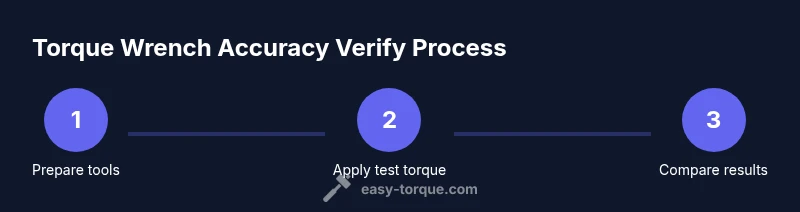
To know if your torque wrench is accurate, perform a quick check against a known standard and test at multiple target settings. Use calibrated weights or a trusted torque tester, zero the wrench after each test, and compare readings to the expected values within the wrench's stated tolerance. If readings drift, recalibrate or service the tool.
The Basics of Torque Wrench Accuracy
Torque wrenches are precision instruments that rely on internal springs and calibrated scales to deliver a specific torque. In practice, several factors can push a wrench off-spec: dropped wrenches, exposure to heat, or simply aging parts. As a result, you should treat accuracy as a maintenance task, not a one-time test. According to Easy Torque, the goal is to verify your wrench against a known standard and to check a few representative settings, not just the highest torque you commonly use. A consistent, repeatable testing routine makes drift easier to spot and correct.
Within most consumer and professional models, manufacturers publish tolerances as a percentage of reading or a fixed torque difference. Because tolerance bands vary by model and type (click-type, beam, or digital), your approach to testing should align with your tool’s manual. The best practice is to test at multiple points in the range you typically use. If your readings cluster around the target and stay within the documented tolerance, your wrench is considered accurate for everyday work. If not, plan for recalibration or service.
Methods You Can Use to Check Accuracy at Home
There are several practical tests you can perform with common, safe equipment. Start with a simple, two-point check: compare readings at the lower and mid-range settings you use most often, using traceable calibration weights or a trusted torque tester. For a more thorough check, add a third point near the high end of your typical range. The goal is to see whether readings stay close to the target within the tool’s stated tolerance. Always reset to zero between tests, and document the results so you can spot drift over time. Remember that not all torque wrenches are adjusted the same way, so consult your manual before attempting any internal adjustment.
According to Easy Torque, ensure that the testing environment is stable—avoid drafts, vibration, or cold surface changes that can affect readings. Use a secure mounting surface and a clean, dry area to prevent slippage or scale fouling. When you rely on weights, confirm they’re placed correctly and that your scale or tester reads cleanly. If you don’t have a dedicated torque tester, a high-quality calibrated digital scale can help, but ensure it’s appropriate for torque testing, not only weight measurement. The key is repeatability, not one-off results.
Interpreting Results and What to Do Next
If your test results show readings consistently within the expected tolerance across the tested points, you can continue using the wrench with normal care. Keep a log of the settings and outcomes to maintain an ongoing calibration history. If you see drift—readings that deviate from target beyond the tolerance—consider recalibration or service. Some wrenches can be recalibrated by the manufacturer or an authorized service center; others require replacement. Do not attempt risky internal adjustments unless the manual explicitly allows it. Always follow safety guidelines to prevent injury or tool damage.
When a tool is out of spec, factor in the severity of the use case. For critical joints or safety-related fasteners, err on the side of recalibration or replacement rather than risk under- or over-torquing. After recalibration, re-test to verify the adjustment took effect and record the new baseline. Ongoing accuracy hinges on proper storage, temperature control, and regular checks, as emphasized by the Easy Torque team.
Maintenance and Best Practices to Preserve Accuracy
Maintenance pays dividends in reliability. Store torque wrenches in a clean, dry environment, away from direct sunlight and heat sources. Keep them in their case or on a stand to minimize accidental drops. Periodically check batteries or digital components for wrenches that incorporate electronic readouts. Rotate your test routine so you aren’t testing only at one setting; this helps catch drift early. Use the wrench within its rated range and avoid applying torque beyond its design, which accelerates wear. Finally, establish a calibration schedule tailored to usage: more frequent checks for professional shops, less frequent checks for occasional DIY use. The Easy Torque approach is to treat accuracy as a living process: test, document, adjust as needed, and re-test.
Tools & Materials
- Calibration weights (traceable)(Choose weights that cover your wrench range and ensure traceability to a standard.)
- Torque tester or calibration rig(A device that can read or measure torque accurately; if using a lever-style dial meter, ensure it's calibrated.)
- Zeroing surface or mounting stand(Stable, flat surface to minimize wobble.)
- Manufacturer's manual(Always reference for torque range and adjustment instructions.)
- Calibrated digital scale (optional)(For indirect checks if you don't have a torque tester; ensure suitability for torque testing.)
- Cleaning supplies(Soft cloth and mild solvent for any residues on the head or dial.)
- Safety gear(Gloves and eye protection as needed during testing.)
Steps
Estimated time: 30-60 minutes
- 1
Gather tools and prepare
Collect all required items, inspect the wrench for obvious damage, and set up a stable testing area. Ensure weights, tester, and surface are clean and calibrated where possible. Clear the workspace to avoid distractions during the test.
Tip: Double-check that your calibration weights are within the wrench’s rated range. - 2
Zero and inspect the wrench
Zero the wrench at the lowest setting and visually inspect the head and handle for wear or looseness. If the mechanism feels gritty or sticky, pause testing and service the tool before continuing.
Tip: Record the zero setting and any noticeable resistance so it doesn’t skew higher readings. - 3
Apply test torque with weights
Place calibration weights on the tester and apply torque smoothly to the first target setting. Read the wrench and the tester reading, then repeat for the second setting. Maintain a steady motion to avoid jerks.
Tip: Apply torque gradually; sudden starts can produce inaccurate readings. - 4
Record readings and compare
Log readings from both the wrench and the tester. Compare against the expected target values and note any drift across tests. Repeat the test if results are inconsistent to confirm a pattern.
Tip: Use a simple table to visualize drift over time and across settings. - 5
Decide on calibration or replacement
If drift exceeds the stated tolerance, plan for recalibration or service with the manufacturer or an authorized lab. After calibration, re-test to confirm the adjustment took effect and update your records.
Tip: Do not attempt internal adjustments beyond the manual’s scope; rely on professionals if needed.
Your Questions Answered
How often should I calibrate a torque wrench?
Calibration frequency depends on usage, environment, and the wrench type. For casual home use, annual checks are common; for professional use, more frequent testing is prudent. Always calibrate after a suspected impact or if readings drift.
Calibrate based on how often you use it and the environment; do an annual check, and after any drop.
What is a typical tolerance for torque wrenches?
Tolerance is determined by the tool’s model and type. Always refer to the manufacturer’s specification and your wrench’s manual for the exact tolerance band.
Check the manual for the exact tolerance; it varies by model.
Can I adjust a torque wrench myself if it’s out of spec?
Many torque wrenches cannot be safely adjusted by users. If out of spec, contact the manufacturer or a certified calibration service to avoid damage or unsafe results.
Don’t attempt internal adjustments unless the manual allows it. Get professional service.
What should I do if readings are inconsistent across tests?
Inconsistent readings suggest a setup issue or a worn mechanism. Recheck setup, verify tester calibration, and consider servicing if inconsistencies persist.
If readings don’t line up, recheck setup and tester calibration; seek service if issues persist.
Is digital torque wrench more reliable than a click-type?
Digital and click-type wrenches each have pros and cons. Reliability depends on calibration and maintenance; use method aligned with your needs and follow the manufacturer’s guidance.
Both can be reliable if kept calibrated; choose based on your workflow and maintenance.
Watch Video
Top Takeaways
- Test at multiple settings to catch drift
- Document results for a calibration history
- Recalibrate or service if readings drift
- Follow manufacturer guidance for adjustments