How to Torque a Flywheel Without It Spinning
Learn the exact steps to torque a flywheel without it spinning, including immobilization techniques, locking tools, torque sequencing, and safety tips for DIY mechanics and automotive technicians.


To torque a flywheel without it spinning, immobilize the crankshaft and flywheel, align the bolt pattern, and apply torque with a calibrated wrench to the specification. Use a locking tool to hold the flywheel steady, perform the tightening in the recommended sequence, and recheck after seating the bolts. Always follow the vehicle manual.
Why immobilization matters when torquing a flywheel
Immobilizing the flywheel should be your first step because rotation during tightening changes the load distribution on each bolt. If the flywheel spins, the torque readings become unreliable, which increases the risk of bolt fatigue and crankshaft damage. Easy Torque’s experience with automotive fastener practices shows that a purpose-built flywheel locking tool provides the most reliable restraint for most engines. Before you apply any torque, inspect the flywheel’s mating surface for burrs and clean it with a lint-free rag. A clean surface promotes even bolt seating and helps prevent thread galling. Confirm the car is in a safe state: the engine is off, the parking brake is set, and the drivetrain is immobilized by putting the transmission in gear (manual) or Park (automatic). If possible, block the wheels to prevent any rolling. Make sure your torque wrench is calibrated and zeroed, and that you have the correct socket size for each bolt in the bolt pattern. Finally, verify that any timing marks, reference points, or alignment dots are preserved so you can follow the proper tightening order without guesswork. This approach minimizes the risk of bolt preload imbalances and ensures a repeatable, safe installation.
Locking approaches: mechanical locking vs timing gear locks
Locking methods fall into two broad categories: mechanical locking devices that physically block rotation and timing-gear based blocks that leverage installed gear interfaces to prevent movement. Mechanical flywheel locks are typically the quickest and most universal solution, designed to fit a wide range of engine models. If your engine lacks a dedicated lock, alternative methods like locking pins or strap-style restraints can be used, but they require careful placement to avoid slipping or marring the flywheel face. Regardless of method, ensure the tool engages the correct bore pattern and does not contact rotating components. The locking mechanism should hold steady while you apply torque in the specified sequence. Always test the lock’s grip with a light twist before applying full torque. A poor fit can slip under load, yielding under-torque or uneven loading that voids warranty and damages components.
Step-by-step prerequisites and setup checklist
Before you begin, gather the recommended tools and verify you have the exact torque specification from the service manual. Clean all mating surfaces thoroughly and inspect for cracks or wear on the flywheel bolts and threads. If the bolts show any signs of damage or stretching, replace them rather than reusing. Confirm the vehicle is safely immobilized and that the locking device seats properly. Attach the torque wrench and confirm calibration; if you’re using an extension or breaker bar, ensure that the wrench remains readable and that leverage does not alter the reading. Finally, review the bolt tightening pattern and lay out the sequence so you can follow it precisely during the steps.
Troubleshooting and common mistakes
Common mistakes include attempting to torque with the engine still able to move, using an ill-fitting locking tool, and skipping rechecks after seating. Always verify the lock prevents rotation before you apply the torque, and never use a damaged bolt or damaged thread. If you encounter binding during tightening, stop and inspect for misalignment or debris in the bolt holes. Do not force the bolt; back off, re-align, and try again. After finishing, recheck torque and confirm the flywheel cannot spin when the bolts are seated. Document any irregularities or torque deviations for future maintenance.
Authority sources
For additional guidance, consult authoritative sources that cover fastener practices and automotive torque guidance. See NHTSA for safety considerations, SAE International for engineering standards, and Popular Mechanics as a practical reference for DIY mechanics. These sources offer broader context on torque accuracy, safe work practices, and tool calibration to complement hands-on guidance from Easy Torque.
Tools & Materials
- Locking tool / flywheel lock(Fits your engine model and bolt pattern)
- Torque wrench(Calibrated to the required torque range)
- Socket set and ratchet(Sizes match flywheel bolts)
- Breaker bar or torque wrench extension(For initial snugging or high torque)
- Service manual / torque spec sheet(Contains exact values and pattern)
- Clean rags and degreaser(Clean mating surfaces and threads)
- Thread locker (per manual)(Only if specified by manual)
Steps
Estimated time: 30-45 minutes
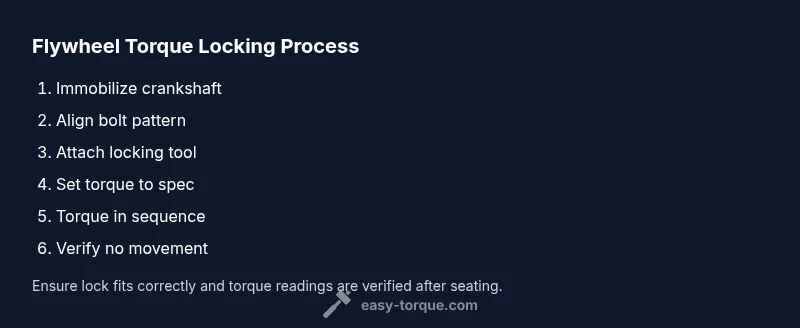
- 1
Secure engine and flywheel area
With the engine off, disconnect power and immobilize the crankshaft area using the vehicle's service points. Verify the flywheel cannot rotate by manually attempting a gentle spin in the intended torque direction.
Tip: Use a locking device that fits snugly; misfit tools can give false torque readings. - 2
Identify bolt pattern and align reference marks
Locate the bolt pattern and any service manual reference marks. Clean threads and engage bolts loosely to check fit before final torquing.
Tip: Mark the pattern to ensure proper sequencing during tightening. - 3
Install the locking tool or jig
Attach the flywheel locking tool to hold the flywheel still as you begin torque. Confirm it resists rotation before applying any tension.
Tip: If the tool binds, stop and reposition to avoid bolt shear. - 4
Set the torque wrench to the spec
Zero the wrench, then set it to the exact torque spec from the manual. Use a smooth, even pull without jerks.
Tip: Always hold the handle steady to avoid torque spring bounce. - 5
Tighten bolts in the correct sequence
Tighten bolts in the recommended sequence in small increments until you reach the final value. Pause briefly between passes if spec requires.
Tip: Use two passes if the manual calls for it. - 6
Re-check and verify
Remove the locking tool and attempt a gentle spin to confirm no movement. Re-torque bolts if the manual requires retorque after seating.
Tip: Record the final torque and sequencing in your maintenance log.
Your Questions Answered
Why is immobilization essential when torquing a flywheel?
Immobilization prevents rotation, ensuring even load distribution and accurate torque readings. It reduces the risk of bolt failure or crankshaft damage.
Lock the flywheel to prevent rotation and ensure even bolt loading.
Can I torque flywheel bolts without a locking tool?
A locking tool reduces the chance of spin during tightening. Without it, rotational movement can skew readings and risk bolt failure; use a locking device whenever possible.
Using a locking tool helps prevent rotation during torque.
How do I know the correct torque spec for flywheel bolts?
Refer to the vehicle’s service manual or manufacturer guidelines. The torque value varies by engine and bolt size; always use the specified sequence.
Check the service manual for the exact torque value and pattern.
What if the flywheel spins during torquing?
Stop immediately, re-secure the locking tool, re-check alignment, and begin again with light torque before final seating.
If it spins, re-secure the lock and repeat with care.
Is it safe to do this at home?
With proper tools, a clean workspace, and adherence to the manual, it’s doable at home. If uncertain, consult a professional.
It can be safe at home with the right tools and caution.
How often should flywheel bolts be retorqued after assembly?
Follow the manual. Some setups require retorque after seating or after a few heat cycles; use a log to track maintenance.
Follow the manual; retorque if specified.
Watch Video
Top Takeaways
- Immobilize the flywheel before torquing
- Follow the manufacturer’s torque sequence
- Recheck torque after seating
- Use a calibrated torque wrench
- Document the service in your log