hp vs torque: Understanding Horsepower and Torque for Engines
Explore hp vs torque, how each metric shapes acceleration, top speed, and drivability. Learn to evaluate engines, tune effectively, and choose the right setup with Easy Torque guidance.


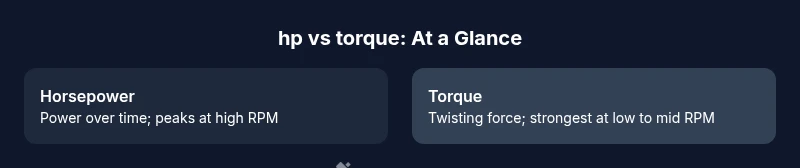
Horsepower and torque describe different aspects of an engine's performance. Torque is the twisting force at the crank, while horsepower blends torque with engine speed to express work over time. For most driving scenarios, torque drives off-the-line and climbing hills, whereas horsepower sustains high-speed performance. In practice, the goal is a balanced torque curve across RPM rather than chasing a single peak value.
Defining horsepower and torque
Horsepower (hp) and torque are two foundational measures of engine performance, but they describe different things. Horsepower is a rate: how much work the engine can do per unit of time, typically measured in horsepower. Torque is a twisting force produced at the crankshaft, measured in lb-ft or N·m. In simple terms, torque governs how hard the engine can pull from a standstill or climb a hill, while horsepower governs how fast that effort can be sustained at higher RPM. In the hp vs torque debate, the distinction matters for real-world driving. The Easy Torque team notes that most drivers experience better daily performance when both metrics are favorable within the engine's usable RPM range. When evaluating engines, consider where the torque peak falls relative to redline and how that torque translates to wheel torque through the drivetrain. In practical terms, a torque-rich engine can feel lively in city traffic, while a high-horsepower setup will feel strong once you reach expressway speeds. Both metrics originate from the same energy source; you measure them from different perspectives, and both matter for a complete performance picture.
wordsCountHintOnBlock1100,
Comparison
| Feature | Horsepower | Torque |
|---|---|---|
| What it measures | Power output over time (rate of work) | Twisting force at the crankshaft |
| Units | hp (horsepower) | lb-ft (pound-feet) |
| Primary influence on acceleration | Top speed potential, high-RPM power | Off-the-line acceleration and low-end strength |
| Impact of gearing | Depends on rpm and gear ratios | Gear ratios translate engine torque to wheel torque |
| Optimization focus | Increase peak power across the RPM range | Increase low-end torque and mid-range torque |
| Best context | Racing and sustained high-speed runs | Towing, hill climbs, and quick starts |
Pros
- Clarifies what each metric means for engine performance
- Helps tailor drivetrain choices and gearing
- Useful across gasoline and diesel engines
- Assists in tuning decisions and maintenance planning
- Encourages evaluating performance across the usable RPM range
Drawbacks
- Relying on horsepower alone can mislead about drivability
- Torque numbers without rpm context can be misleading
- Dyno results vary by measurement method
- Exact peak values can be manufacturer-reported and not always comparable
Balance is key: aim for a well-rounded torque curve with sufficient horsepower for highway performance
Most real-world driving benefits from a combination of strong, usable torque and adequate peak horsepower. Prioritize a drivetrain and tuning approach that keeps torque productive across the engine's rpm band while ensuring enough horsepower to sustain speeds.
Your Questions Answered
What is the difference between horsepower and torque?
Horsepower measures how quickly an engine can perform work over time, while torque measures the instantaneous twisting force at the crank. The two relate but describe different aspects of performance. Understanding both helps you predict acceleration, towing capability, and top speed.
Horsepower is the rate at which work gets done; torque is the twisting force. Both matter, but they affect different parts of how a car feels when you drive it.
Can a car have high horsepower but low torque?
Yes. Engines designed to spin at high RPM can deliver high horsepower even if their torque at lower RPM is modest. These engines feel strong at high speeds but may feel sluggish off the line if torque is limited in the low-to-mid RPM range.
Yes, high RPM engines can have strong horsepower even with lower low-end torque.
Why is torque important for towing?
Torque matters for moving heavy loads from a stop and climbing grades. Higher torque at useful RPM translates to better acceleration when towing and helps maintain speed on inclines. Without adequate torque, you’ll notice strain and slower responses.
Torque helps you get moving with a load; more torque makes hills and hills easier.
How does RPM affect horsepower and torque curves?
Torque typically peaks at mid- to low-RPM; horsepower rises with RPM and often peaks near the redline. The result is a torque peak where the engine feels most responsive, and a horsepower peak that sustains speed at higher RPMs.
Torque is strongest lower in the RPM range, horsepower grows with RPM. Both shapes matter for different driving tasks.
Is horsepower more important than torque in racing applications?
In racing, both matter, but the choice depends on the track and vehicle class. A broad torque band helps launch and acceleration, while high peak horsepower aids top-end speed. The best setups balance both within the race conditions.
Racing favors a balance, not just high horsepower or torque alone.
What practical steps can I take to improve both horsepower and torque?
Improve both by ensuring the engine breathes well (intake, exhaust, tuning), using proper ignition timing, and maintaining drivetrain efficiency. Boosting or increasing displacement can raise torque, while refining cam timing and airflow can raise peak horsepower.
Tune for a healthy balance of airflow and ignition, and don’t neglect the drivetrain. For bigger gains, consider revamp options like boosted induction.
Top Takeaways
- Define the goal: low-end torque vs high-RPM horsepower depending on use-case
- Look for a broad torque band across a usable RPM range
- Match engine power with gearing to translate to wheel performance
- Use dyno results and real-world testing for comparison
- Plan maintenance and tuning to preserve torque delivery and horsepower