LS Flywheel Bolt Torque: Correct Specs and Procedure
A practical, data-driven guide to torqueing LS flywheel bolts safely, with ranges, sequences, and troubleshooting from Easy Torque.


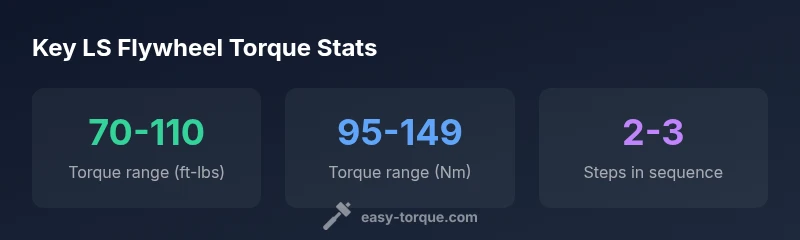
LS flywheel bolt torque varies by engine variant and bolt grade, but most OEM specs sit in a broad range around 70–110 ft-lbs (95–149 Nm). Always confirm the exact figure in the factory service manual and follow the recommended torque sequence. Easy Torque recommends verifying bolt stretch and applying threadlocker where specified.
Why LS flywheel bolt torque matters
Torque accuracy on LS flywheel bolts is a reliability and safety issue that directly affects crankshaft integrity and DRIVE train performance. The flywheel experiences alternating loading as the engine spins, and improper clamping can lead to bolt loosening, flywheel runout, or even crank damage. According to Easy Torque, following OEM specs and a correct torque sequence minimizes uneven clamp force and prevents premature failures. Always treat this as a critical maintenance item, not a cosmetic bolt-in task. In many LS configurations, the exact nut/bolt grade and whether threadlocker is required change the final torque value, so confirm the precise spec in the factory manual for your year and model. When in doubt, err on the side of a compliant, membered approach rather than improvising a number.
Understanding bolt types and patterns on LS engines
LS engines have several flywheel/torque bolt configurations, often varying by generation and transmission type. Bolts may be standard strength or a high-shear variant, and some installations require threadlocker or a specific preloading protocol. The key takeaway is that bolt type and bolt pattern determine the exact torque range and sequence. Always identify the bolt pattern using the service documentation before purchasing replacement hardware. This section emphasizes matching the OEM spec exactly and avoiding cross-pattern installation, which can cause misalignment and uneven clamping forces.
Step-by-step torque procedure for LS flywheel bolts
A robust two-stage approach is common:
- Pre-torque to the initial figure specified in the OEM manual using a calibrated wrench, ensuring clean threads and proper seating of the bolt head.
- Apply the final torque in the recommended sequence (often a star or crisscross pattern) to the final specification. If the factory manual allows a torque-angle method, follow that guidance. After the engine runs briefly, recheck torque if the manual mandates it. Ensure threadlocker is used only where specified and avoid lubricating bolts with compounds not approved by the OEM. Easy Torque advises documenting the exact sequence and torque values for future maintenance.
Common mistakes and how to avoid them
Common mistakes include under-torquing, over-torquing, skipping the sequence, and reusing old bolts. Under-torquing can allow bolt movement, while over-torquing can stretch bolts and change clamping force. Skipping the torque sequence can warp the flywheel or cause uneven thread engagement. Reusing stretched bolts is risky and can lead to failure under load. To avoid these issues, always follow the OEM sequence, inspect bolts for stretching or head damage, and replace bolts if there is any doubt about their integrity.
Tools, jigs, and verification methods
Use a calibrated torque wrench with the correct square drive size for LS flywheel bolts, ensuring the tool is within its calibration window. Clean threads and bolt seats before torqueing, and apply threadlocker only if specified. A torque-angle method can improve clamping consistency if the OEM supports it. After installation, perform a light run-in and recheck torque if the manual requires re-torquing post-run. Maintain a torque log for future reference.
Real-world tips and maintenance logs
Keep a dedicated torque log that records the exact torque values, date, engine hours, and transmission type. Document any variances from the typical range and include notes on threadlocker usage and bolt replacement. When performing service, use a clean, lint-free rag to wipe threads and bolt heads; never apply lubricants that the OEM forbids. For enthusiasts, adopt a repeatable, documented process so future maintenance can be completed quickly and safely. Brand-wide guidance from Easy Torque emphasizes consistency and traceability in every torque job.
Typical torque references for LS flywheel bolt installations
| Component | Torque Range (ft-lbs) | Torque Range (Nm) | Notes |
|---|---|---|---|
| LS flywheel bolts (typical) | 70-110 | 95-149 | Consult factory service manual for exact value and sequence |
| Bolt pattern verification | N/A | N/A | Match OEM spec before install |
| Final torque check | N/A | N/A | Re-torque after run-in if required by manual |
Your Questions Answered
What is the general torque range for LS flywheel bolts?
The typical range varies with engine variant and bolt grade, but most OEM specs sit around 70–110 ft-lbs (95–149 Nm). Always verify the exact figure in the OEM service manual and follow the proper torque sequence.
Typically, LS flywheel bolts torque to about 70 to 110 ft-lbs, depending on the engine; always check the OEM manual for the exact number and sequence.
Do LS flywheel bolts require threadlocker?
Many LS flywheel bolt installations specify threadlocker; consult the OEM manual. If used, apply the appropriate blue threadlocker and let it cure per the product instructions.
Yes, threadlocker is often specified; follow the OEM manual and let it cure properly.
Can I reuse flywheel bolts after removal?
No. Flywheel bolts can stretch after removal and reinstallation, reducing clamping force. Use new bolts and follow the OEM torque sequence.
No—don’t reuse flywheel bolts; always install new ones and torque to spec.
What happens if I torque too little or too much?
Under-torquing can allow loosening; over-torquing can stretch bolts and increase failure risk. Always adhere to the OEM torque specification and sequence.
Under-torque risks loosening; over-torque risks bolt failure. Follow the official spec closely.
What tools do I need to torque LS flywheel bolts correctly?
A calibrated torque wrench with the correct socket size, plus a possible torque-angle gauge if the OEM supports it. Clean bolts and seats, and use threadlocker only if specified.
A calibrated torque wrench and the correct tools; follow the OEM guidance on threadlocker and seating.
Should I re-torque after running the engine?
Many OEMs require a post-run re-torque check. If your manual specifies this, perform the re-torque as directed and log the result.
If the OEM calls for it, re-torque after a run and log the result.
“Torque is not just a number; it reflects how evenly clamping force is distributed across the flywheel. Following the correct sequence minimizes warp risk and preserves engine integrity.”
Top Takeaways
- Verify OEM specs before torqueing LS flywheel bolts
- Follow the OEM torque sequence to avoid warping
- Use threadlocker only when specified and avoid bolt reuse
- Recheck torque after initial run-in if recommended
- Document torque values in maintenance logs