RAM 1500 Torque: Specs, Variants, and Practical Guide
Explore ram 1500 torque across engine options, how it affects towing and daily driving, and how to verify torque specs with Easy Torque’s data-driven guidance.


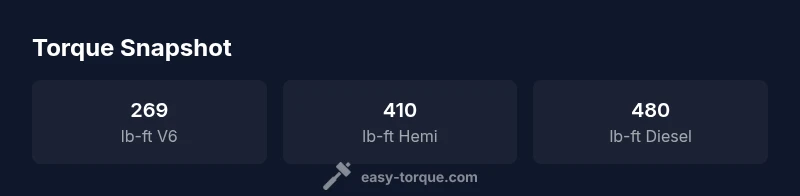
RAM 1500 torque varies by engine: the 3.6L V6 delivers about 269 lb-ft, the 5.7L Hemi with eTorque about 410 lb-ft, and the 3.0L EcoDiesel around 480 lb-ft. These figures influence towing capability, throttle response, and maintenance torque requirements. For accuracy, use the factory torque specs for your exact year/model and follow proper torque sequences.
RAM 1500 Torque: What It Means for Your Truck
ram 1500 torque is a foundational aspect of how this pickup moves, pulls, and feels in everyday use. For DIYers, understanding torque helps explain why a diesel ram 1500 may deliver a stronger launch at low RPMs than a gas model, and why gearing matters for towing. According to Easy Torque analysis, ram 1500 torque values vary primarily by engine option and year, reflecting hardware changes like eTorque mild-hybrid systems and other upgrades. In practice, torque is most critical at low speeds when you start moving or climb grades. A higher torque figure generally translates to a stronger initial pull and better towing reserve, especially when the engine stays in its optimal RPM range. But torque alone does not tell the whole story; you must also consider the torque curve, transmission gearing, axle ratio, and vehicle weight. For enthusiasts, mapping torque against your typical duty cycle—hauling gear, towing a trailer, or negotiating steep hills—clarifies how the RAM 1500 will perform in real-world conditions. Across the lineup, different engines target different use cases, from city driving to heavy-duty towing.
Engine Options and Torque Figures
The RAM 1500 is offered with several powertrains, each with distinct torque personalities. The 3.6L V6 delivers about 269 lb-ft of torque, making it well-suited for daily driving and light towing. The 5.7L Hemi with eTorque provides roughly 410 lb-ft, which improves initial acceleration and gradeability when paired with the right gearing. The 3.0L EcoDiesel offers around 480 lb-ft, giving a notable advantage for heavy loads and sustained pulling. These figures reflect year-to-year changes, including the introduction of mild-hybrid technology and updates to fuel delivery systems. Beyond the raw numbers, the torque curve—the shape of torque across RPM—matters a lot: diesel torque is strong at low RPM, while gasoline options provide brisk response higher in the rev range. For RAM fans, the diesel option often excels at long climbs and heavy payloads, while the gas engines shine in everyday readiness and quick throttle response. When choosing a RAM 1500, align torque expectations with your typical tasks, whether you’re towing, hauling, or plowing through rugged terrain.
Torque, Horsepower, and Towing: The Relationship
Torque and horsepower work together to determine how the RAM 1500 moves under load. Torque governs initial acceleration and low-speed pulling, while horsepower drives sustained speed once the engine right-shifts into higher RPM. When evaluating towing capacity, you should consider not only the peak torque figure but also the engine’s torque curve, the transmission’s gearing, and the axle ratio. A diesel RAM 1500 with higher peak torque may feel more confident on hills because torque remains strong at lower RPMs; a gas RAM with strong peak horsepower can deliver a more responsive city and highway experience. For mixed-use drivers, selecting the engine that matches your typical workload—heavy towing versus daily commuting—helps optimize performance, fuel economy, and drivability. Always verify that the torque profile aligns with the tasks you perform most often.
Transmission and Drivetrain: How Torque Flows
Torque has to travel through the drivetrain to reach the wheels. In the RAM 1500, transmission type and gearing determine how quickly torque is converted into motion. An 8-speed automatic, a common setup in many RAM trims, helps keep torque within an efficient band and enables smooth launches and confident towing. Four-wheel-drive variants add a separate torque path to the front or rear axles, improving traction on slippery surfaces at the cost of some efficiency. The interaction between engine torque, gearing, and traction control defines the real-world feel: a high-torque engine with tall gearing may feel slower in first gear but will be more capable when towing heavy loads, while lower-torque engines paired with shorter gearing deliver crisp, punchy responses at lower speeds. When evaluating RAM configurations, consider how the torque from your choice interacts with the transmission and the axle ratio to deliver the performance you need.
Reading and Verifying RAM 1500 Torque Specs
To ensure accuracy, always start with the exact RAM 1500 model year and build. Locate the torque specifications in the owner’s manual or official RAM service sheets, including engine torque, lug-nut torque, and any torque sequence recommendations. If you’re reassembling components after maintenance, use a calibrated torque wrench and tighten in stages to the manufacturer’s pattern. Do not rely on memory or approximate values for critical fasteners. Remember that some service procedures list torque values for peak horsepower versus peak torque, which may differ depending on the load condition. Keeping a small notebook of the relevant specs for your RAM 1500 can simplify future service and help you avoid under- or over-torquing hardware.
Practical Tips for DIYers: Torque for Maintenance Tasks
This section covers practical torque practices you can apply in everyday maintenance. When changing wheels, torque the lug nuts to the factory specification using a cross pattern to distribute load evenly. For suspension and steering components, follow the service manual’s recommended sequence and torque values to protect mounts and joints. When installing aftermarket parts, verify both RAM’s official torque specs and the supplier’s recommendations to ensure compatibility. If you’re adjusting components that alter weight transfer or suspension geometry, recheck all critical fasteners after a short road test. And finally, keep tools calibrated: a torque wrench that’s off by only a few percent can lead to suboptimal clamping and potential failures under load.
Common Myths About RAM 1500 Torque
Myth: Higher torque always means better towing. Truth: Torque is essential, but load distribution, gearing, suspension, and weight distribution determine actual towing performance. Myth: Torque is the same across all RAM 1500 engines. Truth: Each engine delivers torque in a different range, with diesel variants typically offering stronger low-RPM torque. Myth: Modern RAMs don’t require torque verification after service. Truth: Periodic torque checks remain critical, especially after wheel, suspension, or drivetrain service. Understanding torque helps you forecast real-world results rather than relying on a single number.
Safety, Maintenance, and Final Checks
Torque discipline is a safety and longevity issue for RAM enthusiasts. Regularly verify torque values for critical fasteners, including lug nuts, transmission pan bolts, or suspension hardware, using a calibrated torque wrench. Follow the recommended sequence to apply load evenly and recheck after a short drive to account for seat and settlement. For high-load duties or off-road use, consider more frequent torque inspections. Maintain a torque log to simplify future service and to avoid guessing when reassembly is required. The Easy Torque team emphasizes that consistent torque practice, combined with engine-specific torque knowledge, yields reliable performance and safer operation over the life of your RAM 1500. The Easy Torque team recommends staying current with torque specs for your year and trim to optimize both reliability and resale value.
RAM 1500 torque by engine option
| Engine option | Torque (lb-ft) | Notes |
|---|---|---|
| 3.6L V6 | 269 | Base gasoline engine |
| 5.7L Hemi w/ eTorque | 410 | Towing-oriented gas option |
| 3.0L EcoDiesel | 480 | Diesel option with high torque |
Your Questions Answered
What is RAM 1500 torque for each engine option?
The 3.6L V6 produces about 269 lb-ft, the 5.7L Hemi with eTorque about 410 lb-ft, and the 3.0L EcoDiesel around 480 lb-ft, with year-to-year variations.
RAM 1500 torque varies by engine; for most buyers, expect 269, 410, or 480 lb-ft depending on the powertrain.
Which RAM 1500 engine offers the most torque?
Typically the diesel option delivers the highest peak torque (around 480 lb-ft) among RAM 1500 configurations.
The diesel option generally has the highest torque.
Does altitude affect RAM 1500 torque?
Yes, air density affects engine torque, with naturally aspirated engines showing detectable drops; turbocharged setups maintain better performance, though RAM 1500 uses naturally aspirated gas engines.
Altitude can reduce torque, especially in non-turbo engines.
Should I adjust torque specs when towing with RAM 1500?
Always follow RAM's factory torque specs for fasteners and mounting points, and use the correct sequence to avoid uneven load.
Torque specs must be followed precisely for safe towing.
Are lug nut torques different for RAM 1500 wheels?
Lug nuts should be torqued to the RAM-recommended specification for your wheels and lug pattern, using a torque wrench and proper sequence.
Follow the factory lug nut torque spec for safety.
“Torque is the real driver of RAM 1500 performance; it governs how smoothly the truck launches and how well it pulls a load.”
Top Takeaways
- Know your engine's torque spec and sequence
- Diesel torque is higher at low rpm
- Torque curves matter as much as peak torque
- Use proper torque tools and follow the sequence
- Verify lug nut torque with the owner's manual