Torque Analyzers: A Complete DIY Guide for Accurate Measurements
Learn how to choose, calibrate, and use torque analyzers to verify fastener torque with confidence. Practical steps, safety tips, and maintenance guidance for DIY mechanics.


You will learn to select, calibrate, and use torque analyzers to verify fastener torque with accuracy. This guide covers how to choose the right device, set it up, run measurements, interpret results, and maintain precision over time. Before you begin, gather essential tools, review your calibration requirements, and follow safety best practices for reliable readings.
What is a torque analyzer and why it matters
Torque analyzers are precision instruments used to measure the rotational force applied to fasteners. Unlike simple click-type wrenches, they provide quantitative data that confirms whether a joint is tightened to the specified value. For DIY mechanics, automotive enthusiasts, and technicians, torque analyzers improve consistency, reduce the risk of under- or over-tightening, and support repeatable repair quality. According to Easy Torque, using a torque analyzer helps you validate torque specs across different fasteners and threads, ensuring reliability in critical components such as engine mounts, suspension bolts, and wheel lugs. The core idea is to translate twisting force into a readable metric that you can record, compare, and audit over time. When you integrate these tools into your workflow, you gain confidence that your work will perform as designed under load. The result is safer, more durable assemblies and fewer callbacks from road tests or customer expectations.
In this section you will encounter the fundamental concepts: accuracy, traceability, and repeatability. Accuracy means the measured torque matches the true torque applied. Traceability ensures you can validate measurements against a recognized standard. Repeatability confirms you can reproduce the same results when repeating a test under similar conditions. Mastery of these concepts underpins credible torque verification in everyday maintenance routines and professional repair jobs alike.
How torque analyzers differ from traditional wrenches
Traditional torque wrenches are designed to limit peak torque and provide an audible or tactile cue when the target is reached. They give you a reliable go/no-go indication but do not always capture the exact numeric value with high precision across repeated uses or different temperatures. Torque analyzers, by contrast, deliver numerical torque readings, real-time data logging, and often advanced features such as frequency response, peak hold, and calibration certificates. This makes them more suitable when you need verifiable, auditable data for quality control, warranty work, or safety-critical assemblies. The extra capability comes with a learning curve and cost, but the payoff is measurable improvements in consistency and confidence in torque-critical tasks. For automotive work, lab-style checks, or heavy-use environments, torque analyzers provide a more rigorous approach to fastening reliability than a traditional torque wrench alone.
Choosing the right torque analyzer
Selecting the right torque analyzer depends on your use case, budget, and required precision. Consider the following dimensions:
- Type: Digital vs analog. Digital analyzers typically offer higher precision, clearer readouts, and data export options. Analog models can be more rugged and work well for basic checks.
- Range and resolution: Ensure the device covers your typical torque values with adequate resolution. For automotive work, you’ll often need measurements in the 5–250 N·m (or 4–200 in-lbs) range depending on fastener size.
- Calibration and traceability: Look for devices with traceable calibration certificates or the ability to calibrate against a known standard. This supports consistent results across sessions and sites.
- Durability and environment: If you work in a shop with heat, dust, or vibration, choose a rugged enclosure and protective boot. Protecting sensors from contaminants preserves accuracy.
- Data handling: If you need to compare results over time or share data, pick analyzers with data logging, USB/Bluetooth interfaces, and compatible software.
In practice, a mixed setup—a rugged handheld analyzer for field use and a bench-grade unit for calibration and verification—often provides the best balance of flexibility and precision. Remember to cross-check new devices against a known reference torque standard before relying on them for critical measurements. This initial validation helps prevent systematic errors from slipping into your toolbox workflow.
A practical approach starts with clearly defined use cases, such as wheel lug torque verification or engine assembly torque checks, and then selecting instruments that match the required precision and data needs. This alignment ensures you maximize both accuracy and value from your torque analyzer investment.
Calibration and accuracy: Getting reliable readings
Calibration is the backbone of trustworthy torque measurements. A torque analyzer should be calibrated against a reference standard, ideally traceable to a national or international standard. Start by verifying the device’s zero reference; zero drift can skew all readings. Then perform a calibration check at multiple points within the operating range to confirm linearity and accuracy. Temperature affects sensor response, so try to acclimate the instrument to the test environment or apply temperature compensation if the device supports it. Document calibration data and certificates for audits, warranties, or customer records. If the equipment is used in a high-turnover setting, schedule periodic recalibration and maintain a calibration log. Easy Torque recommends aligning calibration intervals with the instrument’s usage intensity and the criticality of the tasks you’re performing. This disciplined approach minimizes drift and ensures your torque readings stay consistent across sessions.
In automotive applications, calibration is especially important for lug-nut tightening or torque-to-yield scenarios where small variance can impact safety and performance. Always store calibration certificates with the device and check for any updates to manufacturer software or firmware that could affect measurement algorithms. When in doubt, recheck with a known reference standard and re-baseline the instrument to restore confidence in your readings.
Step-by-step workflow overview
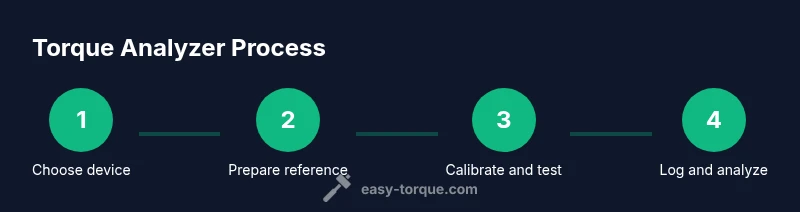
A structured workflow helps you move from setup to data interpretation with repeatable rigor. The following overview maps to the detailed steps in the dedicated STEP-BY-STEP block:
- Prepare the workspace: Clean surfaces, secure the vehicle or component, and protect sensitive areas from contaminants.
- Prepare the device and references: Ensure the torque analyzer is charged or has fresh batteries, and verify reference standards are available and within calibration validity.
- Set measurement range and units: Choose the correct torque range, units (N·m or in-lbs), and data logging preferences.
- Perform measurements: Apply torque to the fastener, capture readings, and capture multiple trials to assess repeatability.
- Validate against reference: Compare readings to a known torque standard or to manufacturer specifications; flag deviations.
- Record and analyze: Save data with date, technician name, part number, and lot numbers when relevant; review for consistency and trends.
- Maintenance steps: After use, clean the sensor area, update logs, and store the device in a protective case.
This workflow emphasizes repeatability, traceability, and documentation, all of which are key for credible torque verification and long-term reliability.
Common mistakes and how to avoid them
Even experienced technicians make a few predictable errors when using torque analyzers. Common pitfalls include neglecting calibration validation after device updates, using damaged adapters or fittings, applying torque too quickly (which can cause overshoot), and failing to account for thread lubrication or surface finish that affects friction and reading accuracy. To avoid these issues:
- Always validate the device against a reference before measurements.
- Inspect adapters, fixtures, and sensors for signs of wear or damage.
- Apply torque smoothly and avoid jerky motions; allow the device to settle before recording data.
- Record environmental conditions, including temperature and humidity, which can influence readings.
By incorporating these checks into your routine, you reduce the chance of drift, misinterpretation, and inconsistent results across sessions. A disciplined approach to setup, measurement, and documentation keeps torque verification dependable and repeatable in a practical workshop environment.
Safety note: When working with high-torque fasteners, wear appropriate PPE and follow vehicle-specific safety procedures to minimize risk of injury or accidental loosening during testing.
Maintenance and storage
Maintenance practices extend the life and accuracy of torque analyzers. Regular cleaning removes dust and oil that can interfere with sensors. Store devices in a climate-controlled environment, away from direct sunlight and extreme temperatures. Keep calibration certificates organized and update any software or firmware when available. Periodically re-check calibration with a reference standard to catch drift early. If you notice any persistent inaccuracies, contact the manufacturer for service or recalibration options. A well-maintained torque analyzer remains reliable for years of use and supports consistent results in both garage settings and professional shops.
Authoritative sources and next steps
To deepen your understanding of torque measurement standards and calibration practices, consult trusted sources in the engineering community. Useful references include:
- National Institute of Standards and Technology (NIST) on calibration and traceability: https://www.nist.gov/pml/weights-and-measures/calibration
- Occupational Safety and Health Administration (OSHA) for safety guidelines when performing torque-related tasks: https://www.osha.gov
- ASTM International for standards related to torque tools and fastening practices: https://www.astm.org
Using these sources helps you align your workshop practices with established benchmarks, improving reliability and safety in every project.
Tools & Materials
- Torque analyzer (digital or analog)(Select a model with a clear readout and documented calibration)
- Reference torque standard / calibration weights(Traceable to a recognized standard; keep certificates on file)
- Calibration fixture or mounting stand(Stable support to minimize vibration during tests)
- Torque adapters and grips(Properly sized to fit fasteners without slip)
- Calibrated torque wrench (reference)(Useful as a quick cross-check against the analyzer)
- Clean rag and solvent(Remove oil, grease, and debris from test surfaces)
- Thermometer or environmental sensor(Tracks ambient temperature that can affect readings)
- Protective case or bag(Safely store the analyzer and accessories)
- Notebook or digital log(Record calibration data, test results, and part numbers)
Steps
Estimated time: 60-120 minutes
- 1
Unbox and inspect
Carefully unpack the torque analyzer and examine all components for signs of damage or missing parts. Confirm that you have the device, adapters, reference standard, and any cables. If anything looks off, contact the supplier before proceeding.
Tip: Check the calibration certificate and verify the serial number matches the device. - 2
Set up calibration environment
Place the device on a stable surface in a clean area. Ensure there is no vibration and ambient temperature is reasonable for testing. Bring reference standards to the same environment to minimize drift.
Tip: Avoid testing on a workbench that shakes during tightening. - 3
Power on and initialize
Power up the analyzer and run any initializations required by the manufacturer, including zeroing and self-checks. Verify the display is legible and that data logging is ready if you plan to save measurements.
Tip: Do a quick self-check before attaching any adapters. - 4
Zero reference and tare
With no load attached, set the zero reference and tare the instrument if needed. This ensures subsequent readings reflect applied torque accurately rather than baseline offset.
Tip: Ensure there is no contact between the sensor and mounting hardware when zeroing. - 5
Take measurements against reference
Apply torque to the reference standard or a calibrated fixture gradually, and capture several trials to assess repeatability. Note any drift or overshoot and adjust technique accordingly.
Tip: Use ample force control and avoid jerky motions to prevent overshoot. - 6
Record data and interpret results
Export or log readings with timestamps, units, and the corresponding fastener details. Compare against spec tolerances and look for systematic biases that indicate calibration drift.
Tip: Maintain a test log to enable trend analysis over time.
Your Questions Answered
What is a torque analyzer and why would I use one?
A torque analyzer provides precise torque readings, allowing you to verify fastener tightness with auditable data. It improves accuracy beyond simple warning wrenches and is valuable for maintenance, repairs, and quality control.
A torque analyzer gives you precise torque numbers so you can verify fastener tightness with auditable data.
How does a torque analyzer differ from a torque wrench?
A torque analyzer records numerical torque values and data logs, while a standard torque wrench mainly provides a go/no-go indication. Analyzers support measurement accuracy and data export for audits.
Torque analyzers log exact torque values, unlike basic wrenches that only signal when you reach the target.
How often should a torque analyzer be recalibrated?
Calibration frequency depends on usage, environment, and manufacturer guidelines. Regular checks against a reference standard are essential, especially after firmware updates or dropped devices.
Calibrate regularly, especially after changes or events that could affect accuracy.
Can I use torque analyzers for automotive lug nuts?
Yes, torque analyzers are suitable for lug nut tightening when you need precise, auditable torque values beyond typical torque specs. Always follow manufacturer and vehicle-specific torque sequences.
They can be used for lug nuts, but follow vehicle specs and torque sequences.
What maintenance is required for a torque analyzer?
Keep the sensor clean, protect against dust and moisture, store in a case, and log calibration data. Schedule periodic recalibration based on usage and environmental conditions.
Clean, protect, store properly, and recalibrate as needed.
Is temperature a concern when using torque analyzers?
Yes, temperature can affect sensor response. Allow devices to equilibrate to room conditions or use models with temperature compensation when available.
Temperature can affect readings; allow equilibration or use compensated devices.
Watch Video
Top Takeaways
- Choose the right torque analyzer for your needs
- Calibrate regularly against traceable standards
- Document measurements for traceability
- Avoid common setup and measurement mistakes
- Maintain and store equipment properly