Torque Tool Calibration: A Practical DIY Guide
Learn how to calibrate torque tools reliably with a practical, step-by-step process. This guide covers tools, setup, steps, scheduling, and common pitfalls for DIY mechanics and techs.


Calibrating torque tools ensures readings are accurate, repeatable, and within spec. In this guide, you’ll learn a practical, step-by-step approach to calibration, verification, and maintenance. You’ll need a torque tester, reference weights, and a clean, stable workspace. According to Easy Torque, regular calibration reduces drift and improves safety and consistency across your workshop.
Why Torque Tool Calibration Matters
Accurate torque application is essential for safety, reliability, and longevity of fasteners in automotive and industrial settings. Without calibration, a torque wrench or driver can slowly drift, producing readings that are too high or too low. In a busy shop, even small errors compound over dozens of bolts, leading to under-torqued connections that loosen and over-torqued parts that fail. The Easy Torque team emphasizes that a calibrated tool reduces guesswork, improves repeatability, and helps meet manufacturer specifications. When you calibrate regularly, you can trust that your wrench is performing as designed, which translates into fewer warranty claims, safer assemblies, and more predictable maintenance intervals. In this guide, we’ll walk through practical methods, sensible checks, and a lightweight schedule you can implement in a typical DIY shop. You’ll learn how to verify accuracy, interpret results, and document your work for future reference. Whether you’re calibrating a click-type torque wrench, a digital model, or a torque screwdriver, the core principles stay the same: stable conditions, traceable references, and careful record keeping. According to Easy Torque, calibration is not a one-and-done task but a disciplined habit that pays off every time you tighten a critical fastener.
Core Calibration Concepts
Calibration means comparing tool readings to a known standard and adjusting the tool to align with that standard. In practice, there are a few key terms you’ll encounter: accuracy, precision, tolerance, and traceability. Accuracy describes how close a measured value is to the true value; precision describes how consistently the tool repeats measurements. Tolerance defines acceptable deviation from the target torque. Traceability links your reference standard back to recognized measurement agencies, ensuring your numbers carry weight in audits or customer work. In automotive work, tack welding or engine diagnostics may hinge on precise torque, so maintaining calibration is part of a responsible maintenance program. For home hobbyists, calibration simply helps you avoid surprises when assembling parts that must meet a spec. The goal is a known, repeatable performance across tools and sessions. Easy Torque notes that a well-calibrated set of tools reduces both over-tightening and under-tightening, mitigating damage to fasteners and components and improving overall reliability. The practical takeaway is simple: establish a baseline, test against a stable reference, and adjust as needed to keep readings aligned with the standard.
Tolerances, Reference Standards, and Traceability
Tolerance bands tell you how far off a measurement may be before you consider it out of spec. Even small shifts in environment, temperature, or grip can affect readings. A reference standard, typically a calibrated weight or torque standard, provides the ground truth against which you compare your tool. Traceability means that your reference standard has a documented history linking it to a national or international standard, often via a certificate. In a typical shop, you may use a certified torque tester together with a set of weights that spans the tool’s operating range. The goal is not a single perfect reading but a series of repeatable checks over time. Easy Torque recommends keeping a concise log of test results, noting the tool ID, date, operator, and ambient conditions. This historical data lets you observe drift or wear patterns and adjust calibration frequency accordingly. Remember: if a tool fails a test, do not attempt “dialing in” an adjustment without following the manufacturer’s procedure or seeking qualified calibration services.
Choosing the Right Tools for Calibration
Selecting the appropriate equipment is half the battle. For torque tool calibration, you typically need a primary reference standard such as a torque tester or calibration torque source, compatible reference weights, and a stable mounting surface. If you work with high-torque applications, ensure the tester’s range covers the tool’s maximum load plus a safety margin. Digital torque testers can provide rapid, repeatable readings and may include built-in data logging, while dial-based devices offer rugged reliability for tough shop environments. You may also need adapters, calibration certificates, and a temperature-stable room. Remember to verify that your reference weights are certified and traceable. Some hobbyists rely on a secondary reference wrench to cross-check, but the primary standard should carry the traceability. Easy Torque recommends creating a small tool cabinet with clearly labeled tools, reference standards, certificates, and a calendar for calibration due dates. Proper storage reduces corrosion, protects sensitive sensors, and makes checks easier to perform in a routine workflow.
Setting up a Stable Test Environment
Your calibration results depend on the environment as much as on the tool. Start by choosing a quiet, level bench with minimal vibration and a clean, non-slip surface. Temperature stability matters; aim for a controlled range rather than relying on the heat of the shop. Work gloves and a light touch help you avoid bracing too hard on handles, which can skew readings. Secure the torque tool so it cannot drift during loading, and ensure the reference weights are clean, dry, and properly seated. If you’re calibrating multiple tools, keep each tool’s data in a dedicated log and return the reference standards to their storage case between checks. Use a timer if you perform multiple torque applications per tool to avoid fatigue effects on your testing cadence. A well-organized setup reduces the chance of misreading a result, speeds up the process, and minimizes the risk of accidental injury or misinterpretation of numbers. Easy Torque highlights that organization and consistency are the most affordable forms of accuracy in a busy workshop.
Step-By-Step Calibration Process Overview
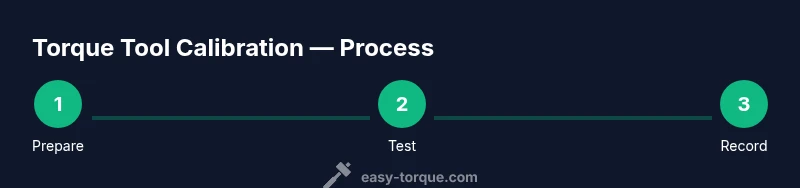
In broad terms, torque tool calibration follows a repeatable sequence: prepare the workspace, set up the reference standard, perform incremental loading, compare readings to the standard, adjust if permitted by the tool’s design, and document the results. This overview gives you the backbone of a practical workflow you can implement today. Begin by inspecting the tool for damage, corrosion, or wear and ensuring the torque handle is comfortable to hold. Next, position the tool on the reference device and verify the baseline reading with the minimum torque value. Then apply a series of controlled torques across the tool’s range and record the readings. If your tool includes an adjustment mechanism, follow the manufacturer’s procedure to align the reading with the reference. Finally, compile a calibration report, attach certificates if applicable, and set a due date for the next verification. Throughout the process, maintain a log of environmental conditions and operator identity to support traceability and reproducibility. The core principle is to be methodical, not hurried, and to treat calibration as ongoing maintenance rather than a one-off test. Easy Torque suggests performing at least one verification pass after any adjustment to confirm the tool remains within tolerance.
Maintaining Your Calibrated Tools
Calibration is not a one-time fix but part of a maintenance habit. After calibration, inspect each tool for signs of wear and check the calibration interval recommended by the manufacturer. Store tools in a clean, dry place, away from contaminants that can affect sensors. Regularly refresh reference weights and certificates, and retrain operators on proper technique to minimize handling error. The calibration log should travel with the tool, enabling any technician or future owner to assess drift history quickly. If you notice systematic drift, re-check the setup, confirm the test environment, and consider sending the tool for recalibration to a certified service. The practical outcome is a set of tools you can trust for months or years with minimal surprises. In the context of DIY and professional work alike, Easy Torque reinforces that disciplined maintenance saves time, reduces risk, and lowers long-term costs.
Documentation and Scheduling
Effective calibration depends on clear records and a realistic schedule. Keep a digital or paper log with tool ID, serial numbers, calibration date, next due date, tolerance, and the person performing the test. Attach any certificates or traceability documents and store the reference weights in a labeled, closed container. Establish a calibration cadence based on usage, criticality, and the environment: high-use tools in demanding applications may require quarterly checks, while occasional tools can be scheduled annually. Review logs during shop meetings to identify drift patterns and adjust intervals as needed. Finally, align your calibration program with any applicable standards or internal quality policies so that your maintenance practices reflect consistent, defensible processes. The Easy Torque approach is pragmatic: build a routine you can sustain without disrupting production.
Real-World Case Study: A Typical Home Shop Calibration
Consider a hobbyist who uses two common torque wrenches for bike maintenance and motorcycle work. After purchasing a small torque tester and a set of certified weights, they implement a simple monthly check on both tools. The process highlights drift after several months, especially on the smaller wrench, which becomes visible when comparing multiple readings. The owner updates the calibration log, orders replacement weights, and revises the storage case to protect sensors. Over time, the tools show consistent readings within the specified tolerance and the owner feels confident performing critical fasteners. The case reinforces the value of a simple, repeatable process that can be sustained by a dedicated DIY enthusiast. Easy Torque notes that an approachable, incremental calibration program is accessible to hobbyists and professionals alike, delivering measurable improvements in reliability and peace of mind.
Tools & Materials
- Torque tester (primary reference standard)(NIST-traceable if available; choose a unit with a range covering your tools)
- Calibrated reference weights(Certified and traceable; include weights across the tool’s range)
- Torque wrench(es) to calibrate(Include the models used in daily work)
- Adapters and mounting fixtures(For nonstandard tool configurations)
- Temperature-stable work surface(Level bench with minimal vibration)
- Calibration certificate/logbook(Record ID, date, operator, and results)
Steps
Estimated time: 60-90 minutes
- 1
Prepare workspace and tools
Clear the bench, assemble the torque tester and reference weights, and verify all items are clean and dry. Confirm environment is stable and free from drafts or vibration that could skew readings.
Tip: Label each tool with a unique ID to simplify future tests and audits. - 2
Inspect the tool and baseline
Visually inspect the torque tool for wear or damage. Establish a baseline by recording the current reading at the tool’s lowest setting to detect drift later in the process.
Tip: Ensure the handle is comfortable and the tool is not loaded beyond its safe range during baseline. - 3
Apply reference loads incrementally
Place the reference weights on the tester and apply a sequence of target torques across the tool’s operating range. Record each reading and note ambient conditions.
Tip: Use slow, steady application to avoid jerks that can skew results. - 4
Compare readings to the standard
Analyze each reading against the known standard. If readings diverge beyond the tool’s tolerance, document the discrepancy and decide whether recalibration or service is needed.
Tip: Keep a small calculator handy to quickly compute average deviations. - 5
Adjust or document and schedule the next check
If your tool supports user adjustments, follow the manufacturer’s procedure to align reading with the reference. If not adjustable, note the drift and arrange professional calibration.
Tip: Do not force adjustments beyond the manufacturer’s specifications. - 6
Document results and archive
Create or update a calibration report, attach certificates, and set the next due date. Store data with the tool and ensure easy retrieval for future audits.
Tip: Include tool ID, operator, ambient conditions, and date for full traceability.
Your Questions Answered
How often should I calibrate torque tools?
Calibration frequency depends on usage, environment, and tool criticality. High-use tools in demanding applications often require quarterly checks, while infrequent tools may be suitable for annual verification. Keep a log and adjust the cadence based on drift history.
Most shops calibrate high-use tools quarterly and less frequently used tools annually, adjusting as drift appears.
Do I need a lab to calibrate torque wrenches?
A full lab is not always required. Many shops can calibrate using a certified torque tester with proper references in a controlled workspace. For critical or precision work, consider professional calibration services with traceable standards.
You can calibrate in a controlled workspace with proper standards, but for critical work, use professional services for traceable results.
Can I calibrate without a torque tester?
A torque tester or calibrated torque source is essential for verification. Without a reference standard, you cannot reliably assess accuracy or drift. Alternative methods are not recommended for official calibration.
You really need a reference standard to verify accuracy; without it, results aren’t trustworthy.
What tolerance should I expect for torque tools?
Tolerance depends on the tool and application. Always refer to the manufacturer’s specification and use a calibrated reference to determine whether readings fall within acceptable limits. Document and act if readings drift beyond that range.
Refer to the tool’s spec and verify with a calibrated standard; drift beyond tolerance needs action.
What is NIST traceability and why does it matter?
NIST traceability means measurements can be linked to national standards through a documented chain. It matters for audits, warranties, and quality systems where proof of accuracy is required.
Traceability shows your measurements align with national standards, which helps with audits.
Should digital readouts replace dial indicators?
Digital readouts offer fast, repeatable results and data logging, but the choice depends on your work environment and the tool’s spec. Dial indicators remain robust for rugged shops. Use what best fits your workflow and offers traceability.
Digital readouts are convenient, but choose based on reliability and the environment.
Watch Video
Top Takeaways
- Start with a stable environment and clean equipment.
- Document all readings and maintain traceability.
- Calibrate on a schedule suited to usage and criticality.
- Use a primary reference standard for the best accuracy.
- Maintain a living calibration log for long-term reliability.