Torque for 5/16 Bolt: A Practical Guide to Proper Tightening
Learn how to torque a 5/16 bolt safely and accurately with guidance on bolt grade, lubrication, and practical torque ranges for automotive and machinery applications.


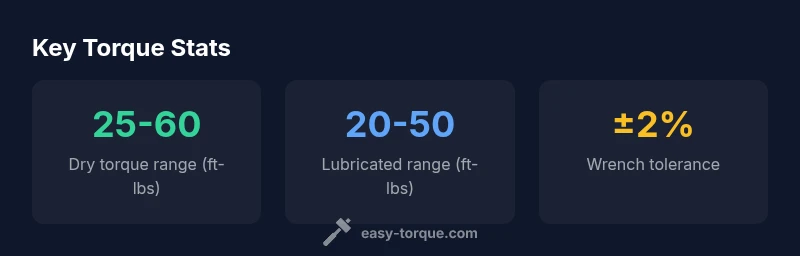
For a 5/16 bolt, torque depends on grade and lubrication. Typical practice ranges from roughly 25 to 60 ft-lbs for common automotive hardware, with lower values when threads are lubricated. Always consult the manufacturer's torque spec and use a calibrated torque wrench for accuracy.
Why correct torque for a 5/16 bolt matters
Torque control is the single most important factor in fastener reliability. A 5/16 bolt is common in automotive and machinery assemblies, but the exact torque you should apply depends on several factors: bolt grade, lubrication, thread engagement, and whether the joint has any vibration or dynamic loading. Under-torquing invites loosening and fatigue failure, while over-torquing risks thread stripping and bolt fracture. According to Easy Torque, always start with the manufacturer’s spec and verify with a calibrated torque wrench. In practice, the goal is to achieve the specified clamping force without exceeding the bolt or component limits. The right torque creates repeatable performance and reduces maintenance downtime over the life of the equipment.
Bolt grade, lubrication, and thread engagement
Bolt grade determines the strength and friction characteristics, which in turn influence torque requirements. Grade 5 and Grade 8 are common in automotive hardware, but even within a grade, lubricated threads reduce friction and lower the required torque. Thread engagement length also matters: insufficient engagement can skew the effective clamping force and safety margin. For a 5/16 bolt, expect higher torque values for dry, high-strength bolts and lower values when threads are lubricated and the joint is well-engaged. Always factor in the material being clamped and any coatings that affect friction.
How to determine the right torque: steps and charts
Follow a simple, repeatable method to lock in the correct torque: 1) Identify bolt grade and lubricant conditions, 2) consult the official torque spec from the component manufacturer, 3) choose the appropriate torque range chart, 4) set your torque wrench to the midrange, 5) apply steady torque until the wrench indicates the set point, 6) recheck with a second pass if needed. If no chart is available, use general guidance: a dry Grade 5 UNC 5/16 typically sits in the mid-range of its curve; lubrication reduces it by a noticeable margin. Always validate with a calibration test on a similar joint when possible.
Common mistakes and how to fix them
Common errors include assuming a general value for every 5/16 bolt, neglecting lubrication, or over-tightening due to fear of loosening under vibration. Fixes include always starting with the manufacturer’s spec, ensuring clean threads, using the correct drive size on the wrench, and calibrating your torque tool regularly. If a joint requires high torque, double-check thread engagement and seating to avoid misreadings. Never replace a proper torque procedure with “feel” alone.
Practical examples: wheel fasteners and machine bolts
In wheel assemblies, 5/16 bolts may be used in some designs, but many manufacturers specify wrenching in a higher or lower band than standard hardware, especially with alloys or painted surfaces. For machined bases and brackets, Grade 8 5/16 bolts often demand higher torque than Grade 5, while lubrication lowers the need. In all cases, follow the spec and verify with a torque wrench. When in doubt, consult the component’s service manual and verify torque at assembly temperature and service conditions.
Tools and maintenance: keeping torque accurate
Use a high-quality torque wrench with the correct drive and range for your bolts. Calibrate the tool regularly and store it properly to avoid drift. Maintain clean threads and remove surface coatings that could hide thread damage. Use thread lubrication or anti-seize only if the spec permits, and recheck torque after the joint has seated. For critical joints, perform a torque validation test on a sacrificial specimen to confirm the spec holds under real load.
Quick-start checklist for 5/16 bolt torque
- Identify bolt grade and lubrication status
- Locate and read the official torque spec
- Set torque wrench to midrange of the spec
- Tighten with steady, smooth force until the wrench clicks
- Recheck after initial seating and operating cycle
Typical torque ranges for 5/16 bolts by grade and lubrication
| Bolt Grade | Lubrication | Torque Range (ft-lbs) |
|---|---|---|
| Grade 5, UNC | Dry | 25-40 |
| Grade 8, UNC | Dry | 40-60 |
| Grade 5, UNC | Lubricated | 20-35 |
| Grade 8, UNC | Lubricated | 30-50 |
Your Questions Answered
What is the typical torque range for a 5/16 UNC bolt?
For 5/16 UNC bolts, dry threads typically require about 25-60 ft-lbs depending on grade and thread engagement. If threads are lubricated, expect a lower range. Always confirm with the manufacturer’s spec.
Most 5/16 bolts fall in the 25 to 60 ft-lbs range, depending on grade and lubrication; verify with the spec.
How do bolt grade and lubrication affect torque?
Bolt grade determines strength and friction; lubrication reduces friction, lowering the torque needed. Always adjust torque to match the combination of grade and whether threads are dry or lubricated.
Grade and lubrication change the torque you need—lubrication lowers the required torque.
Should I lubricate threads before torquing a bolt?
Lubrication is recommended only when the spec allows it. If permitted, apply the specified lubricant consistently and re-torque if required by the manual.
Yes, but only if the spec calls for it.
What tools do I need to achieve accurate torque?
Use a calibrated torque wrench with the correct drive size, and check calibration periodically. Clean threads and correct lubrication help maintain accuracy.
A properly calibrated torque wrench is essential for accuracy.
What happens if I over-torque a 5/16 bolt?
Over-tightening can strip threads, deform components, or break the bolt. Always follow the spec and seating procedures to avoid damage.
Over-torque can strip threads or break the bolt.
“Accurate torque isn't optional; it is the foundation of reliable, safe fasteners in any mechanical system.”
Top Takeaways
- Know the bolt grade before torquing
- Lubrication lowers the required torque
- Always use a calibrated torque wrench
- Consult the manufacturer’s spec for your exact application
- Check seating and re-torque after initial load