Torque Settings for Bolts: A Practical Guide
Master torque settings for bolts with a practical, data-driven guide. Learn how size, grade, lubrication, and conditions affect torque, plus step-by-step application, safety tips, and quick-start checklists from Easy Torque.


What torque settings really control
Torque settings specify the force applied to a bolt to create a secure clamp without damaging the fastener or the joint. In practice, torque translates to clamping force, which depends on bolt geometry, material, coating, and the mating surfaces. For bolt-tightening tasks, you’ll encounter both metric (Nm) and imperial (ft-lb) units. The key is to convert and apply the correct value from a trusted source, ensuring consistency across all fasteners in the same joint. In the context of the Easy Torque framework, always start with the manufacturer’s torque specification and verify with real-world testing under controlled conditions. This approach helps you avoid both under-clamping and over-tightening, which can lead to loosening, thread damage, or joint failure.
How to locate the correct torque values
Finding the right torque setting begins with the manufacturer specification. If the OEM spec isn’t available, rely on reputable torque tables and standards that summarize typical ranges by bolt size and grade. When you use these sources, always note the lubricant condition (dry vs. lubricated), surface finish, temperature, and thread engagement. Before applying torque, clean and inspect the threads, deburr any rough edges, and confirm the joint length. Use a calibrated torque wrench, and apply torque in a stepped sequence to reduce peak loads. Finally, document the final value used for future maintenance and audits.
Key factors that modify torque requirements
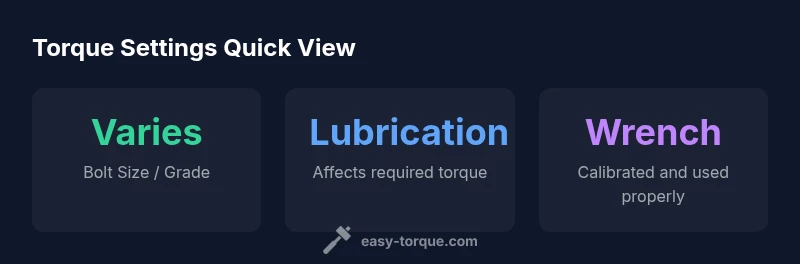
Several variables influence the torque value you should use. Bolt size and grade are primary drivers, but lubrication dramatically changes the outcome by reducing friction, which lowers the needed torque to achieve the same clamping force. Thread engagement length, coating, temperature, and the presence of thread-locking compounds also alter torque needs. Surface conditions (such as corrosion or contamination) and joint stiffness can further shift the required torque. Always treat torque as a target rather than a fixed number, adjusting for real-world conditions.
Step-by-step guide to applying torque
- Gather the right tools: a calibrated torque wrench, appropriate sockets, and a clean workspace. 2) Remove any debris; inspect the bolt and thread condition. 3) Determine the initial torque from OEM or a reliable table; if lubricated, adjust per guidelines. 4) Tighten in stages, following a star or zig-zag pattern for multi-bolt joints to equalize load. 5) Recheck after a short interval of use to confirm the joint remains at spec. 6) Record the final torque value for maintenance history. 7) If in doubt, consult a torque specialist.
Lubrication, surface finish, and thread condition
Lubrication lowers friction, which reduces the torque needed to reach the same clamping force. Dry threads require higher torque values. Coatings such as anti-seize compounds or locking lubricants also affect torque requirements. Surface finish and thread engagement influence how fast torque translates into clamping force. For critical joints (e.g., safety-related components), perform a verification torque after assembly with the pattern and re-torque as needed. Document lubrication state for future maintenance decisions.
Safety considerations and maintenance planning
Always use a torque wrench within its calibrated range and avoid extrapolating beyond its capacity. Wear eye protection and ensure the engine or machinery is de-energized when working near moving parts. Schedule periodic re-calibration of torque tools—annually or per manufacturer guidance. Maintain a log of torque settings by project type, bolt size, and material so maintenance teams can reference historical values and verify compliance during inspections.
Quick-start checklist for your next project
- Verify OEM torque specs or consult a reputable torque table. - Confirm lubricant state (dry vs. lubricated) and material compatibility. - Inspect threads and joint engagement; clean or replace as needed. - Use a calibrated torque wrench; apply torque in stages with a star pattern. - Recheck torque after initial operation and log the value for maintenance.