Torque Values for Bolts: A Practical Guide to Accurate Tightening
Learn how torque values for bolts vary by size, material, lubrication, and thread pitch. Easy Torque explains starting ranges, how to read charts, and best practices for accurate tightening.


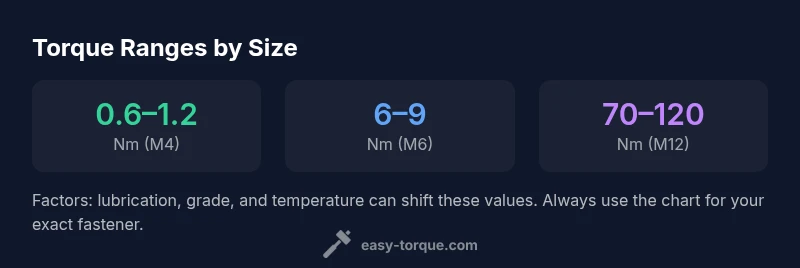
Torque values for bolts vary by size, material, lubrication, and thread pitch. As a general guide, rough ranges are: M4 0.6–1.2 Nm, M6 6–9 Nm, M8 20–30 Nm, M10 40–70 Nm, M12 70–120 Nm; larger bolts rise quickly with diameter and grade. Always consult a torque chart for your fastener grade and condition. Factors like coating and temperature shift numbers, so use a calibrated torque wrench and lubricate as specified.
Why torque values matter for bolts
Torque values are more than just a number on a chart. They translate into clamping force, seal integrity, and joint reliability. When you tighten a bolt too little, the joint can loosen under vibration, leading to leaks, misalignment, or catastrophic failures in critical assemblies. Over-torquing can strip threads, warp components, or cause bolt head failure. For DIY mechanics and professionals alike, understanding torque helps you achieve consistent preload, predictable performance, and safer, longer-lasting assemblies. In this section, we’ll connect the theory to everyday practice and show how small errors compound over the running life of a project. The Easy Torque approach emphasizes repeatable procedures, clean fasteners, and the use of appropriate tools to minimize guesswork.
Key factors that influence torque outcomes
Torque is not a single fixed value. It depends on several interacting variables:
- Bolt size and grade: Larger diameters and higher grades require more clamping force, hence higher torque.
- Material and coating: Stainless steel vs carbon steel, or coated fasteners, respond differently to friction and thread engagement.
- Lubrication and thread condition: Lubricants lower friction, increasing the actual clamping force for the same nominal torque. Dirty or dry threads increase friction and can reduce preload unexpectedly.
- Temperature and environmental conditions: Heat expands metal and changes lubricant viscosity, shifting the torque you read on a wrench from the nominal value.
When sizing and tightening bolts, you should account for these factors and adjust torque accordingly using validated charts, not rules of thumb alone.
Rough starting ranges by bolt size and grade
Starting torque estimates provide a practical baseline for planning and checking your work:
- M4: approximately 0.6–1.2 Nm
- M5: approximately 1.2–2.5 Nm
- M6: approximately 6–9 Nm
- M8: approximately 20–30 Nm
- M10: approximately 40–70 Nm
- M12: approximately 70–120 Nm
These ranges are rough guides that vary with thread pitch, lubrication, and grade. They are most accurate when used with a formal torque chart for the specific bolt grade (e.g., metric grades 8.8, 10.9, 12.9 or ISO equivalents). Always verify with your chart and the component manufacturer.
How lubrication and thread engagement change outcomes
Lubrication reduces friction, which lets the nut or bolt achieve higher preload at a given torque but also changes how you should interpret a torque spec. In cold or dirty environments, friction is higher, so the same torque yields lower preload. Conversely, well-lubricated threads can produce greater preload, potentially over-stressing joints if charts aren’t followed. Proper thread engagement length is also critical; insufficient engagement shifts load into weaker materials and can cause thread stripping.
Reading and applying torque charts correctly
To use torque data effectively, start with a credible chart that matches bolt size, grade, material, and whether lubrication is present. Use your torque wrench to apply torque gradually, pausing to verify torque at the required bolt positions. For assemblies with gaskets or seals, ensure the sequence follows the recommended tightening pattern. Document any deviations and re-check after a short cooldown to account for temperature changes.
Practical steps: choosing, measuring, and verifying torque in a project
- Identify bolt size, grade, and lubrication state from the spec sheet. 2) Locate the exact torque value or range on a confirmed chart. 3) Prepare the joint by cleaning threads and applying lubricant per spec. 4) Use a calibrated torque wrench and tighten in the correct sequence if multiple bolts share the joint. 5) Recheck torque after cooldown or after performing a dynamic load if required by the spec. 6) Record and store the final torque values for future maintenance.
Common mistakes and how to troubleshoot
- Guessing without a chart: Always reference the correct grade and lubrication condition.
- Over- or under-torquing in the same joint: Re-check after a short cooldown and consider re-tightening if the joint has settled.
- Skipping lubrication steps: This dramatically changes the effective torque and preload.
- Using worn tools or miscalibrated wrenches: Regularly calibrate torque wrenches and replace damaged tools to avoid false readings.
Typical bolt torque ranges by size and grade (rough guide)
| Bolt size (mm) | Thread | Torque range (Nm) | Notes |
|---|---|---|---|
| M4 | metric coarse | 0.6-1.2 | Light assemblies |
| M5 | metric coarse | 1.2-2.5 | Low stress joinery |
| M6 | metric coarse | 6-9 | General-use fasteners |
| M8 | metric coarse | 20-30 | Automotive/engineering |
| M10 | metric coarse | 40-70 | Medium to high load |
| M12 | metric coarse | 70-120 | Heavy-duty applications |
Your Questions Answered
What is the basic definition of a torque value for bolts?
A torque value specifies the rotational force required to achieve the desired clamping preload in a fastener. It depends on bolt size, grade, lubrication, and engagement conditions. Following a chart ensures the correct preload is reached without over-stressing the joint.
A torque value is the rotational force needed to preload a bolt safely. Always rely on the chart for your bolt size and grade.
Why do torque values differ for steel vs aluminum bolts?
Different materials have different strength, friction, and elasticity. Aluminum bolts are typically lower strength and may require different torque to avoid yielding or stripping. Always reference material-specific charts or manufacturer guidance.
Different materials mean different torque needs. Check the chart for the exact material you’re using.
How does lubrication affect torque readings?
Lubrication lowers friction, increasing the effective preload at a given torque. Without adjusting the chart or document, the same torque could produce different clamping forces. Apply the lubrication state specified in the torque chart.
Lubrication changes how much preload you get from a torque, so follow the chart for lubed threads.
Can bolts be reused after tightening to a torque value?
Bolt reuse depends on the bolt grade, thread condition, and the service environment. In many cases, recycled bolts are limited by the manufacturer's torque and fatigue criteria. Always inspect threads and consider replacement if there is evidence of wear.
Bolts can sometimes be reused, but check the manufacturer’s guidelines and inspect threads before reuse.
What happens if I under-torque or over-torque a bolt?
Under-torque reduces preload and can allow joints to loosen; over-torque risks thread damage, bolt head failure, or material deformation. Always aim for the specified torque and verify with a calibrated tool.
Under-torquing can loosen joints; over-torquing can strip threads or break bolts. Use the chart and a good wrench.
Do torque values change with temperature?
Yes. Higher temperatures can reduce material strength and change lubrication behavior, altering effective preload. Always consider operating temperature and, if needed, use temperature-specific torque specifications or retorque after cooldown.
Temperature changes can shift torque needs; retorque if conditions warrant.
“Accurate tightening starts with disciplined procedures and validated charts. Don’t rely on memory—use the chart that matches your bolt grade, lubrication, and condition.”
Top Takeaways
- Follow credible torque charts for exact values
- Lubrication and temperature shift torque readings
- Use a calibrated torque wrench to apply torque
- Engagement length and clean threads matter
- Document final torque for maintenance