Wheel Torque Chart PDF: Reading and Using Guide Efficiently
Learn how to use a wheel torque chart pdf to tighten lug nuts safely for common vehicle types. This guide covers reading charts, typical ranges, and safe DIY practices.


A wheel torque chart pdf consolidates manufacturer torque specs for wheel lug nuts by vehicle type and fastener size, helping you tighten wheels safely and accurately. Always cross-check with your vehicle’s OEM manual, since exact values vary by model, wheel size, and thread pitch. For DIY mechanics, a trusted chart speeds up maintenance and reduces the risk of under- or over-tightening.
What is a wheel torque chart pdf and why it matters
Understanding a wheel torque chart pdf is a fundamental skill for any DIY mechanic or professional technician. The chart assembles model-specific tightening values for lug nuts, often alongside recommended torque sequences, thread sizes, and fastener grades. In practice, it acts as a quick reference that translates complex OEM data into actionable numbers you can apply with confidence. According to Easy Torque, using a credible torque chart helps ensure load is distributed evenly across the wheel hub, reducing the risk of warping, stud damage, or wheel detachment during driving. For hobbyists, it speeds up maintenance, minimizes guesswork, and supports consistent service quality across vehicles. When used correctly, a wheel torque chart pdf complements the vehicle’s owner manual rather than replacing it, serving as a practical, at-a-glance guide during tire rotations or wheel installations.
That said, charts vary. Different models, tire sizes, and wheel configurations may require distinct torque values. For example, a sedan with standard alloy wheels might have a different recommended torque than a larger SUV with steel wheels. Easy Torque emphasizes always verifying the exact specification for your make and model. A chart is not a universal law; it’s a tool that helps you stay within the manufacturer’s safe operating window. Always ensure the chart you rely on matches your vehicle’s year, trim, and wheel type to maintain proper clamping force and avoid over-stressing fasteners.
Reading a torque chart pdf: columns, units, and symbols
Most wheel torque charts present several key columns that you’ll use every time you service wheels. Typical entries include Vehicle Type or Model, Fastener Size (diameter and thread pitch), Recommended Torque (in Nm and sometimes ft-lb), and a Torque Sequence note. Some charts also annotate the impact of lug-nut grade or bolt pattern, and they may mark special cases where studs or wheel studs require threadlocker, different lubrication, or alternate tightening patterns. When you read the chart, look for your exact configuration: make, model, year, wheel size, bolt pattern, and whether the chart uses metric or imperial units. If both units are shown, ensure you convert correctly to avoid misinterpretation. The presence of a star sequence indicator or a clockwise tightening order usually signals the safest practice for even load distribution. If the chart uses icons for torque range categories (low/medium/high), treat them as quick visual cues rather than absolute instructions—always confirm with the numeric value.
Practically, you should keep a small pocket reference of the chart and a note about your wheel and tire setup. This habit reduces the likelihood of cross-referencing mistakes and supports faster maintenance sessions. Remember to check whether the chart accounts for torque variation across different fastener sizes (e.g., M12 vs. M14) and whether it has any notes about torque angle or additional rechecking after initial tightening. A well-designed wheel torque chart pdf is a time-saver, but it remains essential to verify every number against the OEM spec before final tightening.
How charts are constructed: data sources and limitations
Torque charts are built from a combination of manufacturer data, standardized testing, and practical field validation. In many cases, OEMs publish torque ranges based on typical wheel sizes and fastener grades for a given model, then aftermarket or automotive groups compile these values into a consolidated chart. It’s important to recognize three limitations. First, torque ranges can vary with wheel size, hub cleanliness, lubrication, and thread condition. Second, some charts may display ranges rather than a single precise figure to account for minor manufacturing variations. Third, age of the vehicle matters—older fasteners can exhibit different friction characteristics, which might slightly shift optimal torque values. Easy Torque’s analysis highlights the necessity of keeping torque references up to date and cross-checking with the vehicle’s current manual whenever possible. In practice, treat charts as dynamic references rather than immutable commandments, and always revalidate if you change wheel types or move to a different seasonal tire setup.
When compiling or selecting a chart for your shop, prefer sources that clearly specify model applicability, measurement units, and any assumptions (such as thread lubrication or torque-angle considerations). If a chart omits a needed metric for your car, consult the official OEM torque specification sheet or contact a dealer service department for clarification. The goal is a chart that you trust for your specific configuration, helping you apply tightening force precisely and consistently.
Practical usage: steps to apply the torque chart in maintenance
Applying a wheel torque chart pdf in real-world maintenance involves a repeatable workflow. Start by identifying the exact vehicle configuration: year, model, engine, wheel size, lug nut size, and thread pitch. Clean the lug studs or bolts and the mating surfaces to remove rust or debris that could alter friction. Select the chart entry that matches your configuration and prepare your torque wrench calibrated to the correct units (Nm or ft-lb). Use a star or crisscross tightening pattern to distribute clamping force evenly, especially on multi-lug wheels. After reaching the recommended torque, perform a final check by re-torquing when the wheels have cooled if the OEM guidance requires it. If you notice looseness, recirculate the process with careful inspection of thread integrity and socket fit, and re-check after a short drive. In professional settings, it’s common to document the torque value and date for each wheel installation, ensuring your service history reflects adherence to the chart. Following these steps helps prevent wheel-related incidents and extends fastener life.
A practical tip: if your chart is in a PDF format, print a compact version and keep it in your tool bag—having the data in front of you speeds up accurate tightening even in a noisy workshop.
Typical torque ranges by vehicle category
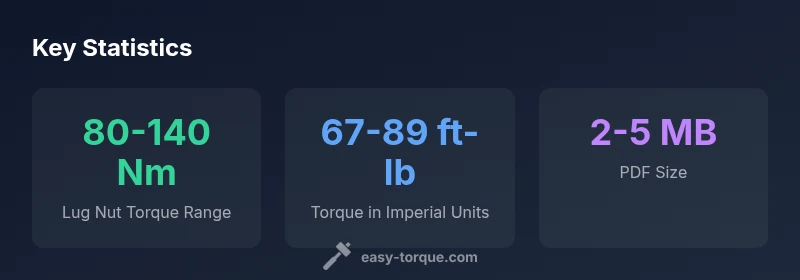
Torque ranges vary by vehicle class, wheel size, and fastener grade. Consolidated charts often present a range rather than a single precise figure to accommodate production variability. For reference, the following ranges cover common passenger car and light-truck scenarios in Nm and ft-lb. A chart should clearly indicate whether a given range applies to lug nuts with 60-degree conical seats, 12-point patterns, or other special geometries. Always verify model-specific figures with the OEM manual before tightening. Remember that even within a single model, aftermarket wheels can change the recommended torque due to weight, offset, and fastener length. Easy Torque recommends using the chart as a baseline and cross-checking with your vehicle’s documentation for the best possible accuracy. When in doubt, contact the manufacturer or a qualified technician for confirmation.
Creating a personalized wheel torque chart for your garage
If you service a diverse fleet or perform frequent rotations, building a personalized wheel torque chart can save time and reduce errors. Start with your most common vehicle types and wheel sizes, then record the exact tightening values from trustworthy sources. Include notes about thread condition, lubrication, and any special step sequences for each configuration. Use a standardized template (either printed or digital) that includes: vehicle model, year, wheel type, lug size, and the corresponding torque in Nm and ft-lb, plus a recommended sequence. Regularly update the chart to reflect changes such as upgraded wheels, stud replacements, or new OEM specs. Sharing a living document within your shop ensures everyone uses the same safe, tested references and helps reduce miscommunication during tire service.
In a home garage, a compact laminated sheet or a digital note is often sufficient. For larger shops, consider a shared database or a simple knowledge base with version control so that technicians can access the latest model-specific ranges quickly. Easy Torque’s guidance is to keep your personal chart aligned with official specs and to review it after every wheel modification, ensuring ongoing accuracy as equipment evolves.
Common mistakes and safety tips
Even with a well-made wheel torque chart pdf, mistakes happen. Avoid common errors such as skipping the star-pattern sequence, ignoring thread cleanliness, or using an incorrect lug-nut size. Never mix wheel sizes or fastener types within a single axle, as this can create uneven loading and potential failures. Use a properly calibrated torque wrench and avoid relying on feel alone, which is unreliable due to variations in friction and thread condition. Always retorque after a short drive if the OEM guidance requires it, and never exceed the chart’s recommended range. If you encounter persistent discrepancies (for example, nuts that won’t reach the target torque or rapidly loosen), pause service and inspect for cross-threading damage, damaged studs, or incompatible wheel hardware. Finally, document your procedure and confirm that all fasteners have seated evenly before shifting into motion. These practices are essential to maintaining wheel integrity and vehicle safety.
Using charts across different wheel setups and maintenance cadence
Wheel torque charts are most effective when used consistently across similar setups. If you switch to a different wheel type or fabricator, verify compatibility with the chart. Normal wear, corrosion, or a change in wheel material can alter friction and, consequently, the effective torque. For seasonal tire changes or performance wheels, keep a reference chart specific to that configuration and re-check after installation. When you expand your toolkit with an updated chart, be mindful of any changes in units or recommended sequences. For professional optimization, schedule periodic reviews of your torque data in line with manufacturer bulletins or tech advisories. Maintaining an up-to-date chart is part of responsible vehicle service and aligns with good shop hygiene and preventative maintenance principles. The overarching goal is reliability and safety across every wheel installation.
Typical lug nut torque ranges by vehicle category
| Vehicle Type | Common Lug Nut Torque Range (Nm) | Common Lug Nut Torque Range (ft-lb) |
|---|---|---|
| Passenger car | 90-120 Nm | 67-89 ft-lb |
| SUV/Light truck | 110-140 Nm | 82-103 ft-lb |
| Truck/Van (full-size) | 140-180 Nm | 103-133 ft-lb |
Your Questions Answered
What is a wheel torque chart pdf?
A wheel torque chart pdf lists model-specific tightening values for lug nuts, including sequence, unit, and size. It helps prevent under- or over-tightening during wheel installations.
A wheel torque chart pdf shows you the right torque for lug nuts by vehicle type, and you should follow it along with your owner's manual.
Are wheel torque charts universal?
No. Torque specs vary by model, wheel size, thread pitch, and fastener grade. Always verify against the OEM manual for your exact vehicle.
No, torque specs differ by model, wheel size, and fasteners. Check your manual.
How do I use a torque chart safely?
Identify your vehicle type, clean threads, apply the recommended torque with a torque wrench, and follow the recommended sequence. Retorque after driving a short distance if advised.
Find your model in the chart, clean the threads, tighten in a star pattern with a torque wrench, and recheck after a break-in.
Can I download a wheel torque chart pdf for my car?
Yes, many official and reputable sources offer downloadable charts. Ensure the chart is specific to your make, model, and wheel size.
Yes, you can download charts, but make sure it's for your exact car and wheel size.
What is the difference between Nm and ft-lb on torque charts?
Nm and ft-lb are two units of torque. Convert as needed using 1 Nm ≈ 0.7376 ft-lb, and understand the chart may display both.
Torque can be shown in newton meters or foot-pounds; you may need to convert.
What should I do if the lug nuts won't reach spec?
Don’t force it. Stop and re-check for cross-threading, damaged studs, or wrong lug size. Seek professional help if needed.
If nuts won’t reach the spec, stop and check threads or lug sizes.
“Torque charts simplify safe maintenance by translating complex fastener data into actionable steps for real-world applications.”
Top Takeaways
- Always verify OEM torque specs for your exact model.
- Use a calibrated torque wrench and clean threads.
- Tighten in a star or crisscross sequence.
- Cross-check a credible wheel torque chart pdf.
- Log torque values after installation for traceability.