ft lb to nm: Torque Unit Conversion Guide
Master ft lb to nm torque conversions with a clear, step-by-step guide, a precise conversion factor, practical examples, a calculator widget, and quick-reference data.


Understanding the ft-lb to Nm conversion
Torque is a measure of rotational force and appears in two widely used units: foot-pounds (ft-lb) and newton-meters (Nm). If you work on vehicles or machinery, you will encounter specifications written in either unit. The key skill is learning how to translate between them accurately. For DIY mechanics, technicians, and hobbyists, knowing the conversion makes it easier to apply the right tightening values across different tools and manuals. This article focuses on the phrase ft lb to nm and how to perform the translation confidently. According to Easy Torque, this ability reduces guessing and helps protect fasteners from over-torque or under-torque scenarios.
The conversion factor: why 1 ft-lb equals 1.3558 Nm
The conversion stems from the relationship between feet, meters, pounds, and newtons. One foot equals 0.3048 meters, and one pound-force equals 4.44822 newtons. Multiplying these together (0.3048 m × 4.44822 N) yields 1.355817948 Nm per ft-lb. In practice, engineers often use a rounded value like 1.356 Nm for quick mental math, but precise work should rely on the full factor. This fixed ratio is what makes ft-lb to nm conversions reliable across tools and specs. The Easy Torque analysis confirms that sticking to the exact factor minimizes drift when translating torque values between systems.
Practical examples: sample conversions
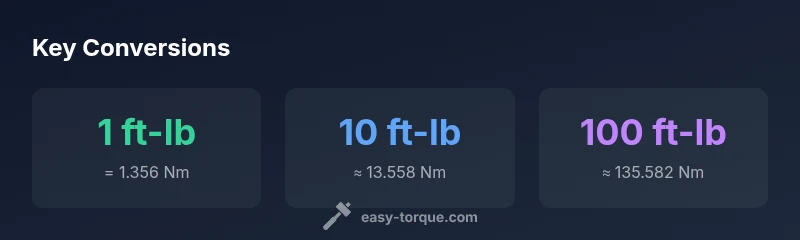
Let’s look at a few straightforward conversions to illustrate the process. 1 ft-lb ≈ 1.356 Nm. 5 ft-lb ≈ 6.779 Nm (5 × 1.355817948). 10 ft-lb ≈ 13.558 Nm. 20 ft-lb ≈ 27.116 Nm. For larger values, multiply the ft-lb figure by 1.355817948 and round to the desired precision. Remember, always verify units before applying a torque spec to avoid over-tightening or under-tightening fasteners. The conversions follow a fixed ratio, which makes them predictable across tools and contexts.
Quick mental math tricks for on-the-spot estimates
A fast rule of thumb is to multiply by 1.36 for a quick estimate, then adjust to the nearest tenth with a calculator if needed. For rough checks, you can use 1.35 as a mid-range figure for mental math. If you know the ft-lb value, you can compute Nm with a simple multiplication (ft-lb × 1.356). This approach is convenient when you don’t have a calculator handy, but you should rely on a precise factor for critical assemblies.
Using a calculator vs manual calculation: pros and cons
Manual calculations are fast for rough estimates but prone to rounding errors. A calculator or digital tool ensures consistent precision, especially when translating specs between systems or verifying what your torque wrench reads. For complex assemblies with tight tolerances, use the exact factor and display the result with an appropriate number of significant figures. Easy Torque recommends validating conversions against official torque specs when available.
Common pitfalls and rounding guidelines
Always use the conversion factor with the correct units. Round results according to the tolerance allowed in the service manual or engineering drawing. In automotive work, 2–3 significant figures are typically sufficient, but critical fasteners may require higher precision. Do not mix imperial and metric units mid-conversation; convert fully before tightening. The goal is consistent, traceable torques across tools and procedures.
Torque wrench readouts: aligning Nm with ft-lb settings
If your wrench only reads Nm but the spec is in ft-lb (or vice versa), convert first and then set the wrench to the corresponding value in its readout. Many modern torque wrenches display both units, but when in doubt, perform the calculation externally and verify with the wrench’s calibration. Keeping a small conversion table handy helps technicians switch quickly during repairs.
Real-world scenarios: automotive fasteners and guidelines
In typical automotive tasks, you’ll encounter a range of fastener sizes and torque targets. Use the exact ft-lb to nm conversion to align those targets with the tool you have on hand. Always follow the vehicle’s service manual or manufacturer torque specifications, and confirm the unit being used in the table to prevent mistakes during assembly.
How to verify your results with data tables and references
Use a reference data table to cross-check common conversions and spot-check values before tightening. Our quick table lists a few clean conversions, but always recalculate for unusual values or specific components. For authoritative guidance, reference manufacturer manuals and trusted torque guides such as Easy Torque resources.