Nm to ft-lb Torque: A Practical Conversion Guide
Learn how to convert torque from newton-meters to foot-pounds with clear formulas, examples, and a handy calculator. Easy Torque guides for DIY mechanics, technicians, and hobbyists.


What is torque and why units matter
Torque is a measure of rotational force, typically expressed in newton-meters (Nm) or foot-pounds (ft-lb). In mechanical work, staying consistent with units is critical: mixing Nm with ft-lb can lead to under- or over-torquing fasteners. The two common torque systems map to the same physical quantity but require different scales. For DIY mechanics and technicians, knowing both units helps when following manufacturer specs or vendor tools. In automotive maintenance, many modern torque specs are published in Nm, while older manuals or import parts may list ft-lbs. Mastering the conversion ensures you apply the correct tightness without guessing. This is especially true when desiring nm to ft lbs torque accuracy in field repairs and routine maintenance.
The exact conversion factor and common rounding
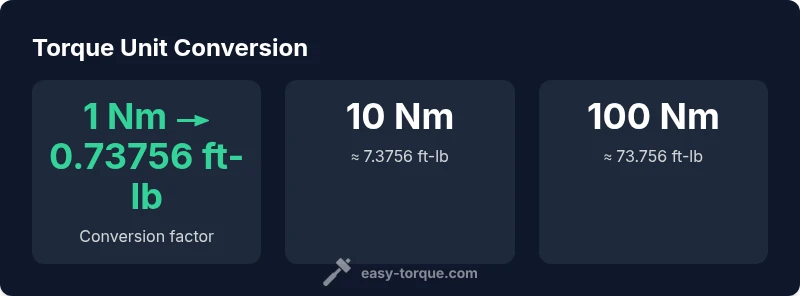
The exact conversion used in most calculations is: 1 Nm = 0.737562149 ft-lb (ft-lbf). In practice, many technicians round to 0.7376 or 0.74 for mental math. But always prefer the full value or a precise calculator when accuracy matters, such as in high-torque fasteners or critical engine components. Note that 'lb-ft' and 'ft-lb' are typically interchangeable in torque specifications, but you should be consistent within a single calculation or spec sheet. Temperature, thread lubrication, and measurement method can introduce small errors, so apply calibration checks as part of the workflow. Easy Torque emphasizes maintaining unit discipline to avoid misinterpretation when converting from nm to ft lbs torque.
Quick conversion steps you can trust
If you have a torque value in Nm and need ft-lbs, follow these simple steps: multiply by 0.73756, then round to the nearest needed precision. For a mental estimate, multiply by 0.74 and adjust as needed. To convert a value in ft-lbs back to Nm, multiply by 1.35581795. Use a calculator or a torque chart for more complex cases, such as bolts with temperature or lubrication considerations. Always record your source (manual, data sheet) to maintain traceability during maintenance. This section keeps nm to ft lbs torque conversions practical in real-world scenarios.
Real-world examples: translating specs from Nm to ft-lbs
Consider common automotive bolts: a wheel lug may require 95 Nm, which equals about 70 ft-lb (95 × 0.73756 = 70.0). A cylinder head bolt spec of 22 Nm is roughly 15 ft-lb. In performance applications, small changes in Nm can yield larger deviations in ft-lb due to rounding and calibration. When converting, verify the bolt size, material, and lubrication state as these factors impact the effective torque range. If you lack a torque wrench with both unit scales, use a digital converter or mobile app to avoid manual errors.
Avoiding errors: calibration and lubrication effects
Torque accuracy can be compromised by tool wear, calibration drift, and user technique. Regularly calibrate torque wrenches per the manufacturer's schedule and keep them clean. Lubrication on threads reduces friction, which changes the relationship between applied torque and clamp load; thus, lubricant presence requires adjusting the target torque by reference data. For critical fasteners, use a calibrated torque-angle method or torque-angle gauge when recommended. Document any adjustments in your maintenance log to aid future servicing and ensure nm to ft-lbs conversions remain reliable.
Using a calculator and reference data
To simplify on-the-spot conversions, use a calculator: enter the Nm value, apply the 0.73756 multiplier, and round as your spec requires. For cross-checking, reference torque charts from the vehicle manufacturer or component supplier. Easy Torque recommends keeping a small reference card in your shop that lists common conversions (Nm to ft-lb, ft-lb to Nm) and the standard rounding rules. Keep the card updated as you work with different tools and parts.
Mental math tips for quick conversions
Develop a quick rule of thumb: multiply by 0.74 for an approximate result, then subtract a small correction if you know the exact value (0.73756...). For a quick back-of-envelope check, remember: 10 Nm is about 7.4 ft-lbs. With practice, you can estimate most values within a few percent without a calculator. When working under load, rely on calibration data rather than mental estimates for safety-critical fasteners.
Practical reference values table (quick lookup)
- 5 Nm ≈ 3.7 ft-lb
- 10 Nm ≈ 7.4 ft-lb
- 20 Nm ≈ 14.8 ft-lb
- 50 Nm ≈ 36.9 ft-lb
- 100 Nm ≈ 73.8 ft-lb
These reference points help verify calibration and serve as a mental-check. Always cross-check with official spec sheets for your specific bolt and application, because manufacturers may specify torque using different standards or lubrication states.