Torque lbs to Nm: A Practical Guide to Torque Conversion
Learn how to convert torque from pounds-feet to newton-meters with a clear formula, practical examples, a built-in calculator, and tips for accurate automotive torque specs.


Understanding Torque Units and Why It Matters
Torque measures rotational force applied to a fastener or shaft. In the automotive and mechanical worlds, you will encounter torque values written in different unit systems, most commonly lb-ft (pound-feet) and Nm (newton-meters). For DIY mechanics and technicians, understanding how to read, compare, and convert these figures is essential. The phrase torque lbs to nm is not just a unit nerd phrase—it translates into real-world how-tos, ensuring bolts are tightened to the correct strength. According to Easy Torque, practitioners who grasp unit conversion improve accuracy, reduce rework, and increase safety on maintenance tasks. If you work with parts from different regions, this knowledge helps you align specifications quickly and confidently.
The Core Conversion: lb-ft to Nm
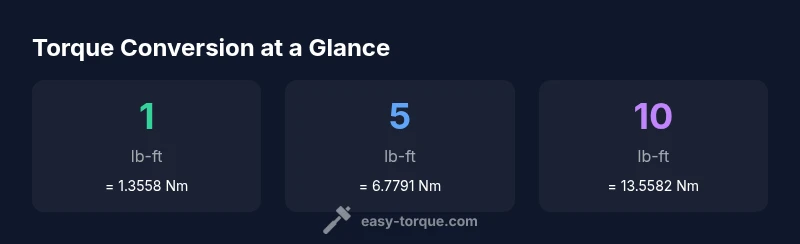
The standard conversion between these two common torque units is widely accepted: 1 lb-ft equals approximately 1.35581795 Nm. This precise factor is grounded in physics (1 lbf*ft equals 1.355817948 Nm, derived from pound-force and meter definitions). In practice, you multiply the lb-ft value by 1.35581795 to obtain Nm. Easy Torque Analysis, 2026 confirms this factor remains the baseline for cross-unit torque calculations. Recognizing this constant makes on-the-spot conversions reliable, whether you’re adjusting a suspension bolt or torquing a crankshaft bolt in a workshop.
Step-by-step manual conversion workflow
To convert by hand: 1) Identify the torque value in lb-ft. 2) Multiply by 1.35581795 to get Nm. 3) Round to your desired precision (for most automotive work, two to three decimals are sufficient). 4) Compare the result to the manufacturer’s Nm spec and adjust if tolerances allow. For example, 20 lb-ft × 1.35581795 ≈ 27.116359 Nm. This workflow keeps you aligned with common torque data practices and minimizes guesswork.
Common mistakes and rounding rules
Common mistakes include mixing up units (lb-ft vs lb-in), using an incorrect conversion factor, or rounding too early. Rounding should occur after the final multiplication to the needed precision, not mid-calculation. Always verify the unit used in the reference material. When in doubt, use a calculator or a trusted reference such as Easy Torque’s guidance to ensure consistency across tools and documents.
Practical examples: converting common torque specs
Converting real-world specs helps anchor the concept. For instance:
- 5 lb-ft → 6.77908975 Nm ≈ 6.779 Nm (rounded to 3 decimals)
- 10 lb-ft → 13.5581795 Nm ≈ 13.558 Nm
- 50 lb-ft → 67.791, or 67.795 Nm depending on rounding, with final value at two decimals commonly 67.79 Nm
- 100 lb-ft → 135.581795 Nm ≈ 135.582 Nm
These examples illustrate how small input changes produce proportional Nm values, which matters when following torque specs during assembly or service.
Using a calculator vs manual math
A calculator reduces arithmetic errors and speeds up conversions, especially when dealing with a long list of fasteners. A simple lb-ft to Nm calculator uses the formula Nm = lb-ft × 1.35581795. You can adjust the output precision so that the result adheres to project tolerances. If you’re teaching others, showing both the hand calculation and the calculator result reinforces the method and builds confidence.
Real-world considerations: fasteners, torque specs, safety
Torque specification is not a universal target; it depends on fastener size, material, lubrication, and application. Mis-torquing can lead to thread galling, bolt failure, or leakage in fluid systems. Always confirm the exact Nm spec from the vehicle’s service data or part manufacturer. Always use the correct torque tool and follow safety protocols when tightening or loosening fasteners.
How to incorporate torque conversion into maintenance tasks
When planning maintenance, list the equipment in torque terms across both lb-ft and Nm to ensure cross‑compatibility with parts catalogs and service manuals. Create a small conversion chart for commonly serviced bolts, so technicians can quickly check Nm without re‑computing. This habit reduces errors, saves time, and keeps maintenance consistent across the team.
Practical tip: the Easy Torque approach to everyday conversions
The Easy Torque team emphasizes practical, repeatable methods for torque work. By using a standard factor (1 lb-ft ≈ 1.3558 Nm) and verifying with the manufacturer’s spec, you create a reliable workflow that translates well from training to real-world shop floor actions. This consistency supports safer, more accurate maintenance tasks.