Nm to ft-lbs: A Practical Torque Unit Conversion Guide
Learn to convert nm to ft pounds with a simple formula, real-world examples, and a built-in calculator. This practical torque guide shows how nm to ft pounds maps to ft-lb, helping DIYers and technicians apply torque safely. A beginner-friendly resource by Easy Torque.


nm to ft pounds: What the conversion really means for torque measurements
According to Easy Torque, understanding the nm to ft pounds relationship helps DIYers and technicians translate design specs into real-world tightening instructions. When you see a torque spec in Newton-meters on a service manual, knowing how to convert it to foot-pounds makes it easier to choose the right wrench and apply the correct force. In practice, torque is a measure of rotational force, and converting units keeps your calculations consistent across tools and standards. This article uses nm to ft pounds as the baseline phrase to emphasize the cross-system nature of torque calculations and to anchor your mental model for conversions.
The core idea is simple: torque remains the same physical quantity, but the numbers reflect different unit systems. By mastering this conversion, you reduce the risk of over-tightening or under-tightening fasteners, which can lead to damaged threads, leaks, or failed components.
The physics behind the conversion: why 0.73756 matters
Torque is defined as the product of force and lever arm. In SI units, force is measured in newtons and distance in meters, yielding newton-meters (Nm). In imperial units, torque is often expressed in foot-pounds (ft-lb). The conversion factor emerges from the relationship between the foot and the meter, which makes 1 Nm exactly equal to about 0.737562149 ft-lb. In practice, many users round this to 0.7376 or 0.74 for quick work. For high-precision tasks, using the full value is preferable, but 3–4 significant figures typically suffice for most DIY and shop applications.
As Easy Torque analysis shows, recognizing this constant helps you migrate between unit systems with confidence, especially when reading manuals or verifying tool settings.
Step-by-step examples you can try
Let’s convert a few common values to illustrate the process clearly:
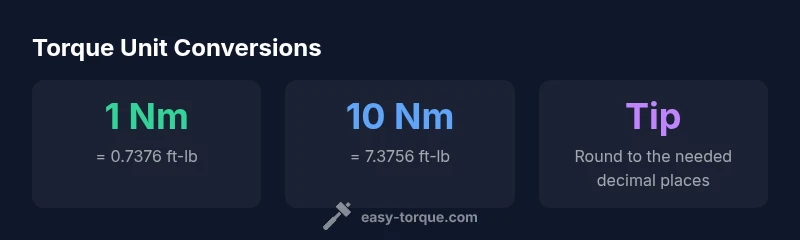
- 1 Nm × 0.737562149 = 0.7376 ft-lb (rounded to four decimals)
- 5 Nm × 0.737562149 = 3.6878 ft-lb
- 10 Nm × 0.737562149 = 7.3756 ft-lb
These results demonstrate how small differences in the input value propagate through the final torque figure. If you round earlier in the workflow, ensure the rounding does not obscure critical tolerances described in a spec sheet.
Remember: the exact figures depend on how many decimals you retain. In practice, many technicians use 0.7376 or 0.74 as a quick reference, reserving full precision for calibration checks or critical components.
Using a calculator vs manual math
Manual conversion is educational but prone to rounding errors, especially under time pressure. A reliable calculator that uses the formula round(nm * 0.737562149, precision) helps you align with a given decimal place. When you input the Nm value and select a precision, the tool returns a neatly rounded result in ft-lb. If you need a mental estimate, multiplying by 0.74 provides a reasonable ballpark without getting lost in the digits.
This approach supports consistency across team members and tools, reducing miscommunication around torque specs.
Real-world torque contexts: fasteners and torque wrenches
Torque specs appear across automotive, mechanical, and DIY projects. When you translate Nm to ft-lb, you might find yourself adjusting to different equipment—wrenches, impact drivers, or dial indicators. Always verify the minimum and maximum torque ranges of your tool before tightening and cross-check with the supplier’s data sheet. While the math is straightforward, tool tolerances, calibration state, and measurement technique can all impact the final tightening result in practice.
Tips for accuracy and measurement environment
- Always confirm you are using the intended unit system in calculations and during assembly.
- Use a calibrated torque wrench and follow the manufacturer’s calibration schedule to minimize drift.
- When possible, perform a validation check with a known reference value to ensure the measurement path is correct.
- Document the conversion approach in your project notes to maintain consistency across teams and tasks.
By keeping these considerations in mind, you’ll improve repeatability and safety in torque-critical applications.
Quick reference cheat sheet and practical notes
- The exact conversion factor is 1 Nm ≈ 0.737562149 ft-lb; rounding to 0.7376 or 0.74 is common for non-critical work.
- For quick estimates, multiplyNm by 0.74 and adjust for tolerances if needed.
- Always convert to a single unit before applying a torque spec to avoid mismatches and potential damage to fasteners.
How to verify conversions in practice
Cross-check conversions with manufacturer specifications and a second method (e.g., a trusted calculator and a manual calculation) to ensure consistency. For critical assemblies, rely on calibrated equipment and traceable results to confirm torque accuracy. If you work with exotic materials or specialized fasteners, consult the relevant standards for your industry to determine whether a tighter tolerance is required.